
Varaha the Boar
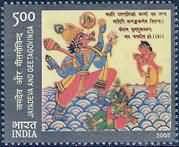
Technical Data
| Date of Issue | July 27, 2009 |
|---|---|
| Denomination | Rs. 5 |
| Quantity | 1,000,000 |
| Perforation | 13 |
| Printer | India Security Press, Nasik |
| Printing Process | Photo Gravure |
| Watermark | No Watermark |
| Colors | Multicolor |
| Credit (Designed By) | Sh. Sankha Samanta |
| Catalog Codes |
Michel IN 2391 Stamp Number IN 2334c Stanley Gibbons IN 2604 WADP Numbering System - WNS IN040.2009 |
| Themes | Poems |
The Cosmic Savior in Dashavatara
Varaha, the third incarnation of Lord Vishnu in the sacred Dashavatara tradition, is revered as the mighty divine Boar who rescued Mother Earth from the depths of cosmic waters. His incarnation symbolizes restoration, protection, and the re-establishment of balance in the universe.
Varaha represents the power of the Divine to intervene when the world itself is threatened.
The Legend of Varaha
According to Hindu mythology, the demon Hiranyaksha dragged the Earth (Bhudevi) into the depths of the primordial ocean, causing cosmic imbalance. To restore order, Vishnu manifested as Varaha — a colossal boar of immense strength.
Diving into the turbulent waters, Varaha confronted and defeated the demon. He then lifted the Earth gently on his tusks and restored her to her rightful place in the cosmos.
This dramatic act signifies the triumph of righteousness over chaos and the divine commitment to sustaining creation.
Varaha in Geetagovinda and Dashavatara
The celebrated Sanskrit devotional masterpiece Gita Govinda, composed by Jayadeva, glorifies Varaha in its revered Dashavatara stotra. Jayadeva poetically praises the Lord who uplifted the submerged Earth, portraying the act as both heroic and compassionate.
Through lyrical devotion, Varaha is depicted not merely as a powerful being, but as the cosmic preserver who safeguards existence itself. The hymn describing this incarnation continues to be sung in temples and incorporated into classical dance and music traditions across India.
Symbolism of the Varaha Avatar
The Varaha incarnation represents:
- Restoration of cosmic balance
- Protection of Earth (Bhudevi)
- Triumph of good over destructive forces
- Divine strength guided by compassion
His form teaches that when the foundations of existence are shaken, divine intervention restores harmony.
Influence on Art and Culture
The majestic imagery of Varaha has inspired:
- Temple sculptures at ancient cave sites and stone temples
- Relief carvings showing Bhudevi seated upon his tusks
- Miniature paintings depicting the ocean rescue
- Classical dance performances based on Dashavatara themes
Across centuries, artists have portrayed Varaha as both fierce in battle and tender in lifting the Earth — a blend of strength and care.
Commemorative Stamp on Dashavatara
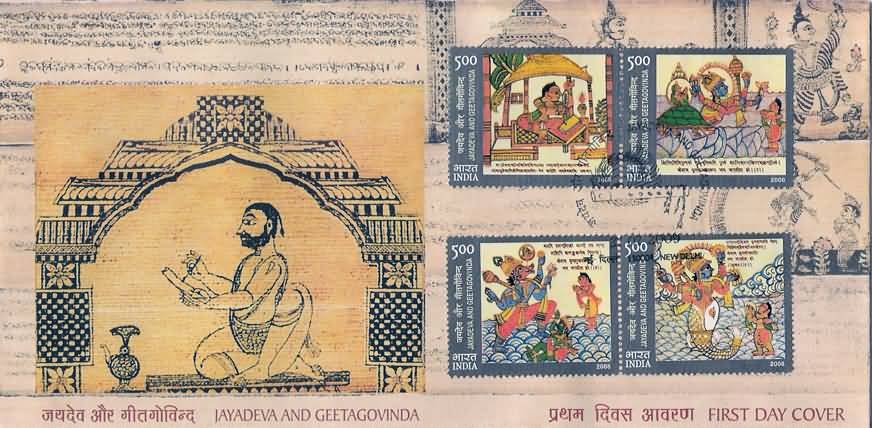
Honouring India’s spiritual and literary heritage, India Post issued commemorative postage stamp celebrating Jayadeva and the Dashavatara theme of Geetagovinda. Varaha, as one of the principal incarnations, forms part of this philatelic tribute to India’s rich mythological tradition.
Varaha: The Uplifter of the Earth
Varaha the Boar stands as a powerful symbol of salvation and restoration. As celebrated in Geetagovinda and the Dashavatara tradition, his story reminds humanity that whenever the world descends into chaos, divine strength arises to restore balance.
Through sacred texts, temple art, devotional music, dance traditions, and commemorative stamps, the legacy of Varaha continues to inspire faith and reverence across generations.
First Day Cover
Leave a Comment
You must be logged in to post a comment.