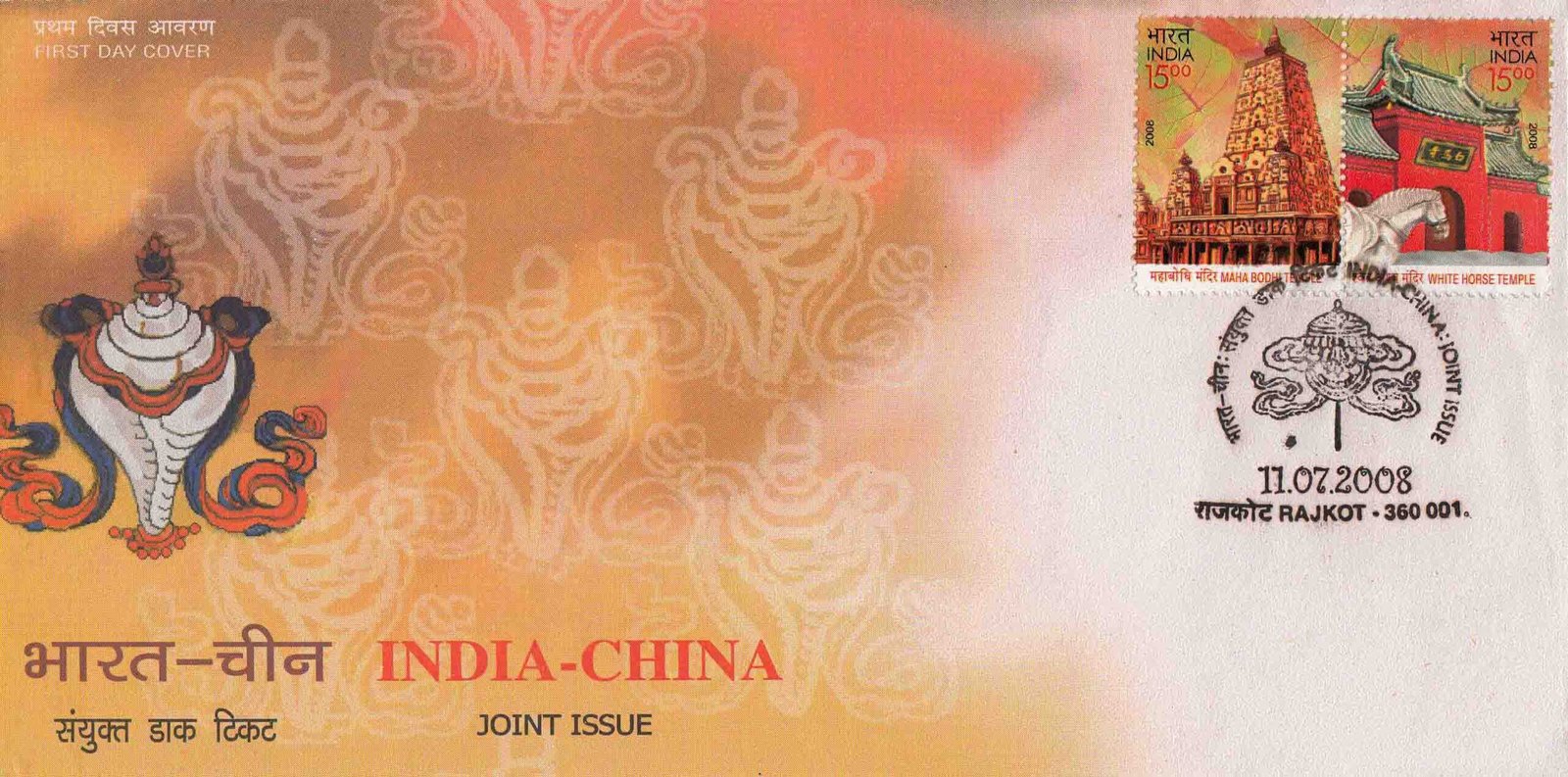
India-China Joint Issue

Technical Data
| Date of Issue | July 11, 2008 |
|---|---|
| Quantity | 200,000 |
| Perforation | 13 |
| Printer | India Security Press, Nasik |
| Printing Process | Photo Gravure |
| Watermark | No Watermark |
| Colors | Multicolor |
| Credit (Designed By) | Sh. Bharati Mirchandani |
| Catalog Codes |
Michel IN BL55 Stamp Number IN 2246c Stanley Gibbons IN MS2485 WADP Numbering System - WNS IN022MS.2008 |
| Themes | Architecture | Buildings | Joint Issues | Temples | UNESCO World Heritage Sites |
Stamps in this Miniature Sheet
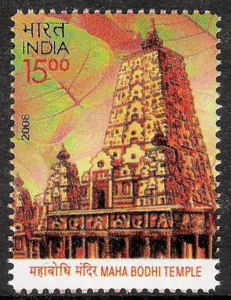
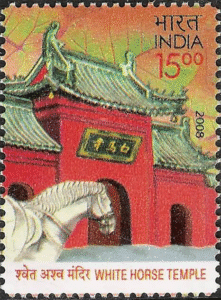
Buddhist Temples
To commemorate the enduring cultural and spiritual ties between India and China, the Department of Posts has released a set of two commemorative postage stamps under the India–China Joint Issue series. The stamps depict two iconic centres of Buddhist heritage: the Mahabodhi Temple and the White Horse Temple.
A Miniature Sheet accompanies the issue, its background adorned with leaves of the Pipal tree (Ficus religiosa), symbolising the sacred tree under which Gautama Buddha attained enlightenment.
Ancient Civilizations and Shared Heritage
India and China, two ancient civilizations with rich histories and cultural traditions, have shared centuries of intellectual and spiritual exchange. Buddhism played a central role in fostering this connection.
From the first century onwards, Indian monks travelled to China, translating Sanskrit scriptures into Chinese and contributing to developments in science, mathematics, and astronomy. Chinese scholars, in turn, journeyed to India to study Buddhism and collect sacred texts, often spending many years in pursuit of knowledge.
White Horse Temple – Cradle of Buddhism in China
The earliest confirmed arrival of Indian monks in China dates back to the first century A.D., when Kasyapa Matanga and Dharmaraksha journeyed to China at the invitation of Emperor Ming of the Han dynasty. According to legend, in A.D. 64, Emperor Ming dreamt of a golden deity flying above his palace. His ministers interpreted the vision as a sign of the Buddha.
A delegation was sent westward to seek Buddhist teachings. On their return, they brought with them sacred texts and invited the Indian monks to China. In A.D. 68, a temple was constructed near Luoyang in Henan Province to honour this event. Named the White Horse Temple in memory of the white horse that carried the sutras, it became the first Buddhist temple in China.
It was here that the earliest Chinese translation of the “Forty-two Sutras” was completed. Over time, the temple emerged as a major centre of Buddhist learning and is revered as the “Founder’s Home” and “Cradle of Buddhism” in China. Its architectural splendour includes the Hall of Heavenly Kings, Hall of the Great Buddha, Hall of Mahavira, and other historic structures.
Mahabodhi Temple – Site of Enlightenment
The Mahabodhi Temple stands at Bodh Gaya in Bihar, India—the sacred site where Siddhartha Gautama attained enlightenment and became the Buddha. Situated near the ancient river Nairanjana (now Lilajan), the temple complex marks the very spot where the Buddha meditated beneath the Bodhi Tree.
The temple’s soaring pyramidal spire rises 54 metres (177 feet) and is adorned with intricate carvings. The complex is enclosed by ancient stone railings dating back to the first century B.C., depicting scenes from the Buddha’s life.
Tradition recounts that after enlightenment, the Buddha spent seven weeks in meditation at various spots within the temple complex. The Vajrasana, a polished sandstone throne attributed to Emperor Ashoka, marks the sacred seat of meditation. The chankama, a raised platform symbolising the Buddha’s meditative walk during the third week, is another revered site.
Inside the sanctum, a gilded statue of Shakyamuni Buddha in the earth-touching mudra faces east—the direction of enlightenment.
Symbolism of the Miniature Sheet
The Pipal tree leaves depicted in the miniature sheet carry profound symbolism. The Pipal (Asvattha, Ficus religiosa) is revered in Buddhist tradition, as it was beneath this tree that Gautama Buddha attained Bodhi or enlightenment. The imagery reflects the spiritual bond linking the two nations through shared reverence for Buddhist heritage.
A Celebration of Shared Spiritual Legacy
This Joint Issue celebrates not only two magnificent temples but also centuries of cultural dialogue, pilgrimage, scholarship, and spiritual exchange between India and China. The commemorative stamps stand as symbols of friendship, mutual respect, and the enduring influence of Buddhism in shaping the civilizations of both nations.
First Day Cover