
Jose Marti (1853-1895)
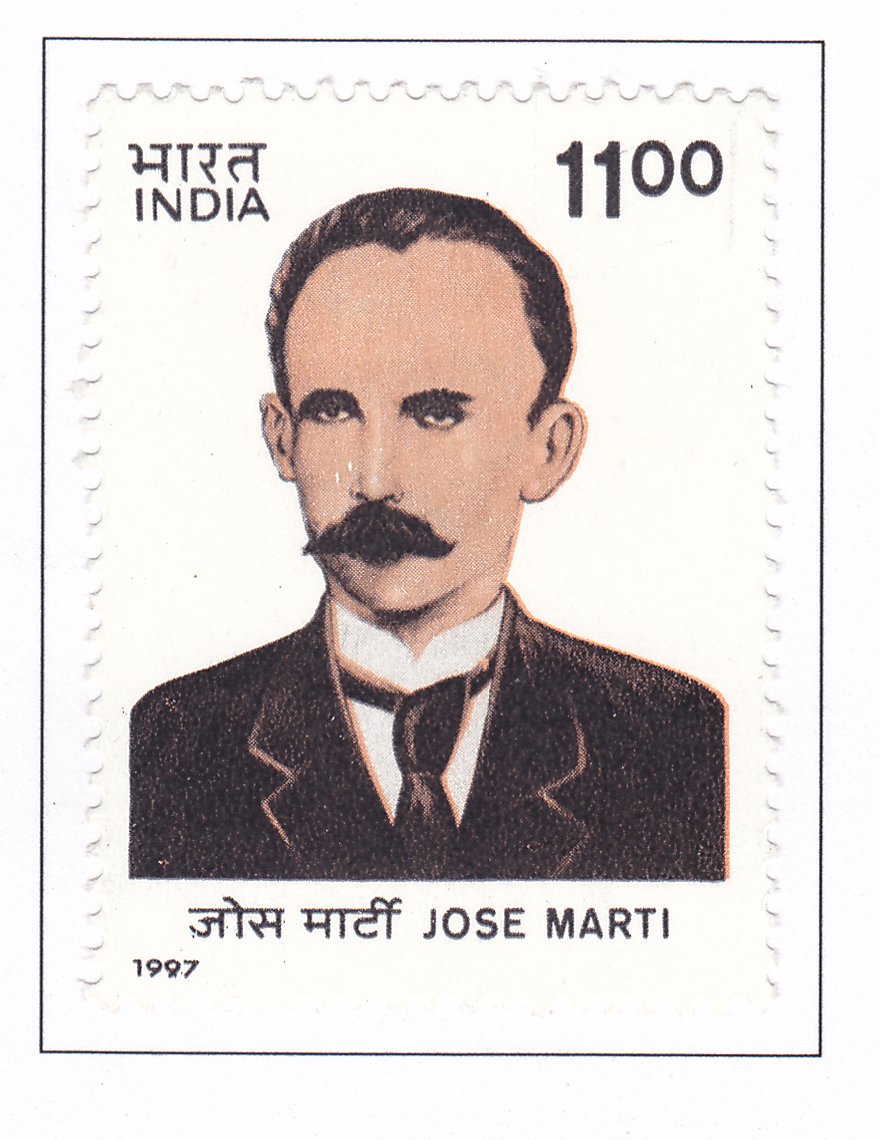
Technical Data
| Date of Issue | January 28, 1997 |
|---|---|
| Denomination | Rs. 11 |
| Quantity | 700,000 |
| Perforation | comb 13 x 13½ |
| Printer | Security Printing Press, Nashik |
| Watermark | No Watermark |
| Colors | Multicolor |
| Catalog Codes |
Michel IN 1535 Stamp Number IN 1596 Yvert et Tellier IN 1309 Stanley Gibbons IN 1699 |
| Themes | Commemoration | Famous people | Literary People (Poets and Writers) | Men |
Introduction
José Martí was born in a modest home in Cuba on 28 January 1853. He devoted his life to the liberation of Cuba from Spanish colonial rule and became one of the greatest national heroes of Latin America. He is remembered as a revolutionary leader, poet, journalist, and thinker.
Early Life and Revolutionary Spirit
José Martí began writing at a very young age. His powerful ideas inspired generations of Cubans to fight for freedom. At the age of seventeen, he was imprisoned under harsh conditions for his nationalist beliefs. During this period, he wrote The Political Prisoner in Cuba, a strong condemnation of colonial oppression.
Political Leadership
In 1892, Martí founded the Cuban Revolutionary Party with the aim of achieving complete independence for Cuba and supporting the freedom of Puerto Rico. In the same year, he started the newspaper Patria, which became an important voice of the independence movement.
Social and Economic Ideas
Martí believed that political freedom should be accompanied by social justice. He supported:
- Redistribution of land
- Economic systems based on small landholdings
- Equality for all people
- Removal of discrimination based on race, creed, or region
Influence on Cuba
Fidel Castro described José Martí as the intellectual author of the Cuban Revolution. His writings and ideals continued to shape Cuban political thought long after his death.
Death and Legacy
On the eve of his death, Martí wrote that independence had been the driving force of his life. He died in 1895 while fighting for Cuban freedom. Today, he is honoured as the apostle of Cuban independence and one of the leading literary figures of Latin American Modernismo.
Philatelic Recognition
A commemorative postage stamp was issued on the birth anniversary of José Martí, honouring his role as the apostle of Cuban independence and an important figure in Latin American literature.
Conclusion
José Martí remains a timeless symbol of freedom, justice, and national dignity. His life and writings continue to inspire people across the world.