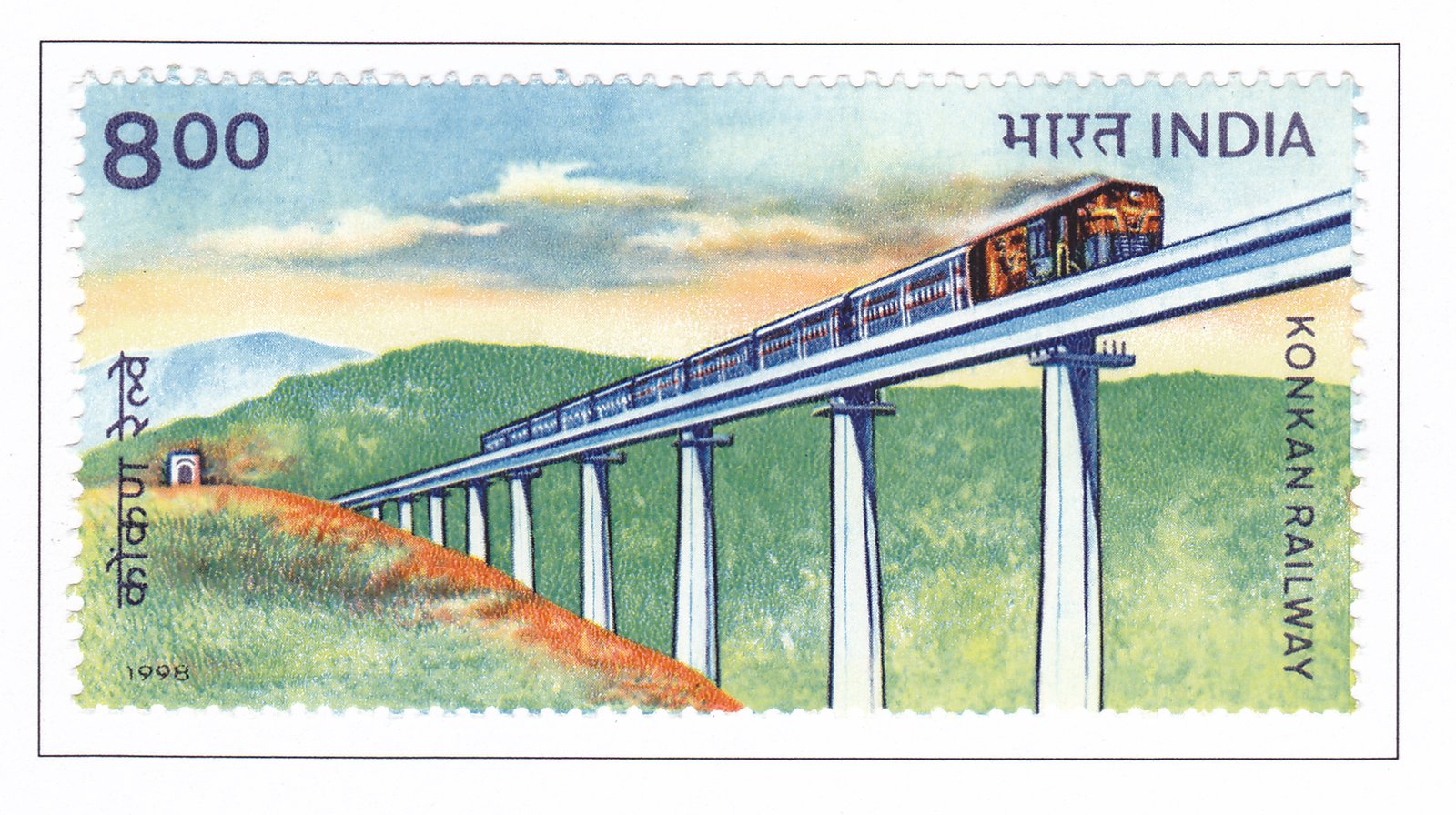
Konkan Railway
Technical Data
| Date of Issue | May 1, 1998 |
|---|---|
| Denomination | Rs. 8 |
| Quantity | 700,000 |
| Perforation | comb 13 |
| Printer | Security Printing Press, Nashik |
| Printing Process | Photogravure |
| Watermark | No Watermark |
| Colors | Multicolor |
| Credit (Designed By) | Sh. J. P. Irani |
| Catalog Codes |
Michel IN 1623 Stamp Number IN 1689 Yvert et Tellier IN 1389 Stanley Gibbons IN 1786 |
| Themes | Bridges | Locomotives | Railways |
Introduction
The Konkan Railway is one of the greatest engineering achievements in India’s railway history. It connected the scenic western coast of India through a modern railway line and fulfilled a dream that had remained incomplete for more than a century.
Early Plans
The first plans to build a railway line along the western coast were made in 1882. However, the rugged Sahyadri Mountains, numerous rivers, and deep creeks made construction extremely difficult at that time.
Beginning of Railway Development in India
India’s first railway line was opened on 16 April 1853 between Bori Bunder and Thane, covering a distance of 21 miles. Since then, the railway network expanded greatly, but the western coastal region still lacked an important railway connection.
Formation of Konkan Railway Corporation
In 1984, fresh plans were prepared to build the railway line. After surveys conducted up to 1988, the Konkan Railway Corporation Ltd. was established in 1990 as a Government of India undertaking with the participation of Maharashtra, Goa, Karnataka, and Kerala under the Build, Operate and Transfer (BOT) principle.
Engineering Challenges
The construction of the Konkan Railway was a huge challenge because of the difficult terrain. The route required:
- 92 tunnels
- 179 major bridges
- 2,819 minor bridges
- 59 stations
The Karbude tunnel in Ratnagiri, measuring 6.5 km, became the longest tunnel in the Indian Railway system.
Remarkable Bridges
The Panval Nadi bridge in Ratnagiri became the tallest bridge in Asia at that time, standing 64 metres high, taller than the Qutub Minar. It was built using advanced engineering techniques.
Technological Achievements
The Konkan Railway introduced many new technologies in India, such as ballast-less tracks in tunnels for smoother travel and lower noise. Its modern bridge construction methods received national and international recognition.
Completion and Importance
The railway project was completed on 26 January 1998, during the Golden Jubilee year of Indian Independence. It opened new opportunities for transport, trade, tourism, and economic development in the Konkan region rich in minerals and agriculture.
Commemorative Stamp
The Department of Posts feels privileged to issue this special commemorative stamp on the occasion of the dedication of the Konkan Railway to the Nation.
Conclusion
The Konkan Railway stands as a symbol of determination, innovation, and national progress. It transformed connectivity along India’s western coast and remains a proud milestone in the country’s infrastructure development.
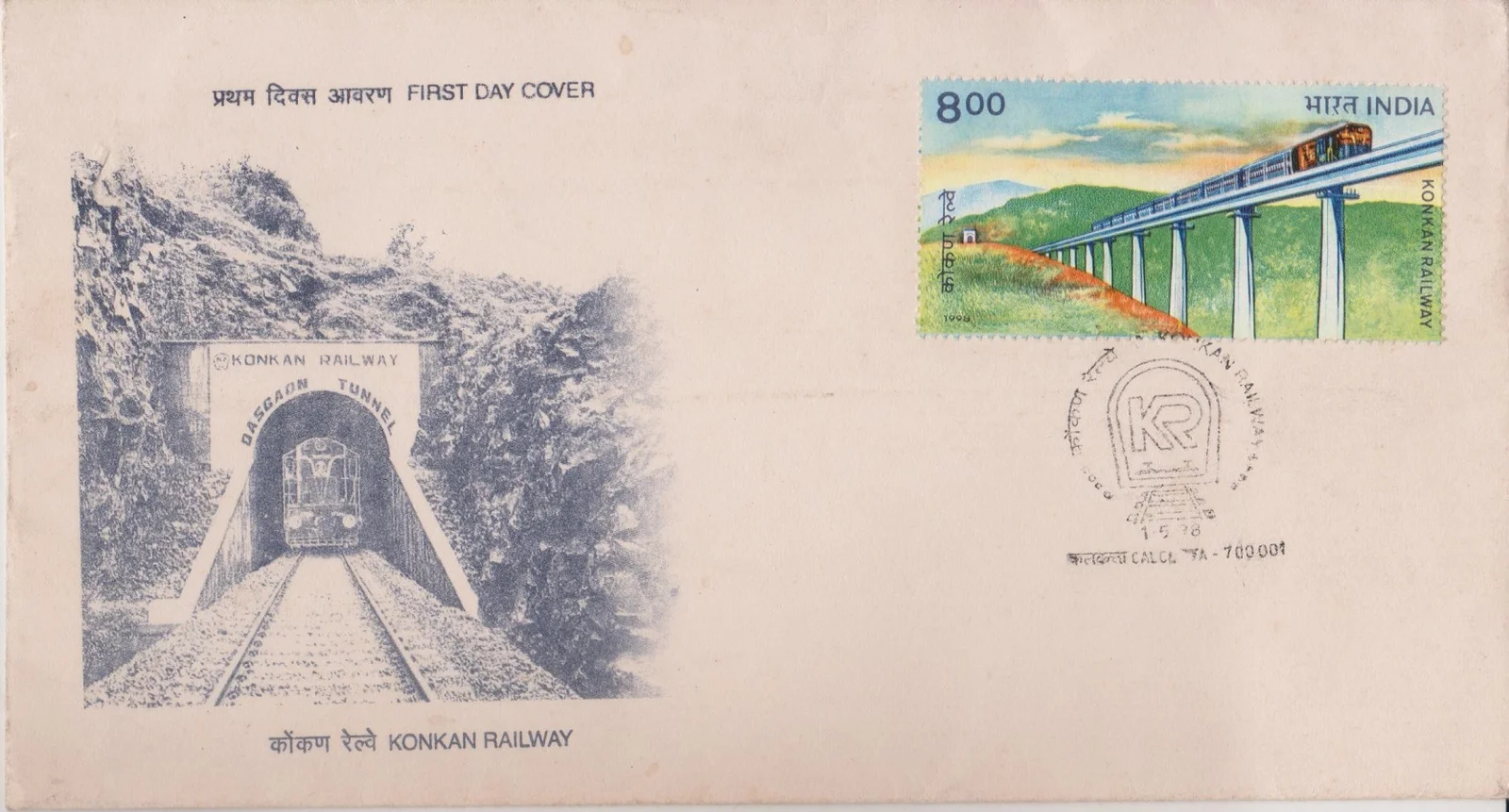
First Day Cover