
Kranti Trivedi
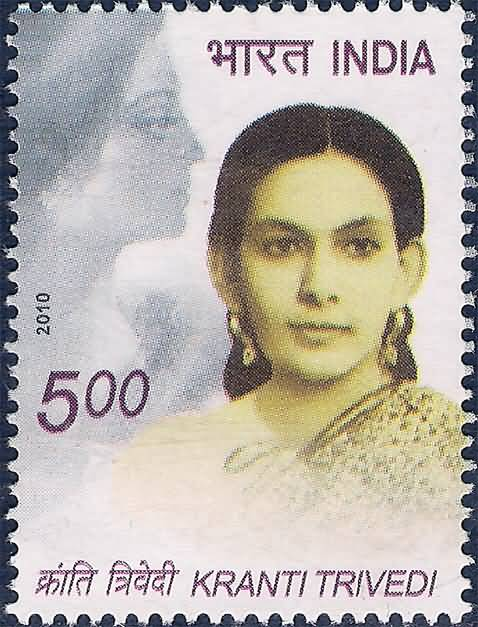
Technical Data
| Date of Issue | October 25, 2010 |
|---|---|
| Denomination | Rs. 5 |
| Quantity | 300,000 |
| Perforation | 13 |
| Printer | India Security Press, Nashik |
| Printing Process | Photo Gravure |
| Watermark | No Watermark |
| Colors | Multicolor |
| Credit (Designed By) | Smt. Alka Sharma |
| Catalog Codes |
Michel IN 2520 Stamp Number IN 2458 Yvert et Tellier IN 2283 Stanley Gibbons IN 2758 WADP Numbering System - WNS IN066.2010 |
| Themes | Anniversaries and Jubilees | Famous people | Literary People (Poets and Writers) | Women |
Voice of Hindi Literature and Women’s Sensibilities
Kranti Trivedi was born on 28 September 1930 in Raipur (now in Chhattisgarh), into the distinguished family of Ravi Shankar Shukla, the first Chief Minister of Madhya Pradesh. From an early age, she displayed a natural flair for writing and went on to become a prominent name in Hindi literature.
Literary Style and Themes
Kranti Trivedi’s writings are marked by simplicity of language, smooth narrative flow, and contextual relevance. Through engaging subject matter, she aroused spontaneous interest among readers and inspired them to explore Hindi literature further. Her stories were widely published in popular Hindi magazines such as Saptahik Hindustan, Dharamyug, Kadambini, Navneet, and Sarika.
Her widely acclaimed story “Phoolon Ko Kya Ho Gaya” gained special recognition and established a distinct identity. The propagation of Hindi language and the issues concerning women formed the two cornerstones of her literary work.
Novels and Creative Contributions
Her first six novels proved to be milestones in generating interest in Hindi literature. In her later mythological novels, she sensitively portrayed the varied emotions and struggles of women.
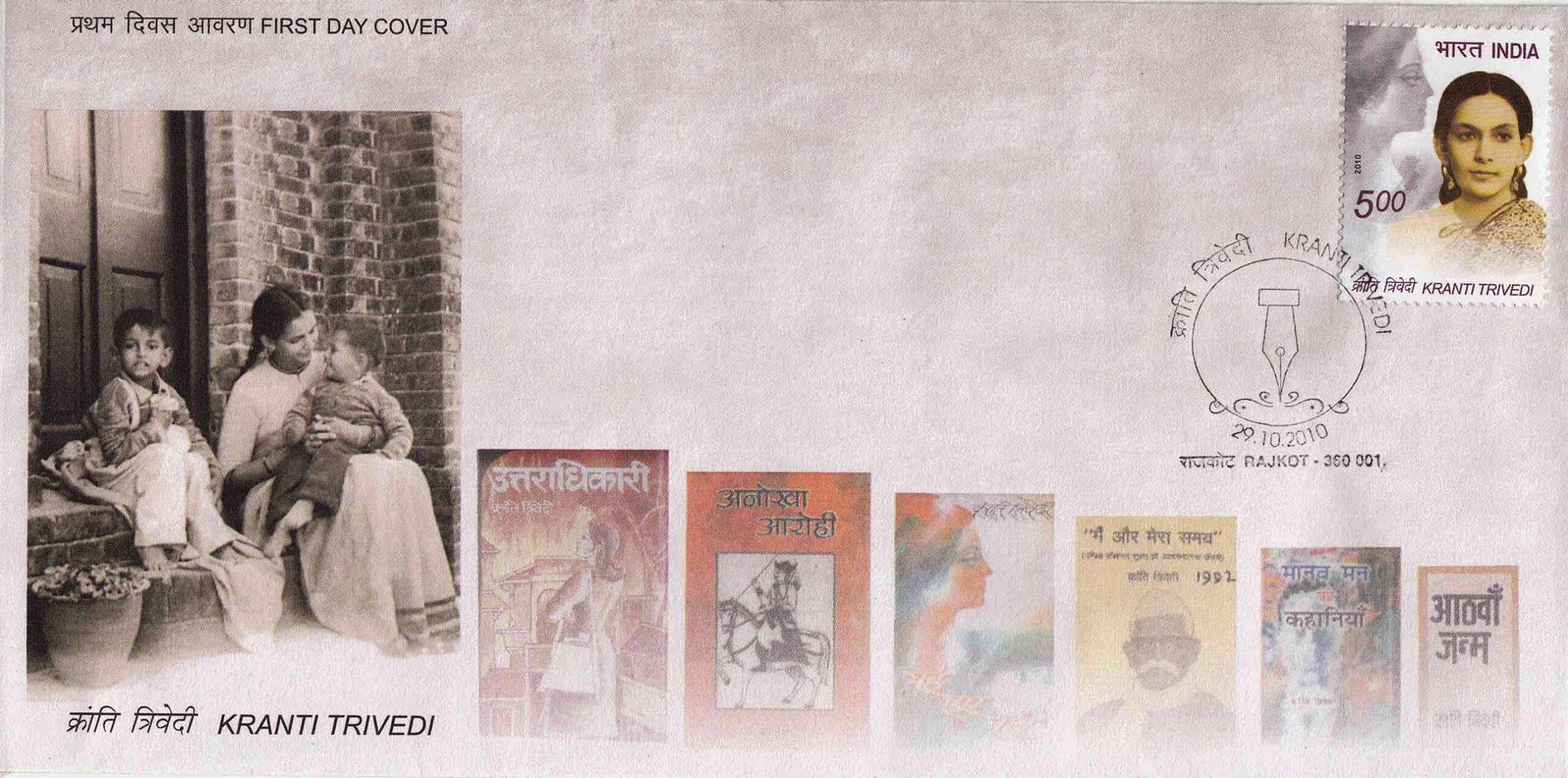
Her powerful social novels include Shagun Pakshi, Krishna Paksha, Amrit Ghat, Mohbhang, Bund–Bund Amrit, and Aathvan Janma, in which she raised women’s issues with deep empathy and understanding.
Over her lifetime, she authored nearly 40 books, with several manuscripts published posthumously, including the unpublished work “Lata aur Vriksha.”
Her story “Phoolon Ka Sapna” addresses caste discrimination, while the novel “Ashesh” highlights the role of zamindars in the freedom movement. In “Agam,” she explores the clash between Eastern and Western cultures, emphasizing harmony between them. The novel “Main Aur Mera Samay” is a biographical account of her father, Pt. Ravi Shankar Shukla, narrated in the first person.
She also wrote poetry, including “Atishikshan,” a collection infused with spontaneous emotions. For children, she penned popular stories such as “Patte Ki Nav,” “Mithee Boli,” “Peeli Haveli,” “Kut Kut Chuha,” and “Nanhe Jasoos.” Her works, while simple and engaging, consistently conveyed meaningful messages for humanity.
Awards and Recognition
Smt. Kranti Trivedi received numerous honours for her contribution to Hindi literature. She was awarded the Hindi Sevi Samman (2002) and the “Pandit Deen Dayal Upadhyaya Puruskar” (2002) by the Uttar Pradesh Hindi Sansthan. She was also honoured with the Rashtriya Hindi Sewa Millennium Samman by UNESCO and the Nari Lekhan Puraskar by the Rashtra Bhasha Prachar Samiti of the Government of Madhya Pradesh.
Legacy and Commemoration
Kranti Trivedi passed away on 26 October 2009, leaving behind a rich literary legacy rooted in compassion, cultural awareness, and advocacy for women’s empowerment.
In recognition of her valuable contribution to Hindi literature and society, India Post issued a commemorative postage stamp in her honour.
First Day Cover
Leave a Comment
You must be logged in to post a comment.