Kurinji Flowers
Technical Data
| Date of Issue | May 29, 2006 |
|---|---|
| Denomination | Rs. 15 |
| Quantity | 100,000 |
| Perforation | line13¼ x 14 |
| Printer | India Security Press, Nasik |
| Printing Process | Photogravure |
| Watermark | No Watermark |
| Colors | Multicolor |
| Credit (Designed By) | Sh. Brahm Prakash |
| Catalog Codes |
Michel IN BL35 Stamp Number IN 2154a Stanley Gibbons IN MS2330 WADP Numbering System - WNS IN023MS.2006 |
| Themes | Flowers | Plants (Flora) |
A Rare Bloom of the Western Ghats
The enchanting Neelakurinji is one of the most remarkable flowering plants found in India. Growing in the wild hilly regions of the Western Ghats, particularly in the Sahyadri ranges and the Kodaikanal Hills at elevations of about 1600 metres, this rare plant is known for its spectacular blooming cycle. Some species of the Kurinji flower bloom only once every twelve years, making the event a rare and celebrated natural phenomenon.
Botanical Characteristics
The Kurinji is a gregarious shrub belonging to the Acanthaceae family and the Strobilanthes group. The most well-known species is the Neelakurinji or “Blue Flower,” scientifically known as Strobilanthes kunthiana. The plant typically grows on dry slopes and in rocky gorges on the eastern sides of hills where dense forests are sparse.
This tall, bushy shrub can grow up to eight to ten feet in height. During its blooming period, it becomes covered with clusters of bright blue, bell-shaped flowers, transforming the surrounding hillsides into a stunning blue landscape. The plants follow a periodic blooming cycle of eight to twelve years, after which they wither and die.
The last major blooming was recorded in 1994. Although flowering began again in December 2005, the Kurinji reached its magnificent full bloom in 2006, drawing tourists and nature lovers from around the world.
Cultural and Historical Significance
The Kurinji flower holds a special place in the culture and traditions of southern India. Around Munnar, local tribal communities such as the Muduvas traditionally calculate their age based on the flowering cycles of Kurinji.
The plant has also been referenced in ancient Tamil literature, including Sangam classics such as Akananuru, Purananuru, and Madurai Kanchi dating from the 3rd–5th centuries AD. In these works, it is called “Karungal Kurinji,” meaning “the black-stemmed flower.”
According to legend, the deity Murugan wore a garland of Kurinji flowers when he married Valli. Sangam poets also praised rulers whose lands were abundant with Kurinji honey, which was believed to possess special qualities when collected during the blooming season.
When Kurinji flowers bloom across the hills, the landscape appears covered with a bluish haze. These mountains are also the origin of important rivers such as the Vaigai River and the Amaravathi River.
Conservation Concerns
Over the past century, development pressures have led to deforestation and the shrinking of natural habitats in the Western Ghats. Large areas have been cleared for plantations and timber extraction, while the introduction of alien plant species has disturbed the delicate ecosystem.
As a result, the natural habitat of the Kurinji plant has been reduced to remote forests, hill slopes, and gorges. Recognizing the ecological importance of this unique species, several “Save Kurinji” campaigns have been launched in the states of Tamil Nadu and Kerala.
The Kurinji flower has now become a symbol of the rich biodiversity of the Western Ghats, a region recognized as one of the world’s major biodiversity hotspots.
Philatelic Tribute
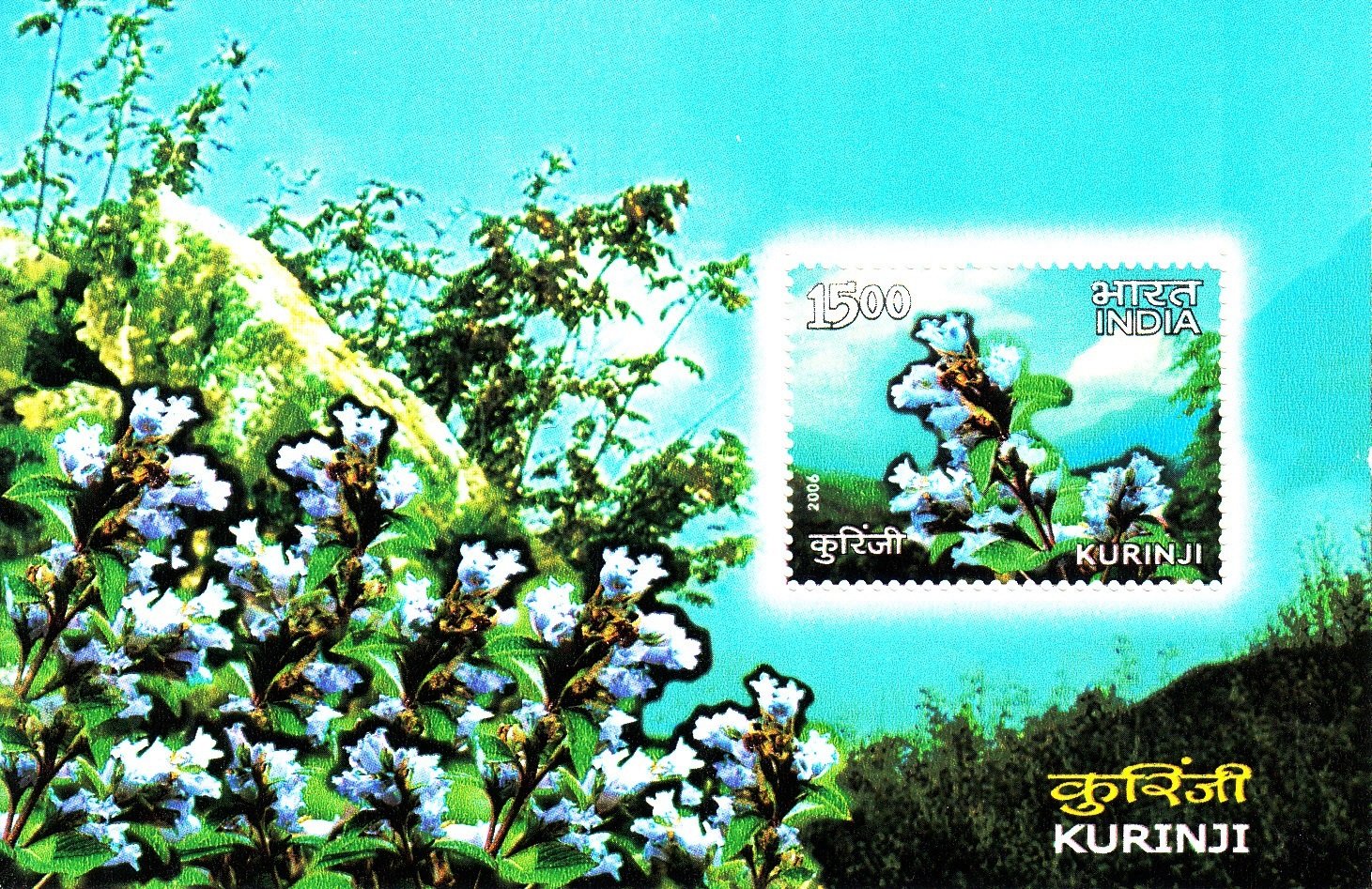
To highlight the ecological and cultural significance of this rare flowering plant and to promote conservation efforts, the Department of Posts issued a Miniature Sheet dedicated to the “Save Kurinji” campaign, celebrating the beauty and importance of the legendary Kurinji flower.
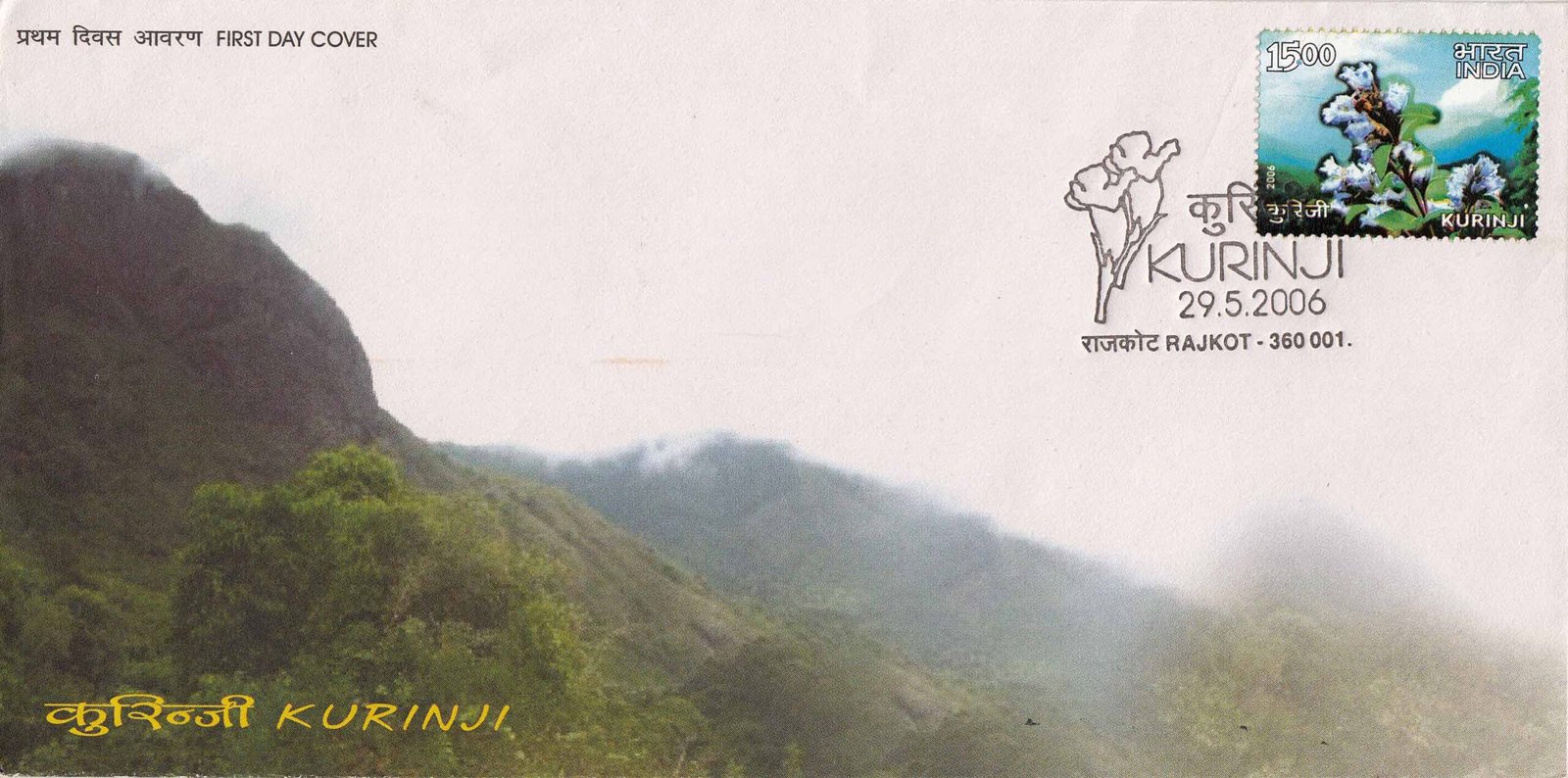
First Day Cover