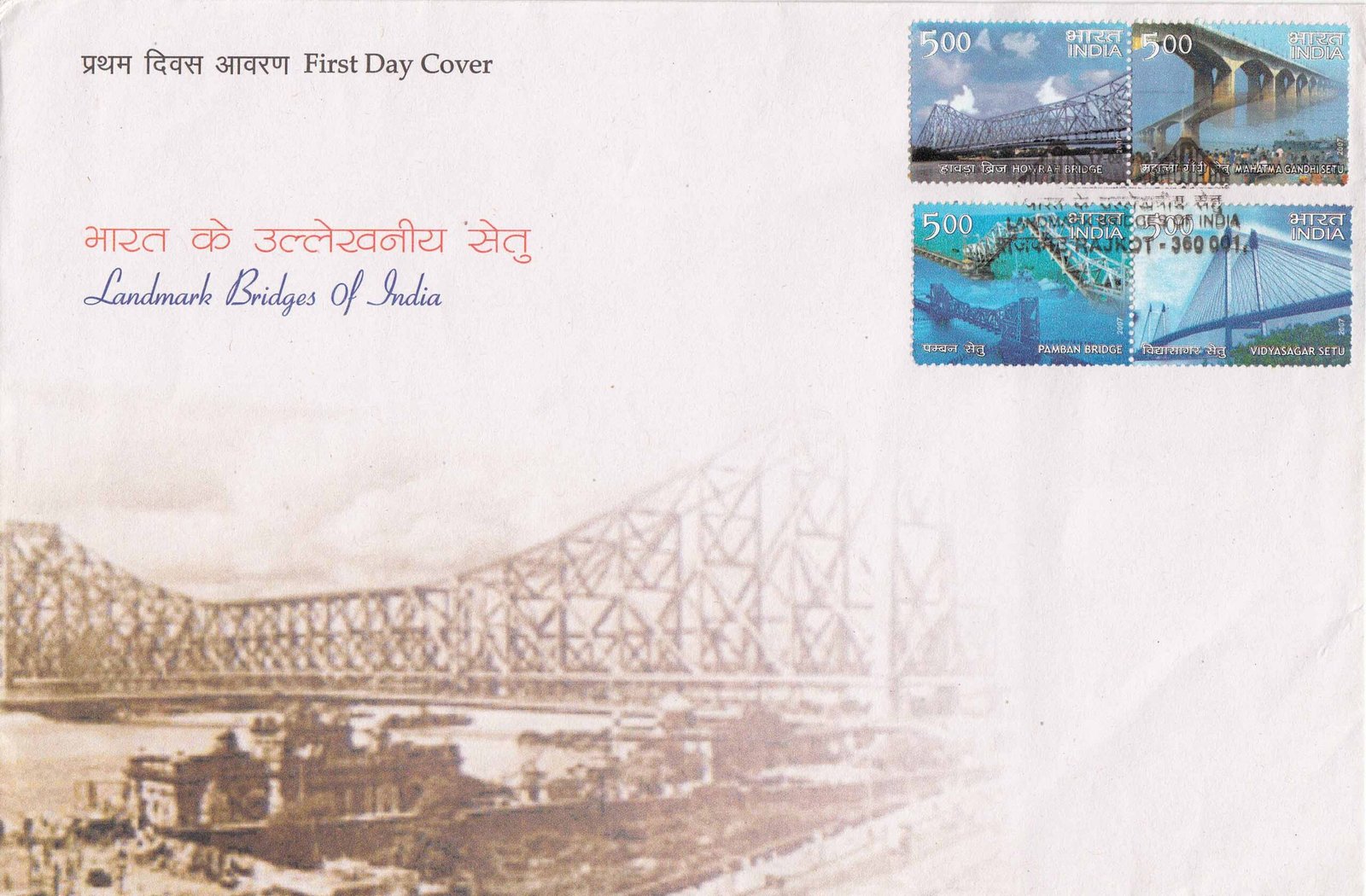
Landmark Bridges of India

Technical Data
| Date of Issue | May 2, 2007 |
|---|---|
| Denomination | Rs. 20 |
| Quantity | 400,000 |
| Perforation | 13 |
| Printer | India Security Press, Nasik |
| Printing Process | Photogravure |
| Watermark | No Watermark |
| Colors | Multicolor |
| Credit (Designed By) | Sh. Brahm Prakash |
| Catalog Codes |
Michel IN BL45 Stamp Number IN 2204e Stanley Gibbons IN MS2419 WADP Numbering System - WNS IN038MS.2007 |
| Themes | Bridges |
Stamps in this Miniature Sheet
Celebrating Engineering Marvels Through Commemorative Stamps
From the earliest days of civilization, humans relied on their own strength to travel. Over time, animals were domesticated, machines were invented, and engineering innovations transformed transportation. Among the most significant of these innovations is the bridge—a structure that connects lands, people, and cultures.
Initially inspired by natural formations like fallen trees and rocks, bridges evolved into sophisticated man-made structures designed for pedestrians, horse riders, and eventually mechanized transport. Today, bridges are not just part of transportation infrastructure; many stand as iconic landmarks that reflect architectural brilliance and engineering excellence.
To honor these monumental achievements, the Department of Posts issued a set of four commemorative postage stamps on “Landmark Bridges in India.” These stamps celebrate four iconic bridges that symbolize progress, connectivity, and innovation.
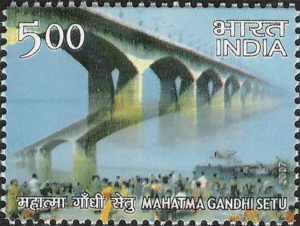
1. Mahatma Gandhi Setu – The Ganga Bridge
Popularly known as the Ganga Bridge, Mahatma Gandhi Setu is located in Patna, Bihar. The bridge stands at the historic site where Mahatma Gandhi crossed the river en route to Champaran, marking the beginning of a significant chapter in India’s freedom struggle.
Opened to traffic on 2nd March 1982 by then Prime Minister Indira Gandhi, it was once recognized as the longest single river bridge in the world.
Key Features:
- Total length: 5,565 meters
- 45 intermediate spans of 121.065 meters each
- Two end spans of 63.53 meters
- Built using pre-stressed cantilever construction
The completion of Mahatma Gandhi Setu marked a major milestone in Bihar’s economic development, significantly improving connectivity across the state.
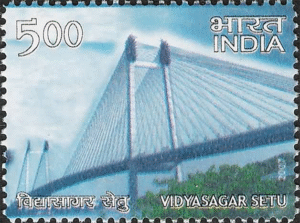
2. Vidyasagar Setu – The Second Hooghly Bridge
Spanning the Hooghly River, Vidyasagar Setu is a modern cable-stayed bridge connecting Kolkata and Howrah. Known locally as the Second Hooghly Bridge, it enhances the grandeur of Kolkata’s skyline while serving as a vital transportation link.
In addition to the iconic Howrah Bridge, this bridge plays a crucial role in easing traffic between the twin cities.
Key Features:
- Length: 823 meters
- Width: 35 meters
- Steel pylons rising 120 meters
- Navigational clearance of up to 34.38 meters
- Connected by flyovers and ramps for seamless traffic flow
Constructed at a cost of Rs. 380 crores, it was inaugurated on 10th October 1992 and is regarded as one of India’s longest cable-stayed bridges.
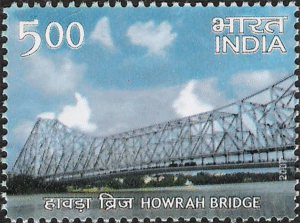
3. Howrah Bridge (Rabindra Setu) – Gateway of Kolkata
The Howrah Bridge, officially renamed Rabindra Setu in 1965, remains one of Kolkata’s most recognized landmarks. Often called the “Gateway of Kolkata,” it shares a deep historical and cultural connection with the city’s growth.
Designed as a suspension-type balanced cantilever bridge, it was constructed without any intermediate pier. The project was conceptualized after World War I under the leadership of noted engineer Sir R.N. Mukherjee. The bridge opened to traffic in February 1943.
Engineering Highlights:
- Central span: 1500 feet
- Anchor arms: 325 feet
- Cantilever arms: 468 feet
- Suspended span: 564 feet
- Tower height: 280 feet
- Deck width: 71 feet with 15-foot-wide footpaths on either side
Built using 26,500 tonnes of steel—much of it sourced indigenously—the Howrah Bridge remains a technological marvel and a proud symbol of Indian engineering.
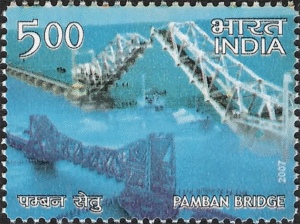
4. Pamban Bridge (Pamban Viaduct) – India’s Historic Sea Bridge
Opened in 1914, the Pamban Bridge connects mainland India to Rameswaram Island across the Palk Strait. It forms part of the Southern Railway network and was originally constructed to facilitate rail connectivity between India and Sri Lanka (then Ceylon).
Key Features:
- Total length: 2.06 km
- 146 spans of 40 feet each
- Includes a 213-foot Scherzer lift span (bascule/drawbridge)
- Built over a submerged reef 100–300 feet wide
For decades, ferry services linked Dhanushkodi and Talaimannar in Sri Lanka, making it an important international rail-cum-ferry route. The Pamban Bridge continues to stand as both an engineering achievement and a scenic attraction.
Miniature Sheet on Landmark Bridges
The Department of Posts issued a Miniature Sheet of four commemorative postage stamps featuring:
- Mahatma Gandhi Setu – Pre-stressed cantilever construction
- Vidyasagar Setu – Longest cable-stayed bridge
- Howrah Bridge (Rabindra Setu) – Suspension-type balanced cantilever bridge
- Pamban Viaduct – Bascule (drawbridge) sea bridge
These stamps beautifully capture India’s engineering heritage and pay tribute to bridges that connect regions, economies, and communities.
First Day Cover