
Lotus Plant Motif (Ganga Devi)
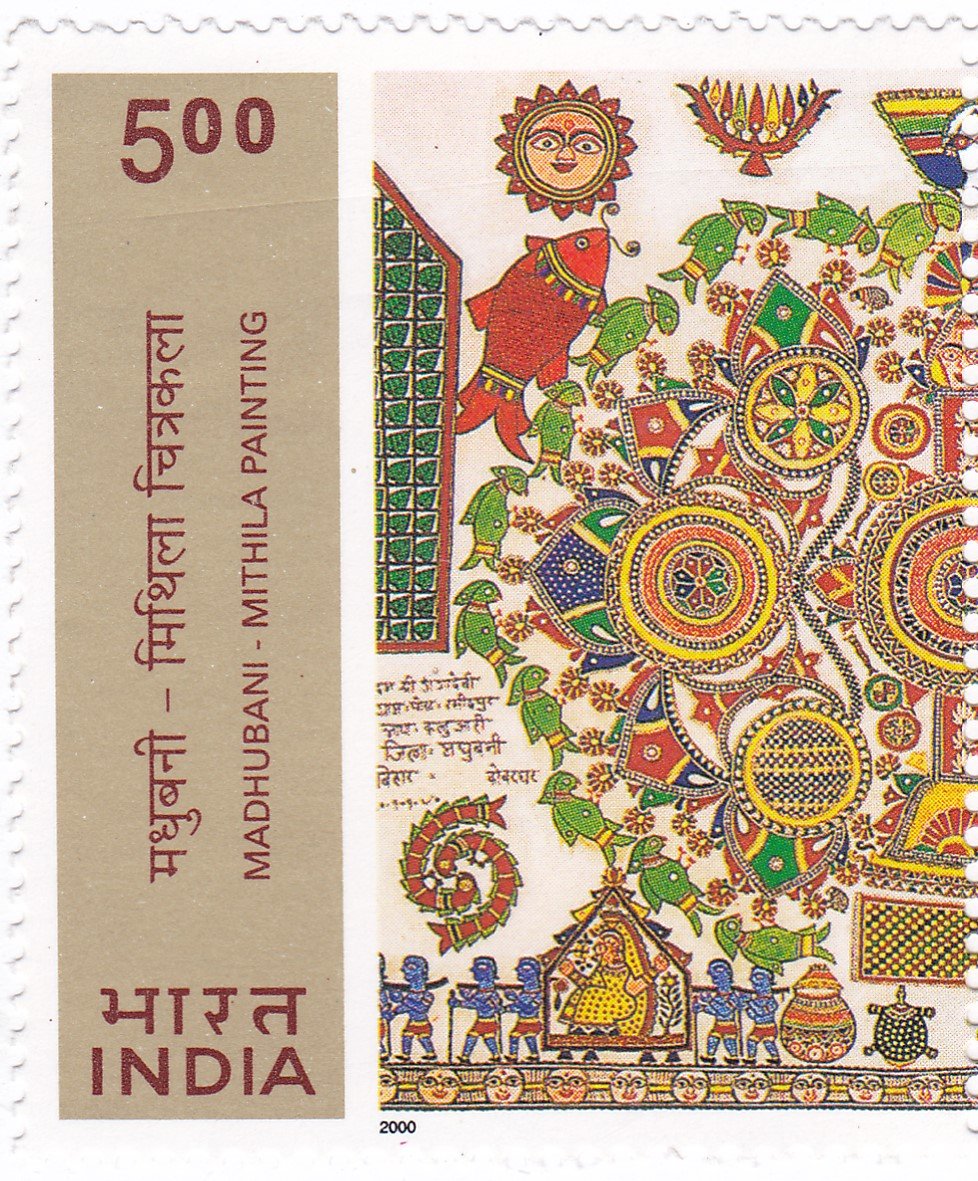
Technical Data
| Stamp Set | Madhubani Mithila Paintings |
|---|---|
| Date of Issue | October 15, 2000 |
| Denomination | Rs. 5 |
| Quantity | 3,000,000 |
| Perforation | comb 13½ |
| Printer | Calcutta Security Printers Ltd |
| Watermark | No Watermark |
| Colors | Multicolor |
| Catalog Codes |
Michel IN 1789 Stamp Number IN 1853a Yvert et Tellier IN 1555 Stanley Gibbons IN 1958 |
| Themes | Art | Paintings |
A Symbol of Fertility in Madhubani Art
The “Lotus Plant Motif” by Ganga Devi is a significant element of Madhubani Painting, originating from the culturally rich region of Mithila. This motif is widely recognized for its deep symbolic meaning and its central role in traditional ritual paintings.
Cultural and Ritual Significance
In Mithila tradition, the lotus plant motif is an essential feature of the Kohbar Ghar (nuptial chamber) murals. It symbolizes:
- Fertility and new beginnings
- Growth and prosperity
- Harmony in marital life
These motifs are traditionally painted during weddings to bless the couple and ensure a prosperous future.
Symbolism of the Lotus
The lotus is a powerful symbol in Indian culture, representing purity, creation, and spiritual awakening. In Madhubani Painting, it is often depicted with stylized flowers and intricate patterns that enhance its symbolic value.
The motif reflects the close relationship between nature, life, and human emotions in traditional art.
Artistic Features and Style
The Lotus Plant Motif by Ganga Devi showcases the distinctive characteristics of Madhubani Painting:
- Bold outlines with vibrant natural colors
- Symmetrical and stylized floral patterns
- Detailed depiction of leaves, stems, and blossoms
- Dense filling of space with decorative elements
These features create a visually rich and harmonious composition.
Role in Madhubani Art Tradition
The lotus motif plays a central role in the evolution of Madhubani painting. It reflects:
- The ritual origins of the art form
- The importance of symbolism in storytelling
- The creativity of women artists in Mithila
Through such motifs, artists preserve cultural values and traditions across generations.
Commemorative Postage Stamp Featuring Lotus Motif
The Lotus Plant Motif by Ganga Devi is featured in a commemorative postage stamp series issued by India Post celebrating Madhubani art.
Stamp Highlights:
- Depicts the central lotus motif from a Kohbar mural
- Symbolizes fertility and growth
- Showcases intricate detailing and traditional techniques
- Honors the artistic legacy of Ganga Devi
This stamp promotes awareness of India’s rich folk art heritage and its symbolic depth.
Cultural Heritage and Artistic Legacy
The lotus motif is not just decorative—it represents the essence of life and continuity. Its depiction in Madhubani art highlights:
- The integration of art with rituals
- The preservation of traditional knowledge
- The enduring relevance of folk art in modern times
Conclusion
The Lotus Plant Motif by Ganga Devi is a timeless symbol of fertility, prosperity, and cultural richness. Through its intricate design and deep meaning, it stands as a powerful representation of Madhubani art and India’s artistic heritage.
Its inclusion in a commemorative stamp ensures that this traditional motif continues to inspire and remain relevant for future generations.