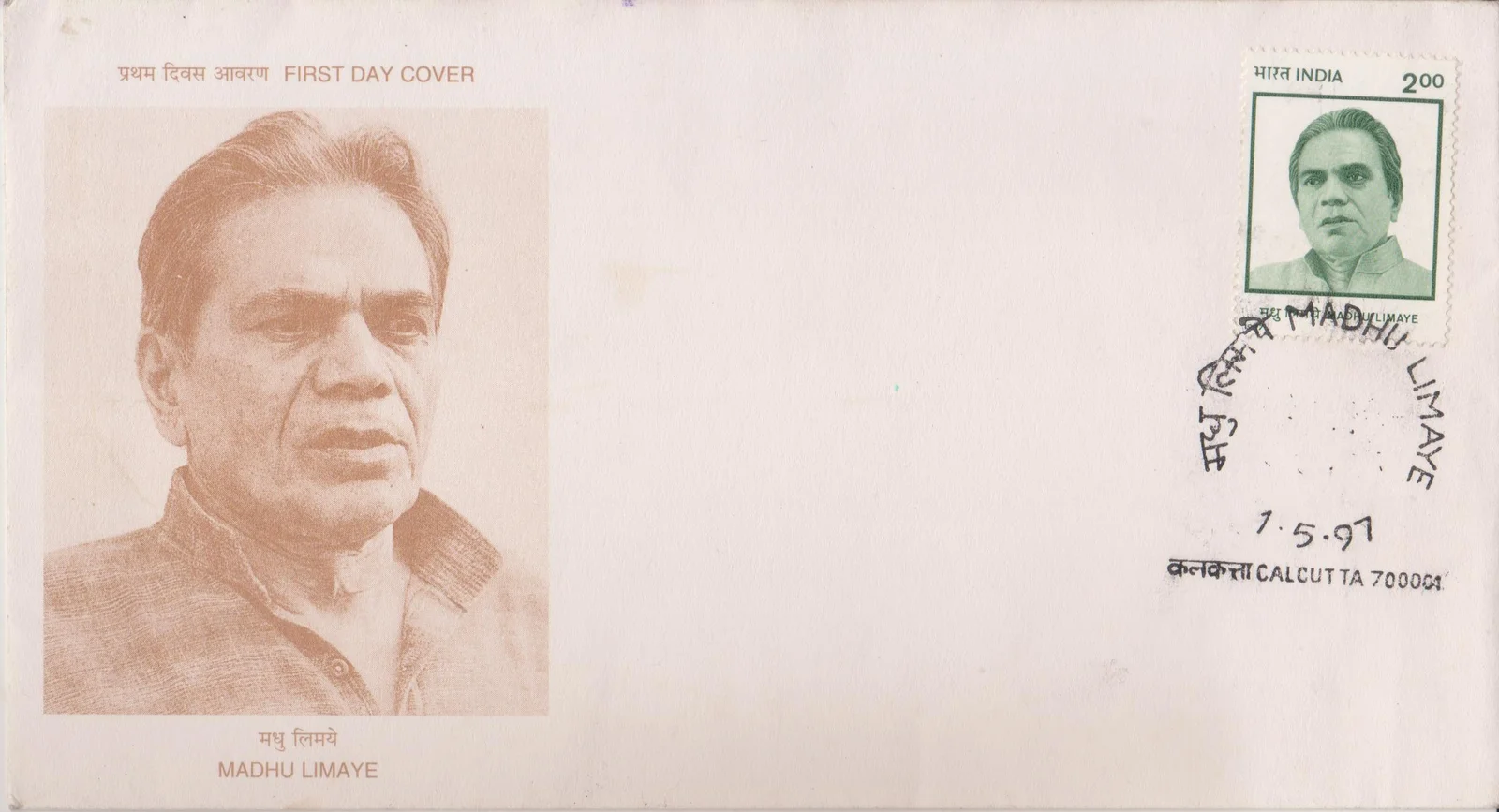
Madhu Limaye (1922-1995)
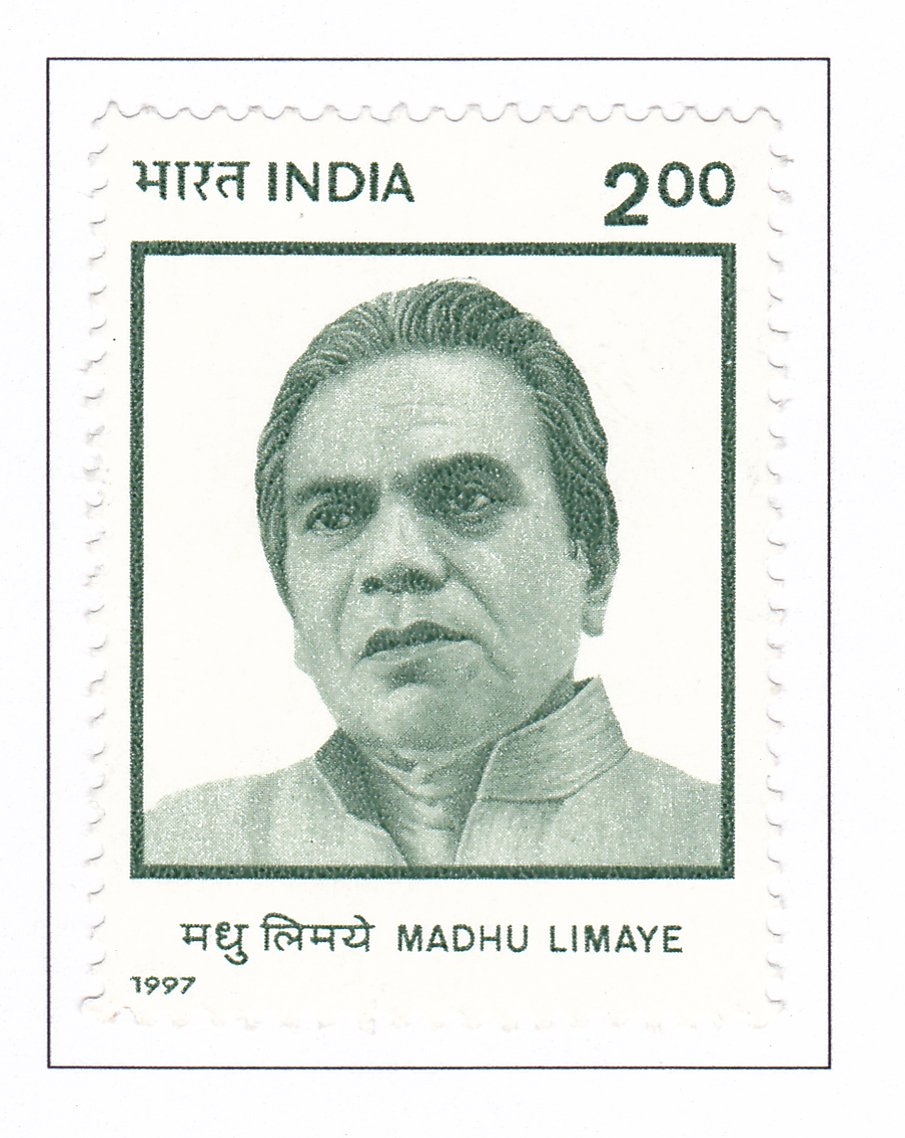
Technical Data
| Date of Issue | May 1, 1997 |
|---|---|
| Denomination | Rs. 2 |
| Quantity | 400,000 |
| Perforation | comb 13 x 13½ |
| Printer | Security Printing Press, Nashik |
| Printing Process | Photogravure |
| Watermark | No Watermark |
| Colors | Deep dull green |
| Credit (Designed By) | |
| Catalog Codes |
Michel IN 1548 Stamp Number IN 1610 Yvert et Tellier IN 1319 Stanley Gibbons IN 1712 |
| Themes | Anniversaries and Jubilees | Famous people | Literary People (Poets and Writers) | Men |
Early Life and Education
Madhu Limaye was born on 1 May 1922 in Pune. While studying at Fergusson College, he joined the Congress Socialist Party (CSP) and became Secretary of the Pune CSP at the young age of seventeen. He left college to dedicate himself fully to India’s freedom struggle and the socialist movement.
Participation in Freedom Struggle
Freedom and socialism became the guiding ideals of his life. He organized students and workers at Dhulia, and in 1940 he was arrested and sentenced to one year of rigorous imprisonment for delivering anti-war speeches.
During the Quit India Movement of 1942, he worked underground, travelling widely to organize youth and mobilize the masses. For his active role in the movement, he was arrested and imprisoned in Worli, Yeravada, and Visapur jails until the end of the Second World War.
Socialist Movement and International Role
In 1947, the Socialist Party sent Madhu Limaye to the International Socialist Conference at Antwerp. He later toured Europe and wrote about the political and social conditions there.
After returning to India, he was entrusted with drafting the constitution of the Socialist Party and was made Convenor of its foreign department. Around the same time, he was appointed Joint Secretary of the Socialist Party.
In 1953, he visited Rangoon as General Secretary of the Asian Socialist Bureau.
Role in Goa Liberation Movement
In 1955, Madhu Limaye actively participated in the Goa Liberation Movement. During this struggle, he faced severe hardships at the hands of Portuguese authorities. A Portuguese Military Tribunal sentenced him to twelve years’ imprisonment, but in the Gandhian spirit of satyagraha, he refused to offer any defence during the trial.
After his release, he was elected Chairman of the Socialist Party.
Trade Union and Parliamentary Career
Madhu Limaye also worked for labour rights and helped organize unions among transport and municipal workers.
In 1964, he was elected to the Lok Sabha from Monghyr, Bihar. He was elected four times to the Lok Sabha from Bihar and later became leader of the socialist group in Parliament.
His deep understanding of parliamentary rules and procedures made him one of India’s most respected parliamentarians. He used Parliament as a platform to fight for the poor and downtrodden.
Simplicity and Scholarly Pursuits
Madhu Limaye lived a life of simplicity and selflessness. For him, service to the nation was the highest duty.
After 1980, due to heart ailment and long-standing asthma, he withdrew from active politics and devoted himself to writing and scholarship. Though away from daily politics, he continued to influence public life through his books and ideas.
Death and Legacy
Madhu Limaye passed away on 8 January 1995. He is remembered as a fearless freedom fighter, principled socialist, distinguished parliamentarian, and thoughtful writer.
Commemorative Stamp
The Department of Posts issued a commemorative stamp in memory of his valuable contribution to the nation.
First Day Cover