Madhubala
Technical Data
| Date of Issue | March 18, 2008 |
|---|---|
| Denomination | Rs. 5 |
| Quantity | 400,000 |
| Perforation | 13 |
| Printer | India Security Press, Nasik |
| Printing Process | Photo Gravure |
| Watermark | No Watermark |
| Colors | Multicolor |
| Credit (Designed By) | Sh. Sankha Samanta |
| Catalog Codes |
Michel IN 2265 Stamp Number IN 2235 Stanley Gibbons IN 2468 WADP Numbering System - WNS IN009.2008 |
| Themes | Actors | Anniversaries and Jubilees | Famous people | Movies | Women |
An Enduring Legend of Hindi Cinema
Often referred to as the “Venus of the Indian screen,” Madhubala remains one of the most iconic actresses in the history of Hindi cinema. Alongside her contemporaries like Nargis and Nutan, she achieved a cult status that has endured for decades. Her evocative beauty combined with extraordinary talent gave her a magnetic appeal that continues to captivate audiences. She was even voted the most popular actress of all time in Hindi cinema, a testament to her timeless charm and artistry.
Early Life and Entry into Films
Born as Mumtaz Begum Jehan Dehlavi on February 14, 1933, in Delhi, Madhubala entered the film world at the age of nine as a child artist. Her immense potential was recognized by the celebrated actress Devika Rani, who rechristened her as Madhubala.
Her breakthrough came with Neel Kamal (1947), directed by Kidar Sharma, but it was her mesmerizing performance in Mahal (1949), directed by Kamal Amrohi, that established her as a major star. The haunting song “Aayega Aane Wala,” sung by Lata Mangeshkar, became a defining moment in Hindi cinema and immortalized Madhubala’s ethereal screen presence.
Versatility and Cinematic Brilliance
The 1950s marked the golden phase of her career. She delivered diverse performances — from romantic dramas like Tarana (1951) opposite Dilip Kumar, to spirited roles in films like Badal (1951).
Her impeccable comic timing shone in Mr. & Mrs. ’55, directed by Guru Dutt, showcasing her remarkable range. She was equally enchanting in Chalti Ka Naam Gaadi (1958), opposite Kishore Kumar, whom she later married in 1960. The song “Ek Ladki Bheegi Bhagi Si” from the film remains an enduring symbol of her charm and spontaneity.
Her versatility was further evident in films like Howrah Bridge with Ashok Kumar and Kaala Pani with Dev Anand, where she portrayed vastly different characters with equal conviction.
The Zenith – Mughal-e-Azam
The year 1960 marked a watershed moment in Hindi cinema with the release of Mughal-e-Azam, directed by K. Asif. In the role of Anarkali, Madhubala delivered what is widely regarded as the finest performance of her career.
Despite battling a serious heart ailment, she portrayed the tragic courtesan with unmatched grace and emotional depth. The iconic song “Pyar Kiya Toh Darna Kya” immortalized her performance and set new standards for historical roles in Indian cinema. Her portrayal remains a benchmark for cinematic excellence.
International Recognition and Untimely End
Madhubala’s talent drew attention beyond India. Celebrated Hollywood director Frank Capra reportedly expressed interest in working with her. In August 1952, the American magazine Theatre Arts featured her prominently in an article titled “The Biggest Star in the World – And she’s not in Beverly Hills.”
However, her promising career was tragically cut short. Suffering from a congenital heart condition, she passed away on February 23, 1969, at the age of thirty-six. Yet, her mystique and artistic brilliance have ensured her immortality in the hearts of millions.
Philatelic Tribute
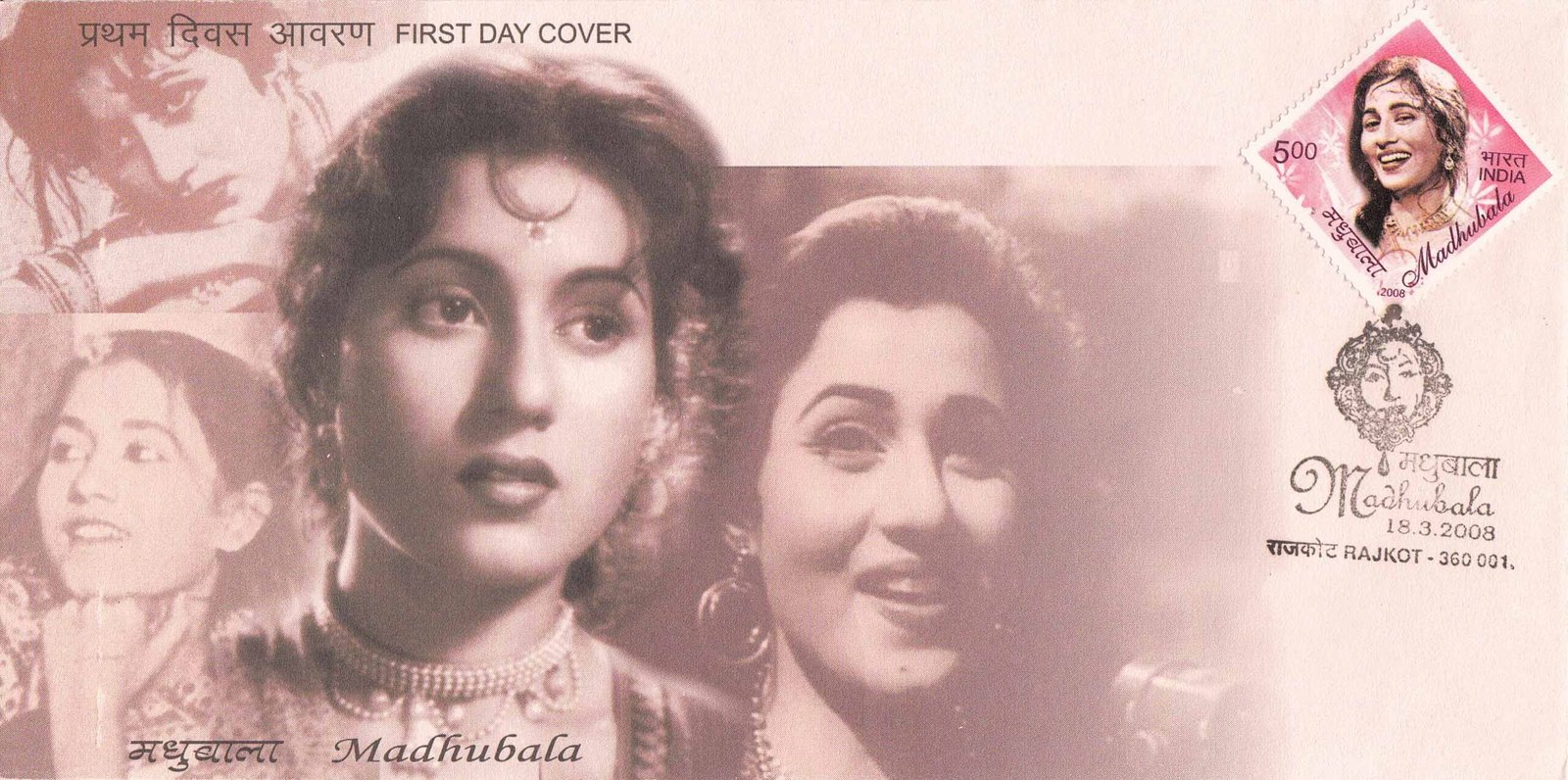
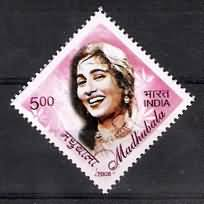
In recognition of her immense contribution to Indian cinema, the Department of Posts issued a commemorative postage stamp honouring Madhubala — one of the most enduring legends of Hindi film history.
The stamp celebrates not only her timeless beauty but also her prodigious talent, versatility, and the unforgettable roles that have secured her a permanent place in the golden annals of Indian cinema.
First Day Cover