
Mahatma Gandhi
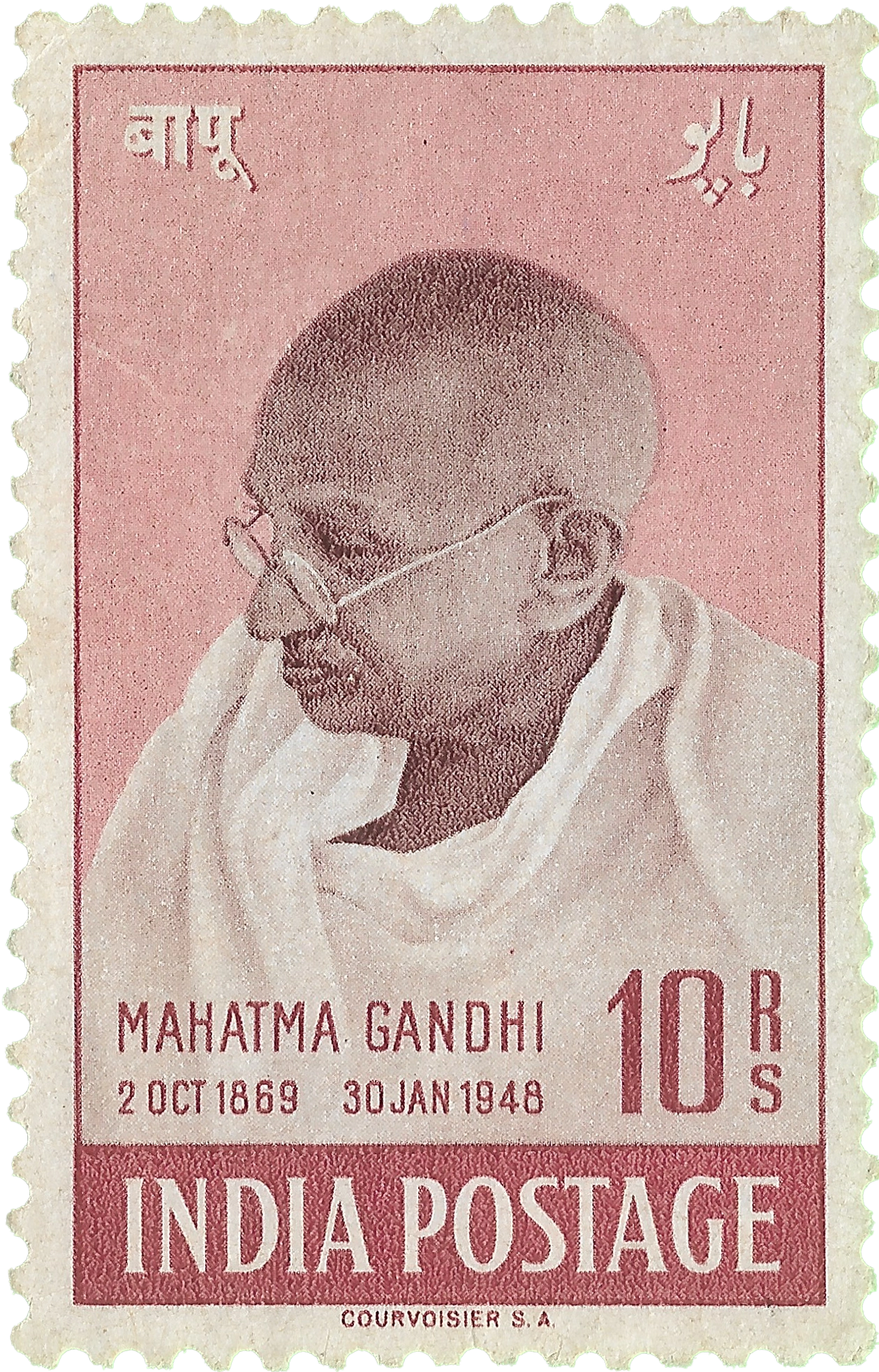
Technical Data
| Stamp Set | Mahatma Gandhi Memorial |
|---|---|
| Date of Issue | August 15, 1948 |
| Denomination | INR 10 |
| Quantity | 25,000,000 |
| Perforation | comb 11¾ |
| Printer | courvoisier (switzerland) |
| Watermark | No Watermark |
| Colors | Lake | Purple brown |
| Catalog Codes |
Michel IN 190 Stamp Number IN 206 Yvert et Tellier IN 6 Stanley Gibbons IN 308 |
| Themes | Anniversaries and Jubilees | Famous people | Freedom Fighters | Men | Optical Instruments | Revolutionaries | Teachers |
Life, Ideals, and Mourning Issue Commemorative Stamp
Mahatma Gandhi, born as Mohandas Karamchand Gandhi, is regarded as one of the greatest leaders in world history. His greatness lay not only in his public achievements but also in the simplicity, selflessness, and moral strength of his life. His teachings of truth and non-violence continue to inspire generations across the globe.
Satyagraha and the Freedom Struggle
During his early years in South Africa, Gandhi developed the principle of Satyagraha, a method of non-violent resistance against injustice. This philosophy became the foundation of his leadership in India’s struggle for independence from British rule.
After returning to India, he mobilized millions by promoting truth (satya) and non-violence (ahimsa). Through years of sacrifice and determination, he guided the nation towards achieving independence.
Vision of Social and Economic Equality
For Mahatma Gandhi, freedom was not limited to political independence. He worked tirelessly for the upliftment of the oppressed, especially the “Harijans” (Dalits), striving to restore their dignity and social equality.
He also emphasized economic self-reliance and rural development, symbolized by the charkha (spinning wheel). His vision promoted self-sufficiency and empowerment at the grassroots level.
Promoting Communal Harmony
In the later years of his life, Gandhi devoted himself to fostering unity between Hindus and Muslims. He believed that all religions should be respected and viewed as forces that unite people rather than divide them. His message of tolerance, peace, and mutual respect remains deeply relevant today.
Life, Legacy, and Global Influence
Gandhi was born in Porbandar in 1869. Though rooted in India, his ideals transcended national boundaries, influencing people worldwide. In a time marked by violence and unrest, he stood as a symbol of ethical living and peaceful resistance.
On January 30, 1948, in New Delhi, Gandhi was assassinated, bringing an end to his physical life. However, his legacy remains immortal, continuing to inspire struggles for truth, justice, and freedom across the world.
Mahatma Gandhi Mourning Issue Stamp
To honor his enduring legacy, commemorative postage stamp known as the “Mahatma Gandhi Mourning Issue” were released by India Post. These stamps pay tribute to his life, ideals, and unparalleled contribution to humanity.
Conclusion
Mahatma Gandhi’s life is a timeless example of truth, non-violence, and moral courage. The Mourning Issue stamp stands as a tribute to a leader whose influence extends far beyond India, continuing to guide humanity toward peace and justice.