
Experiments in Education – Nai Talim

Technical Data
| Date of Issue | October 2, 2020 |
|---|---|
| Denomination | Rs. 25 |
| Quantity | 500,000 |
| Perforation | 14 |
| Printer | Security Printing Press, Hyderabad |
| Printing Process | Wet Offset |
| Watermark | No Watermark |
| Colors | Black | Carmine |
| Credit (Designed By) | Sh. Sankha Samanta |
| Catalog Codes |
Michel IN 3699 Stamp Number IN 3239 Yvert et Tellier IN 3377 Stanley Gibbons IN 3767 Phila-India IN 3734 |
| Themes | Anniversaries and Jubilees | Education | Famous people | Independency Activists | Men |
Gandhi’s Vision of Education
Mahatma Gandhi believed that education was fundamental to building a peaceful, just, and self-reliant society. He viewed education not merely as academic instruction but as a means to develop a wholesome human personality, capable of resisting violence, injustice, and oppression, and living in harmony with others.
Concept of Nai Talim (Basic Education)
Gandhi’s philosophy of Nai Talim, or Basic Education, emphasized learning through productive work and vocational training. He believed that education should draw out the best in the body, mind, and spirit of the child. Nai Talim sought to integrate intellectual development with physical labour and moral values, making education both meaningful and practical.
Education Linked to Self-Reliance
At the core of Nai Talim was the idea of self-reliance. Gandhi advocated that education should equip learners with practical skills that could support their livelihood while contributing to the socio-economic development of society. By linking education with crafts and local industries, Nai Talim aimed to strengthen village economies and promote dignity of labour.
Social and Moral Development
Nai Talim placed strong emphasis on ethical values, social responsibility, and community living. Gandhi believed that true education fosters cooperation, compassion, and mutual respect, enabling individuals to contribute positively to society. The approach encouraged learners to develop a sense of service, responsibility, and harmony with their social and natural environment.
Relevance of Nai Talim in Contemporary Times
Gandhi’s experiments in education remain highly relevant today. In an era of increasing inequality and unemployment, Nai Talim offers a model that combines skill development, moral education, and social awareness. Its focus on experiential learning and sustainability aligns closely with modern educational goals.
Commemorative Postage Stamp
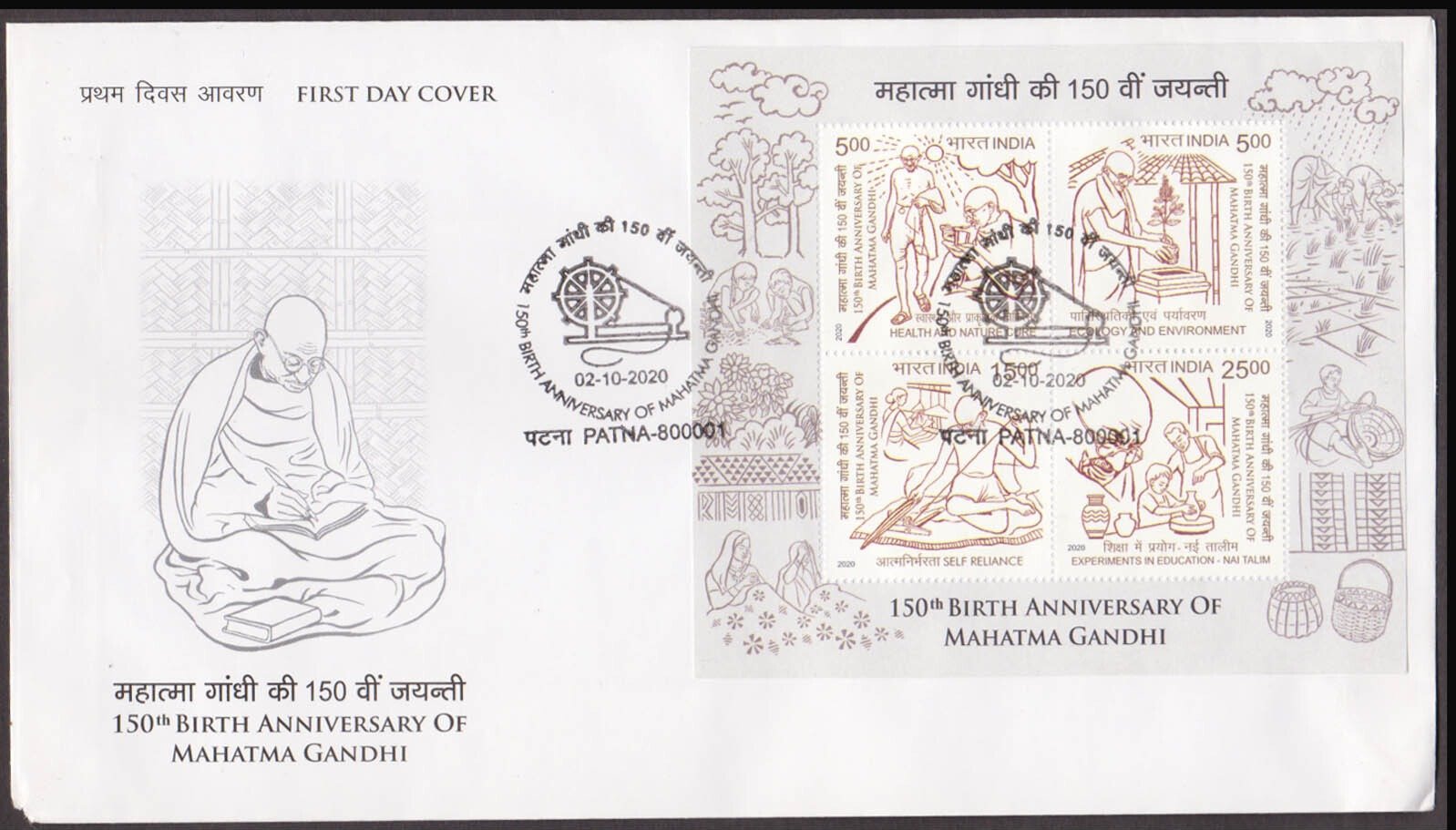
The ideals of Experiments in Education – Nai Talim are reflected in the Commemorative Postage Stamp issued by the Department of Posts on the 150th Birth Anniversary of Mahatma Gandhi. The stamp honours Gandhi’s transformative vision of education and highlights the enduring relevance of Nai Talim in shaping responsible, skilled, and compassionate citizens.
First Day Cover
Leave a Comment
You must be logged in to post a comment.