
Mahatma Gandhi – Communal Harmony
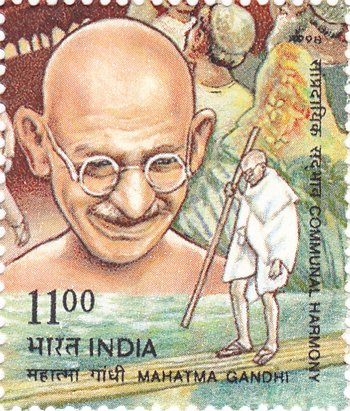
Technical Data
| Stamp Set | Mahatma Gandhi Memorial |
|---|---|
| Date of Issue | January 30, 1998 |
| Denomination | Rs. 11 |
| Quantity | 700,000 |
| Perforation | comb 14 |
| Printer | Security Printing Press, Nashik |
| Watermark | No Watermark |
| Colors | Multicolor |
| Catalog Codes |
Michel IN 1614 Stamp Number IN 1674 Yvert et Tellier IN 1381 Stanley Gibbons IN 1778 |
| Themes | Anniversaries and Jubilees | Famous people | Human Rights | Independency Activists | Lawyers-Advocates | Men | Optical Instruments | Teachers |
Mahatma Gandhi’s Vision of Unity and Peace
Communal Harmony was a central pillar in the philosophy of Mahatma Gandhi. He believed that true freedom and national progress could only be achieved when people of different religions and communities lived together in peace, trust, and mutual respect.
For Gandhi, unity among Hindus, Muslims, and other communities was essential for building a strong and inclusive India.
Gandhi’s Efforts to Promote Communal Harmony
During the turbulent period of India’s independence and partition in 1947, widespread communal violence threatened the unity of the nation. At this critical time, Mahatma Gandhi took it upon himself to restore peace.
He traveled from village to village, often barefoot, appealing to people to abandon hatred and violence. His mission was clear—to remove fear, suspicion, and hostility between communities.
Gandhi emphasized:
“Hindus and Muslims should be free from suspicion and fear of one another.”
A Symbol of Peace During Partition
The role of Mahatma Gandhi in maintaining Communal Harmony during partition was extraordinary. While political negotiations were ongoing, Gandhi focused on healing the social fabric of the nation.
His relentless efforts to calm tensions and promote unity earned him deep respect across communities.
Lord Mountbatten famously described him as the “one-man boundary force”, highlighting his unique role in preventing violence and maintaining peace during one of the most challenging periods in Indian history.
Philosophy Behind Communal Harmony
Mahatma Gandhi’s idea of Communal Harmony was rooted in:
- Non-violence (Ahimsa)
- Truth (Satya)
- Respect for all religions
- Equality and human dignity
He believed that all religions ultimately promote peace, compassion, and unity, and that differences should never lead to conflict.
Lasting Relevance of Gandhi’s Teachings
The principles of Communal Harmony advocated by Mahatma Gandhi remain highly relevant today. In a diverse country like India, maintaining harmony among communities is essential for:
- Social stability
- National integration
- Sustainable development
His teachings continue to inspire efforts to build a peaceful and inclusive society.
Conclusion
Communal Harmony was not just an ideal but a lifelong mission for Mahatma Gandhi. Through his actions during the partition and his unwavering commitment to non-violence, he showed that unity is stronger than division.
His legacy reminds us that lasting peace can only be achieved through understanding, tolerance, and mutual respect among all communities.