Rhizophora mucronata (Asiatic Mangrove)
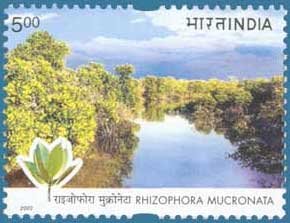
Technical Data
| Date of Issue | October 30, 2002 |
|---|---|
| Denomination | Rs. 5 |
| Quantity | 3,000,000 |
| Perforation | Syncopated 13 x 13¼ |
| Printer | Calcutta Security Printers Ltd |
| Printing Process | Offset Lithography |
| Watermark | No Watermark |
| Colors | Multicolor |
| Credit (Designed By) | Shri Kamleshwar Singh |
| Catalog Codes |
Michel IN 1924 Stamp Number IN 1975 Yvert et Tellier IN 1689 Stanley Gibbons IN 2090 WADP Numbering System - WNS IN035.02 |
| Themes | Conferences | Forests | Landscapes | Leaves | Plants (Flora) | Rivers | Trees | U.N.O. |
A Key Mangrove Species of India
Rhizophora mucronata is one of the most important mangrove species found in tropical coastal regions of India. Known for its strong root system and adaptability, it plays a vital role in maintaining the stability and biodiversity of mangrove ecosystems.
Habitat and Distribution
Rhizophora mucronata thrives in coastal areas such as river deltas, estuaries, and tidal regions. In India, mangroves are found in regions like the Sundarbans, as well as along the deltas of major rivers including the Ganga River, Godavari River, Krishna River, and Cauvery River. It is also present in the Andaman and Nicobar Islands.
These environments provide the saline, waterlogged, and tidal conditions required for its growth.
Unique Adaptations
Rhizophora mucronata is well known for its distinctive adaptations that allow it to survive in harsh coastal environments:
- A strong network of prop roots that provide stability in soft, muddy soil
- High tolerance to salinity and waterlogging
- Ability to withstand tidal currents and strong winds
These features make it one of the most resilient mangrove species.
Ecological Importance
Rhizophora mucronata plays a crucial role in maintaining coastal ecosystems:
- Acts as a nursery ground for fish, crabs, and other marine life
- Provides habitat for birds and wildlife
- Prevents coastal erosion by stabilizing shorelines
Mangrove ecosystems that include this species are essential for biodiversity conservation and the livelihoods of coastal communities.
Role in Climate Change Mitigation
Mangroves such as Rhizophora mucronata are important natural carbon sinks. They help reduce the impact of climate change by absorbing carbon dioxide and protecting coastal areas from storms and rising sea levels.
Its conservation supports global environmental efforts under the United Nations Framework Convention on Climate Change, which promotes sustainable management of ecosystems.
Philatelic Recognition
The importance of mangrove ecosystems has been highlighted by India Post, which issued commemorative postage stamps during the COP-8 held in New Delhi.
Rhizophora mucronata was one of the four mangrove species featured on these stamps, emphasizing the need to protect mangroves from the threats of climate change.
Conclusion
Rhizophora mucronata is a vital component of India’s mangrove ecosystems. Its strong root system, ecological importance, and role in climate protection make it an essential species for environmental sustainability. Preserving this mangrove species is crucial for maintaining coastal balance and supporting future generations.
First Day Cover