
Mary ward-Loreto Institutions
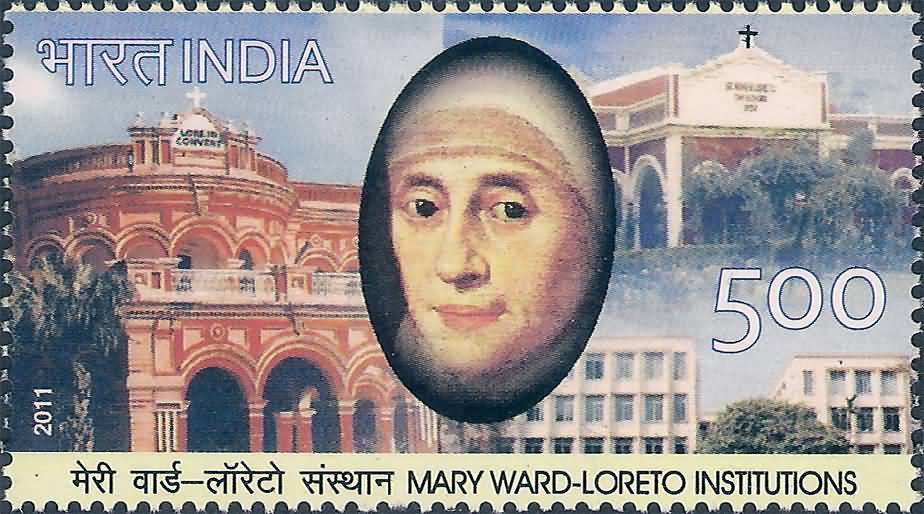
Technical Data
| Date of Issue | February 2, 2011 |
|---|---|
| Denomination | Rs. 5 |
| Quantity | 400,000 |
| Perforation | 13 |
| Printer | Security Printing Press, Hyderabad |
| Printing Process | Wet Offset |
| Watermark | No Watermark |
| Colors | Multicolor |
| Credit (Designed By) | Smt. Alka Sharma |
| Catalog Codes |
Michel IN 2550 Stamp Number IN 2487 Yvert et Tellier IN 2313 Stanley Gibbons IN 2792 WADP Numbering System - WNS IN004.2011 |
| Themes | Buildings | Famous people | Schools | Women |
Founder of the Loreto Institutions
Early Life and Vision
Mary Ward, an English Roman Catholic nun, was born on 23 January 1585 at Old Mulwith, Yorkshire. She was a woman of exceptional intellectual and spiritual ability, endowed with remarkable foresight, courage and determination. At a time when women’s roles were severely restricted, she envisioned a future where women would play a transformative role in society through education.
Founding of the Institute of the Blessed Virgin Mary
In 1609, Mary Ward founded the Institute of the Blessed Virgin Mary at St. Omer in France, along with seven companions. She undertook the momentous task of educating young women, guided by her belief that “fervor lies not in feelings but in the will to do well,” and that there was no fundamental difference between men and women in their capacity to serve society.
Journey to Rome and Pioneering Ideals
In 1621, Mary Ward undertook her historic journey to Rome, walking all the way from Brussels. There, she sought approval for a new form of religious life—without enclosure and governed by a Superior General. This radical vision marked her as a pioneer far ahead of her time and laid the foundation for a modern approach to women’s religious and educational institutions.
Trials, Suppression and Perseverance
Her progressive ideas faced strong opposition during the papacy of Pope Urban VIII. Her order was suppressed, and in 1631, Mary Ward was imprisoned. Despite these hardships, she endured with extraordinary fortitude, perseverance and faith. Released in 1632, she was permitted to resume her mission of educating young girls.
Return to England
In 1639, Mary Ward returned to England and settled with her community in Yorkshire, continuing her work with renewed commitment. Her life remained a testimony to courage, resilience and unwavering dedication to her vision.
Global Presence of the Loreto Institutions
The Institute of the Blessed Virgin Mary, known globally as the Loreto Sisters, has grown into a worldwide movement. Today, the Institute has a presence in six continents, with more than 4,000 members, and provides education to over 70,000 students globally. The Institute is also represented at the United Nations as a Non-Governmental Organization, engaged in education and service to the poor and needy.
Mary Ward’s Legacy in India
Mary Ward’s vision reached India in 1842, where the Loreto Sisters became pioneers in women’s education. What appears ordinary today was revolutionary in her time. In India, Loreto institutions care for thousands of girls, especially the weak, oppressed and marginalized, and provide adult literacy programmes for deprived young women, while adapting to changing social and academic needs.
Enduring Inspiration
Mary Ward was a leader of originality, faith and daring courage. Her belief in “doing ordinary things well” continues to inspire generations of young women to serve society with compassion and excellence.
Passing and Commemoration
Mary Ward passed away on 20 January 1645. To mark 400 years (1609–2009) of her founding experience and her enduring contribution to education and women’s empowerment, India Post is pleased to issue a commemorative postage stamp on “Mary Ward – Loreto Institutions.”
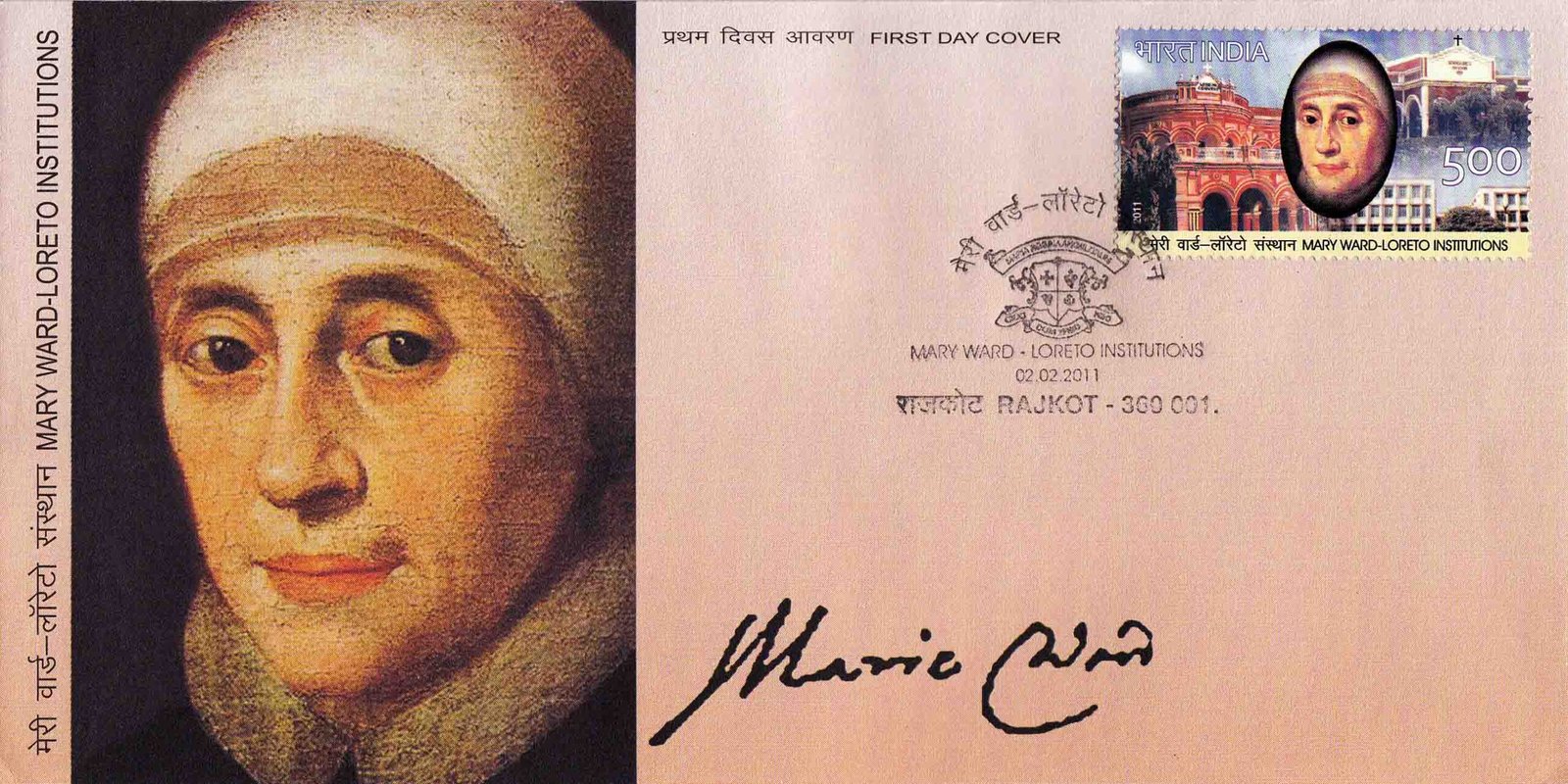
First Day Cover
Leave a Comment
You must be logged in to post a comment.