
Bullock Cart
Technical Data
| Date of Issue | March 25, 2017 |
|---|---|
| Denomination | Rs. 5 |
| Quantity | 3,000 |
| Perforation | 13 |
| Printer | India Security Press, Nashik |
| Printing Process | Wet Offset |
| Watermark | No Watermark |
| Colors | Multicolor |
| Credit (Designed By) | Sh. Brahm Prakash |
| Catalog Codes |
Michel IN 3131 Yvert et Tellier IN 2822 Stanley Gibbons IN 3285 |
| Themes | Transport |
The Backbone of Rural Transport
Commemorative Stamp
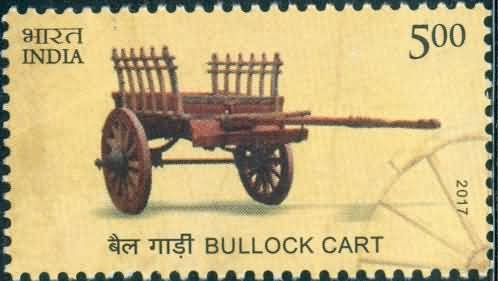
The Bullock Cart is one of the oldest and most enduring modes of transport in India. For centuries, it served as the primary means of carrying goods and passengers across villages, fields, and trade routes. As a symbol of India’s agrarian heritage and sustainable mobility, it has been honoured through a Commemorative Stamp issued by India Post in the Indian Transport series.
Historical Significance
From ancient times, bullock carts have played a vital role in supporting rural life and commerce. Long before the introduction of mechanized vehicles, these carts connected villages to markets, enabled the transport of agricultural produce, and facilitated trade across regions.
Pulled by a pair of oxen, the bullock cart was particularly suited to India’s rural terrain and unpaved roads. Its simplicity, affordability, and durability made it indispensable to farming communities.
Design and Features
The traditional bullock cart typically consists of:
- A sturdy wooden frame
- Two or four large wheels
- A flat or enclosed platform for carrying goods or passengers
- A yoke to harness the oxen
Built using locally available materials, it was economical to maintain and environmentally friendly. The slow but steady movement of the cart symbolized patience, resilience, and harmony with nature.
Economic and Social Role
The bullock cart was central to India’s rural economy. It transported:
- Grains and farm produce
- Firewood and building materials
- Household goods and passengers
Even today, in remote areas where modern vehicles are either too costly or unsuitable due to limited infrastructure, bullock carts continue to serve as a practical means of transport.
Cultural Importance
Beyond its economic function, the bullock cart is deeply woven into India’s cultural traditions. It is often seen in rural fairs, festivals, and traditional processions, reflecting the country’s agrarian roots.
Philatelic Recognition
The Commemorative Stamp on Bullock Cart, part of the 20-stamp Indian Transport series, beautifully captures the essence of this historic vehicle. Through this philatelic tribute, India Post acknowledges the vital role of the bullock cart in shaping India’s economic development and social cohesion.
The stamp stands as a reminder that India’s journey toward modern transport began with the steady wheels of the bullock cart — a humble yet powerful symbol of progress rooted in tradition.
Leave a Comment
You must be logged in to post a comment.