
Medicinal Plants of India
Technical Data
| Date of Issue | December 19, 2025 |
|---|---|
| Denomination | Rs 25 |
| Quantity | 111,000 |
| Printer | Security Printing Press, Hyderabad |
| Printing Process | Wet Offset |
| Colors | Multicolor |
| Credit (Designed By) | Mr. Anuj Kumar |
| Catalog Codes |
Colnect codes IN 2025.12.19-01 |
| Themes | Plants (Flora) |
Stamps in this Souvenir Sheet


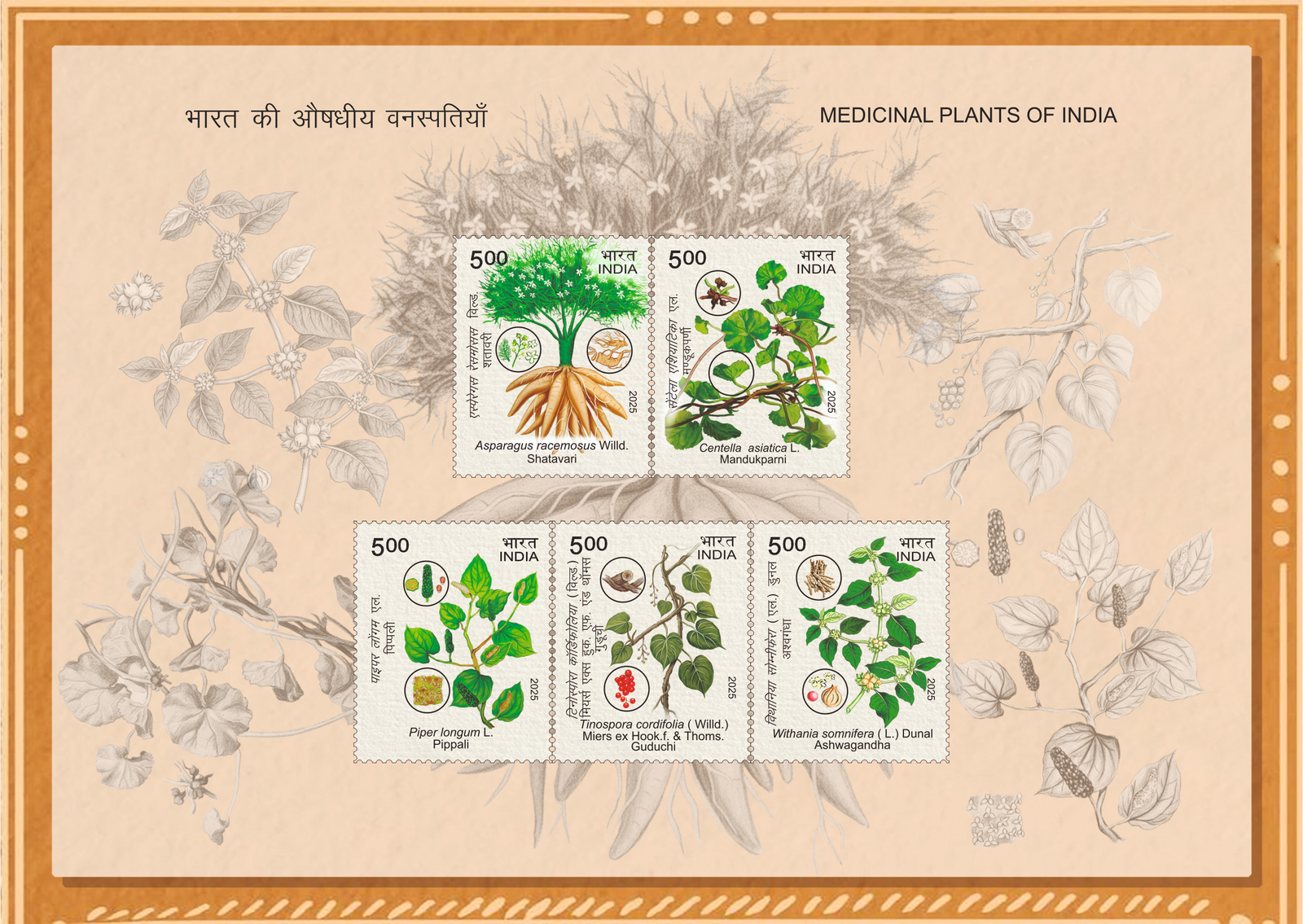
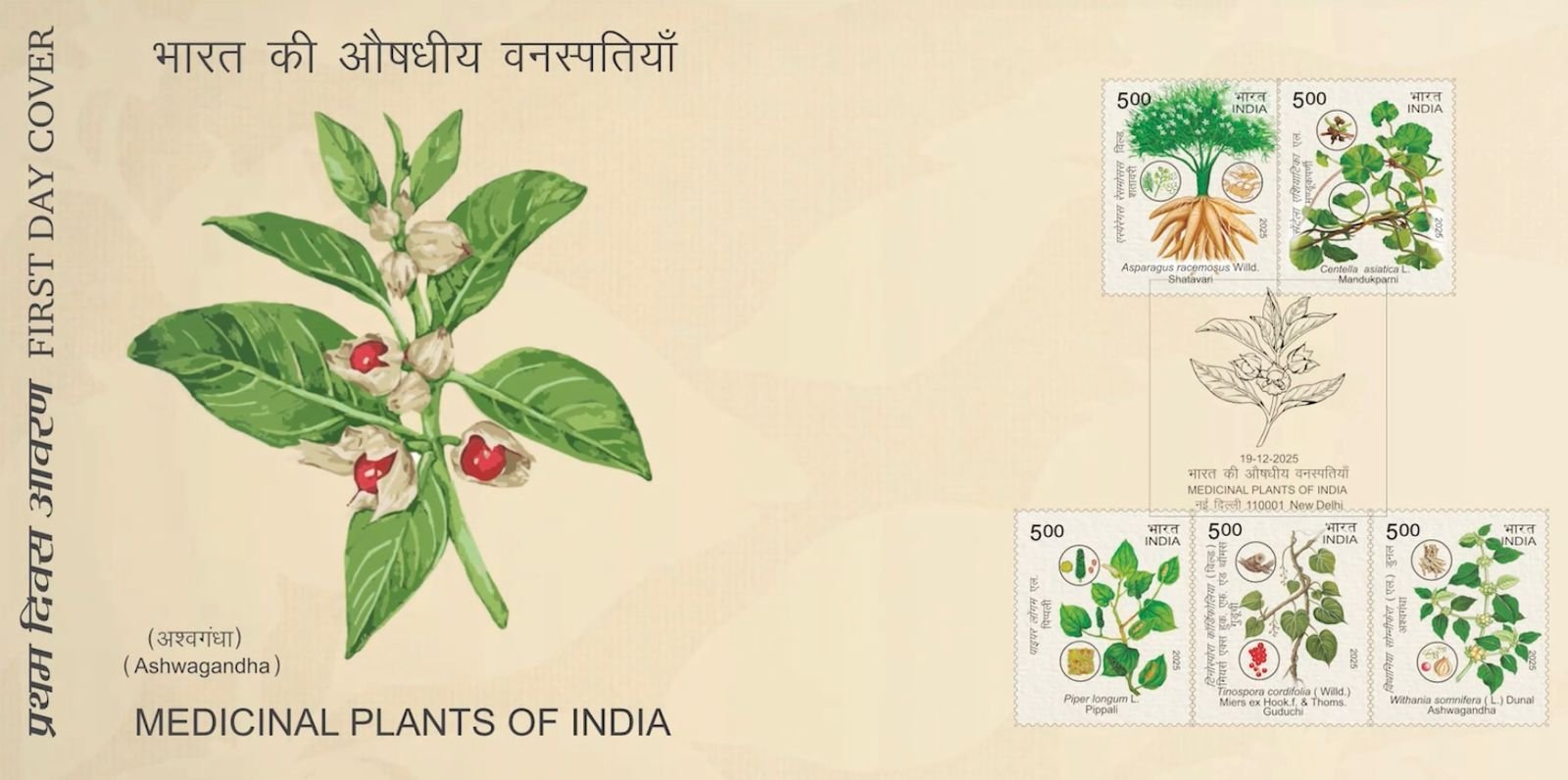
India’s vast geographical diversity has endowed the country with an extraordinary wealth of medicinal plants that form the foundation of its traditional systems of medicine. These plants have been used for centuries for prevention, cure and rejuvenation, with specific plant parts carefully chosen for their therapeutic value. Among this rich heritage, five medicinal plants stand out for their proven efficacy and continued relevance in contemporary healthcare.
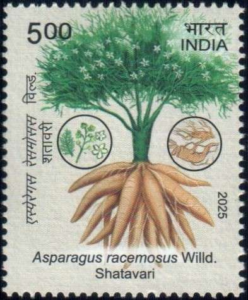
Asparagus racemosus Willd. (Shatavari)
Shatavari is a perennial, prickly climber and a highly branched undershrub found throughout the tropical and subtropical regions of India. It is widely valued as a powerful adaptogen, helping the body cope with physical and emotional stress. Traditionally, Shatavari supports reproductive health, improves digestion, strengthens immunity and enhances overall vitality, making it an important rejuvenative herb.
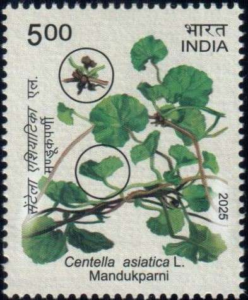
Centella asiatica L. (Mandukparni)
Mandukparni is a perennial, prostrate herb with creeping stems that root at the nodes. It has simple, kidney-shaped leaves with long petioles and a loose, sub-capitate umbel inflorescence. The dried whole plant is traditionally used in the treatment of fever, itching, cough and anemia, and is also known for supporting cognitive health and mental clarity.
Piper longum L. (Pippali)
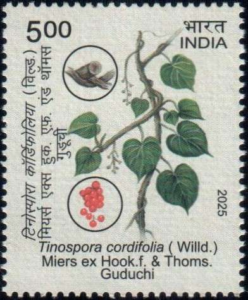
Pippali is a slender, aromatic, creeping perennial herb widely used in traditional medicine. It is especially valued for its role in improving digestion and respiratory health. The plant is used in the management of dyspepsia, abdominal pain, anorexia, asthma, fever and disorders related to the spleen, and forms a key ingredient in many classical formulations. Tinospora cordifolia (Willd.) Miers ex Hook.f. & Thoms. (Guduchi)
Guduchi is a large, extensively spreading perennial woody climber with succulent stems. The stem is the most commonly used part and is prescribed for treating fever, cough, gout, worm infestation, anemia and various skin diseases. Revered as a potent immunomodulator, Guduchi is often described in traditional texts as the “nectar of immortality.”
Withania somnifera (L.) Dunal (Ashwagandha)
Ashwagandha is a perennial herb and an erect, branched undershrub growing up to 1.25 metres in height. It is widely known as a rejuvenator that promotes intellect, stability and physical strength. Ashwagandha is also used to enhance stamina, reduce stress and support overall physical and mental well-being.
India’s Legacy of Medicinal Plant Knowledge
India is a global centre of botanical and traditional medical knowledge, with nearly 8,000 documented plant-based remedies across systems such as Ayurveda, Siddha and Unani. Even today, a large section of the population—particularly in rural areas—relies on these accessible and time-tested natural medicines. The growing global demand for safe, holistic and plant-based products has further positioned India as a leading exporter of medicinal plants and a key supplier to the herbal, nutraceutical and pharmaceutical industries.
Commemorative Postage Stamps
In recognition of India’s rich natural heritage and traditional knowledge systems, the Department of Posts is pleased to issue a set of Commemorative Postage Stamps honouring vital medicinal plants such as Shatavari, Mandukparni, Pippali, Guduchi and Ashwagandha, celebrating their role in promoting health, well-being and harmony with nature.
First Day Cover
Leave a Comment
You must be logged in to post a comment.