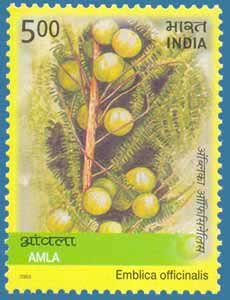
Amla (Emblica officinalis)
Technical Data
| Date of Issue | April 7, 2003 |
|---|---|
| Denomination | Rs. 5 |
| Perforation | comb 13 x 13¼ |
| Printer | Calcutta Security Printers Ltd |
| Printing Process | Offset Lithography |
| Watermark | No Watermark |
| Colors | Multicolor |
| Credit (Designed By) | Shri Kamleshwar Singh |
| Catalog Codes |
Michel IN 1957 Stamp Number IN 2002d Yvert et Tellier IN 1721 Stanley Gibbons IN 2125 WADP Numbering System - WNS IN013.03 |
| Themes | Plants (Flora) |
The Wonder Fruit of Indian Medicine
The rich tradition of plant-based healing in India finds one of its finest expressions in Amla, a highly valued medicinal plant known for its remarkable therapeutic properties.
Botanical Description
Amla is a medium-sized deciduous tree found widely across India. It bears a distinctive globose, pale yellow fruit that has been used in traditional medicine systems for centuries. The fruit is not only nutritious but also possesses a wide range of healing qualities.
Medicinal Properties
Amla is regarded as a powerful natural remedy with multiple health benefits. It is known for its properties as:
- An astringent
- A digestive aid
- A carminative (relieves flatulence)
- A laxative
- An anti-pyretic (reduces fever)
- A general health tonic
Therapeutic Uses
In traditional medicine, Amla is prescribed for a variety of ailments. It is commonly used in the treatment of:
- Colic and digestive disorders
- Jaundice
- Hemorrhages
- Flatulence
- General weakness
Its rejuvenating qualities make it an essential component in many herbal formulations aimed at improving overall health and vitality.
Cultural and Medicinal Significance
Amla holds a prominent place in India’s ancient systems of medicine, where plants are studied and classified under disciplines like Dravya Guna Shastra. Its continued use in both classical and folk traditions highlights the enduring relevance of natural remedies.
Commemorative Stamp Recognition
Recognizing its importance, India Post featured Amla in its series of commemorative postage stamps on medicinal plants. This initiative celebrates India’s botanical heritage and promotes awareness about the value of traditional healing systems.
Conclusion
Amla stands as a symbol of nature’s healing power—an age-old remedy that continues to support health and wellness. Its wide-ranging benefits and deep roots in tradition make it an indispensable part of India’s medicinal legacy.
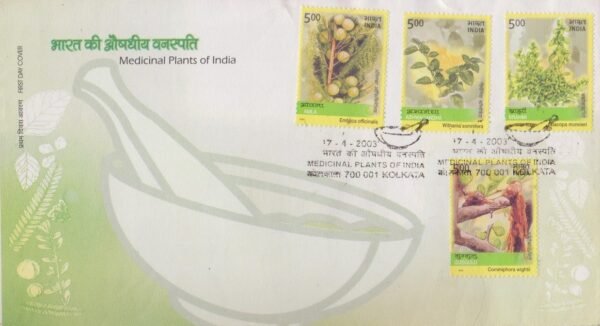
First Day Cover