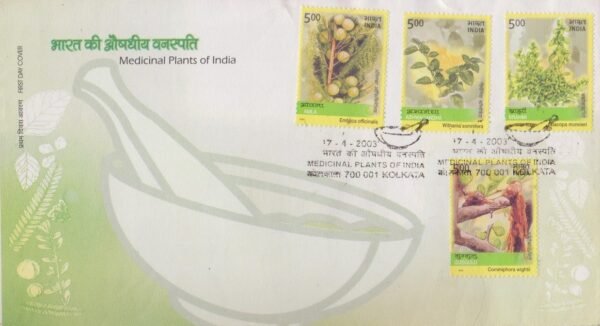
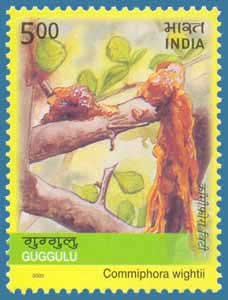
Guggulu
Technical Data
| Date of Issue | April 7, 2003 |
|---|---|
| Denomination | Rs. 5 |
| Perforation | comb 13 x 13¼ |
| Printer | Calcutta Security Printers Ltd |
| Printing Process | Offset Lithography |
| Watermark | No Watermark |
| Colors | Multicolor |
| Credit (Designed By) | Shri Kamleshwar Singh |
| Catalog Codes |
Michel IN 1954 Stamp Number IN 2002a Yvert et Tellier IN 1720 Stanley Gibbons IN 2123 WADP Numbering System - WNS IN011.03 |
| Themes | Plants (Flora) |
The Healing Resin of the Desert
Among the many medicinal plants that enrich the traditional healing systems of India, Guggulu occupies a significant place. Known for its potent therapeutic properties, Guggulu has been used for centuries in treating a wide range of ailments.
Botanical Description
Guggulu is an armed shrub or small tree that thrives in the arid and semi-arid regions of India, particularly in Rajasthan. It produces an oleo-gum resin from its stem, which is the primary medicinal component used in traditional remedies.
Medicinal Properties
The resin of Guggulu is highly valued for its diverse healing effects. It is known to possess:
- Anti-inflammatory properties
- Detoxifying effects
- Therapeutic benefits for chronic diseases
Therapeutic Uses
Guggulu has been widely used in traditional medicine to treat:
- Neurological disorders
- Skin diseases and leprosy
- Heart ailments
- Cerebrovascular conditions
- Hypertension
Its versatility makes it an essential ingredient in many classical and folk medicinal formulations.
Traditional Significance
The study and application of Guggulu are part of Dravya Guna Shastra, where plants are classified based on their taste, potency and biological effects. This highlights the scientific depth of India’s ancient medical knowledge.
Commemorative Stamp Recognition
Acknowledging its importance, India Post included Guggulu in its commemorative postage stamp series on medicinal plants. This initiative celebrates India’s rich botanical heritage and promotes awareness about the value of traditional healing practices.
Conclusion
Guggulu stands as a powerful symbol of nature’s healing potential, especially in challenging environments. Its continued relevance in traditional medicine reflects the enduring wisdom and effectiveness of India’s herbal legacy.
First Day Cover