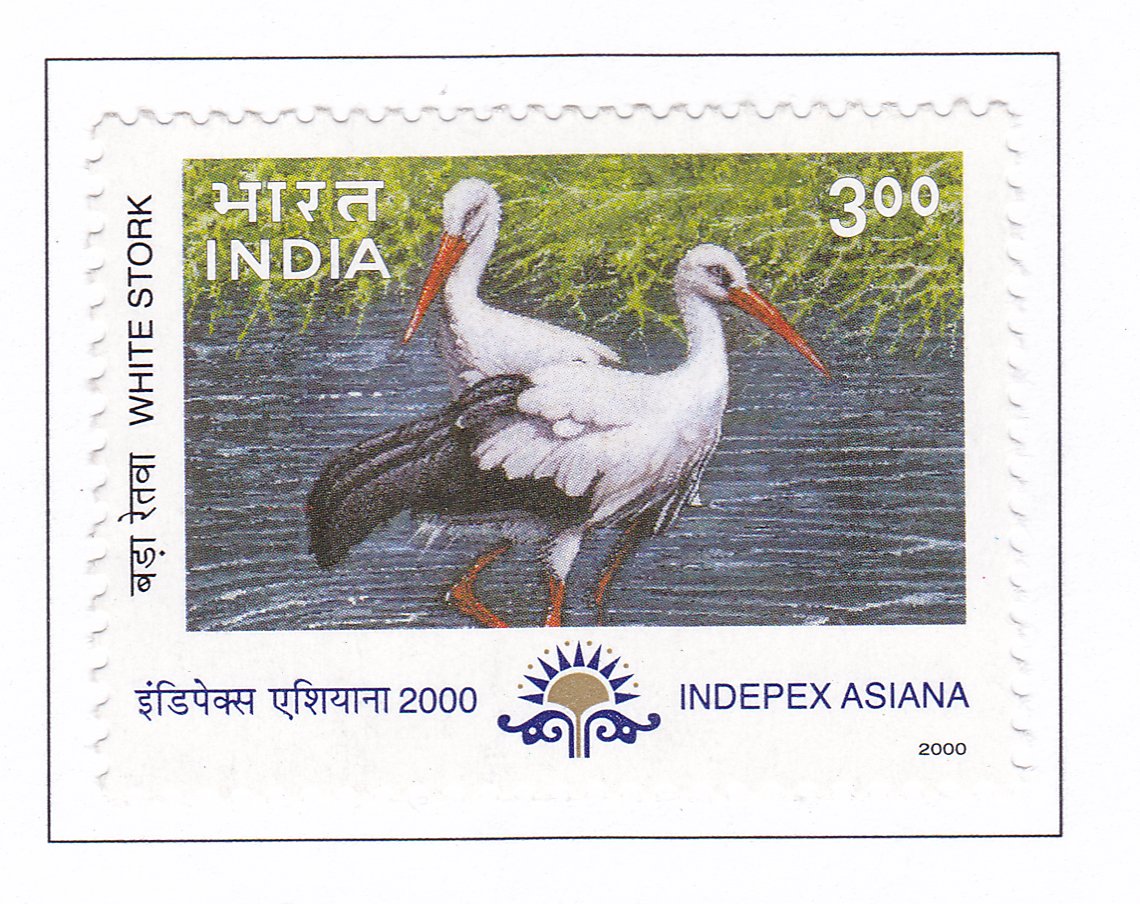
White Stork (Ciconia ciconia)
Technical Data
| Date of Issue | May 24, 2000 |
|---|---|
| Denomination | Rs. 3 |
| Quantity | 1,000,000 |
| Perforation | comb 13½ x 13 |
| Printer | Calcutta Security Printers Ltd |
| Printing Process | Offset Lithography |
| Watermark | No Watermark |
| Colors | Multicolor |
| Credit (Designed By) | Sh. Ramesh Sukumar |
| Catalog Codes |
Michel IN 1765 Stamp Number IN 1834 Yvert et Tellier IN 1531 Stanley Gibbons IN 1937 |
| Themes | Animals (Fauna) | Birds | Philatelic Exhibitions | Storks |
Migration, Habitat, and Stamp Representation
The White Stork is a large and graceful migratory bird known for its long legs and neck. It is one of the prominent species featured in the Migratory Birds commemorative stamp series issued by India Post.
Migration and Distribution
The White Stork is a winter visitor to India, arriving between September and October and departing by March or April. It is mainly found in northwestern parts of the country, with smaller populations seen across the Gangetic plains, Assam, Madhya Pradesh, Gujarat, Rajasthan, and Maharashtra.
Habitat and Behavior
This species prefers open landscapes such as marshy grasslands and moist agricultural fields. It is often seen walking slowly and gracefully while searching for food.
The White Stork feeds on:
- Frogs
- Reptiles
- Insects
Its feeding habits make it an important part of the ecosystem, helping maintain ecological balance.
Breeding and Global Range
The White Stork breeds outside India, primarily in regions such as Europe, North Africa, and western Asia. During the breeding season (March to May), it nests in these areas before migrating to warmer regions like India for winter.
Stamp Recognition
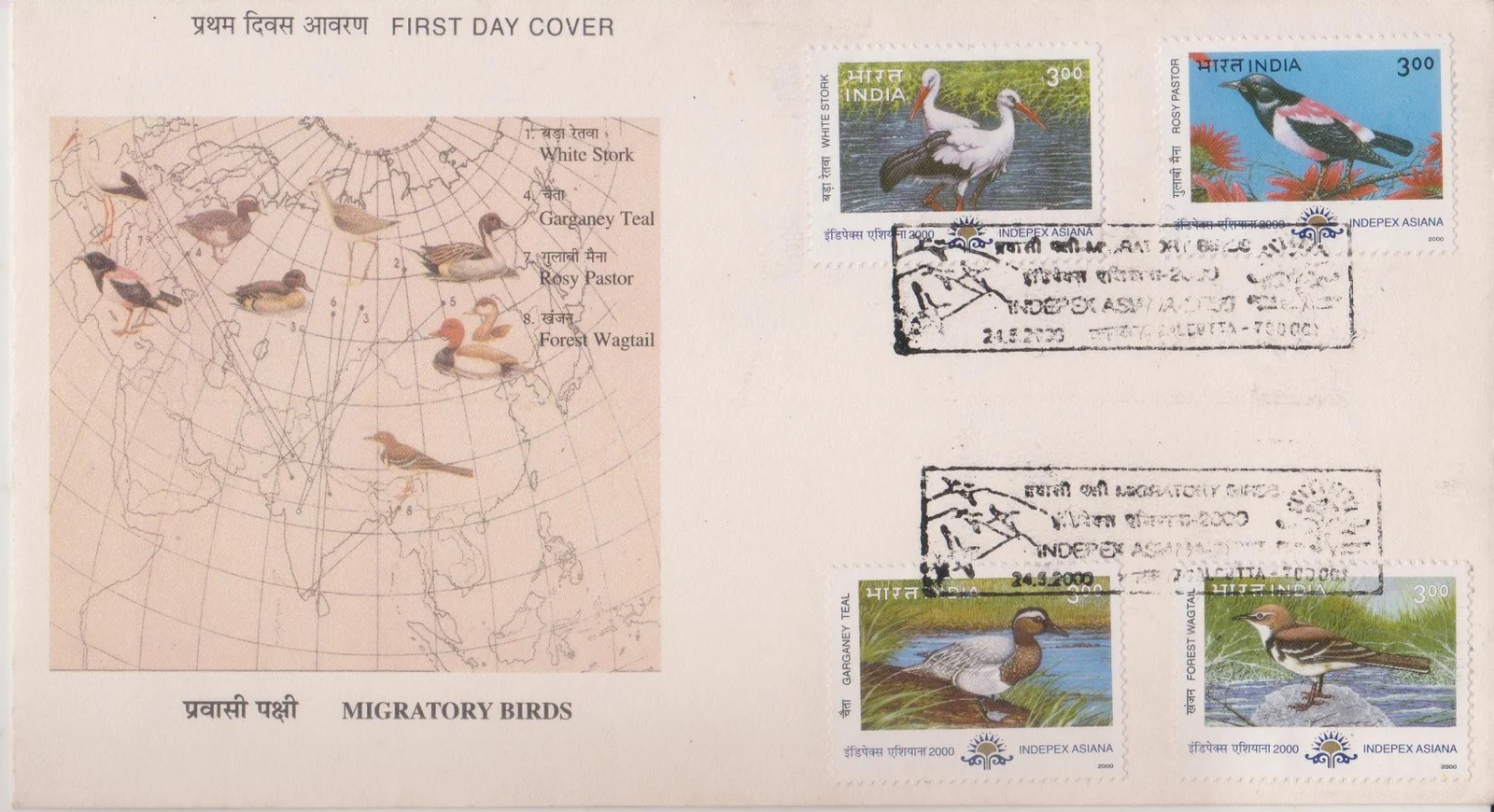
The White Stork is one of the four species depicted in the Migratory Birds stamp series, which also includes Rosy Pastor, Garganey Teal, and Forest Wagtail. The series highlights the seasonal migration of birds to the Indian subcontinent and raises awareness about their conservation.
Conclusion
The White Stork is a remarkable migratory bird that symbolizes the beauty and precision of nature’s seasonal movements. Its inclusion in the commemorative stamp series reflects its ecological importance and the need to protect migratory bird habitats.
First Day Cover