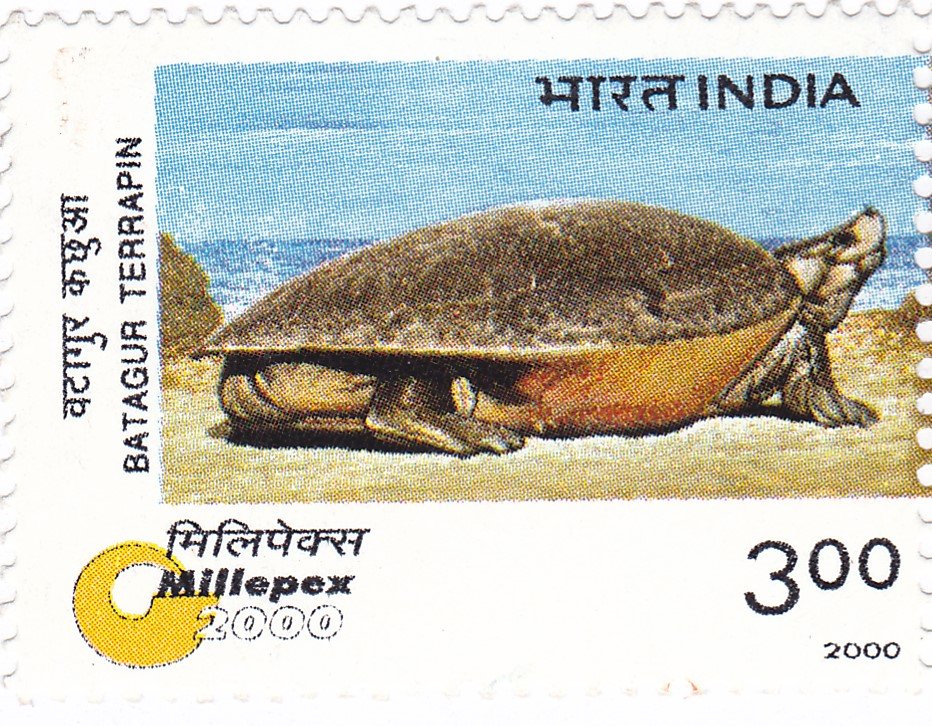
Batagur Terrapin (Batagur baska)
Technical Data
| Date of Issue | January 29, 2000 |
|---|---|
| Denomination | Rs. 3 |
| Quantity | 1,000,000 |
| Perforation | comb 13½ |
| Printer | Security Printing Press, Nashik |
| Printing Process | Photogravure |
| Watermark | No Watermark |
| Colors | Multicolor |
| Credit (Designed By) | Sh. Ramesh Sukumar |
| Catalog Codes |
Michel IN 1741 Stamp Number IN 1802 Yvert et Tellier IN 1508 Stanley Gibbons IN 1904 |
| Themes | Animals (Fauna) | Reptiles | Sea Life | Turtles |
Habitat, Characteristics, and Conservation
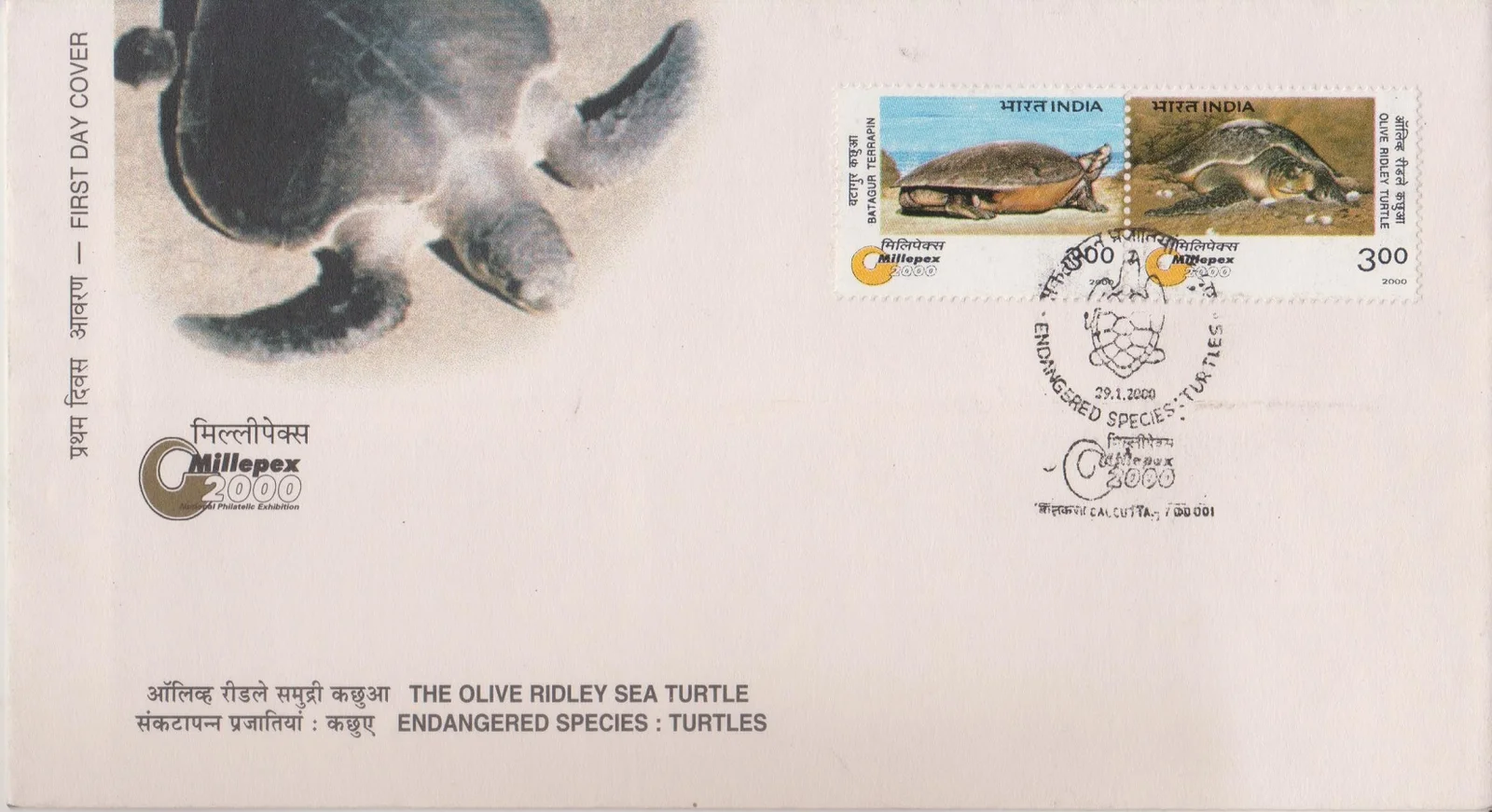
The Batagur Baska, commonly known as the Batagur Terrapin, is a rare and endangered aquatic turtle species found in South Asia. It has been featured on a commemorative postage stamp titled “Endangered Species: Batagur Baska (Batagur Terrapin)”, issued during the Millepex 2000 to raise awareness about its declining population.
Habitat and Distribution
The Batagur Terrapin inhabits freshwater, brackish, and coastal environments. It is most commonly found in shallow, muddy tidal regions near river mouths, especially areas rich in mangrove vegetation. Historically, it was abundant in the Hooghly River region.
Today, its presence has been recorded in parts of the Sundarbans, where suitable habitat conditions still exist.
Physical Characteristics
The Batagur Terrapin is a moderately large, web-footed turtle adapted for aquatic life. Its body structure allows it to move efficiently in water, while its nesting behavior requires sandy riverbanks or islands.
Nesting Behavior
This species prefers to nest in colonies on large sandbanks with gentle slopes or on riverine islands. These nesting sites are crucial for its reproduction and survival, making habitat protection extremely important.
Decline and Rediscovery
Once abundant, the Batagur Terrapin experienced a severe population decline due to overexploitation and habitat loss. For several years, there were no confirmed reports of its presence in India, raising fears of extinction.
However, in 1998, the species was rediscovered in the Sundarbans when eggs were found. Subsequent conservation efforts led to successful breeding, offering renewed hope for its survival.
Conservation Efforts
Conservation initiatives, including habitat protection under programs like Project Tiger in the Sundarbans, have played a key role in safeguarding this species. These efforts aim to restore its population and re-establish it in its former habitats, such as the Hooghly–Hatla estuaries.
Conclusion
The Batagur Terrapin is a critically important species for aquatic ecosystems but remains highly endangered. The commemorative stamp “Endangered Species: Batagur Baska (Batagur Terrapin)” serves as a reminder of the urgent need for conservation. Continued protection of its habitat and breeding sites is essential to ensure its long-term survival.
First Day Cover