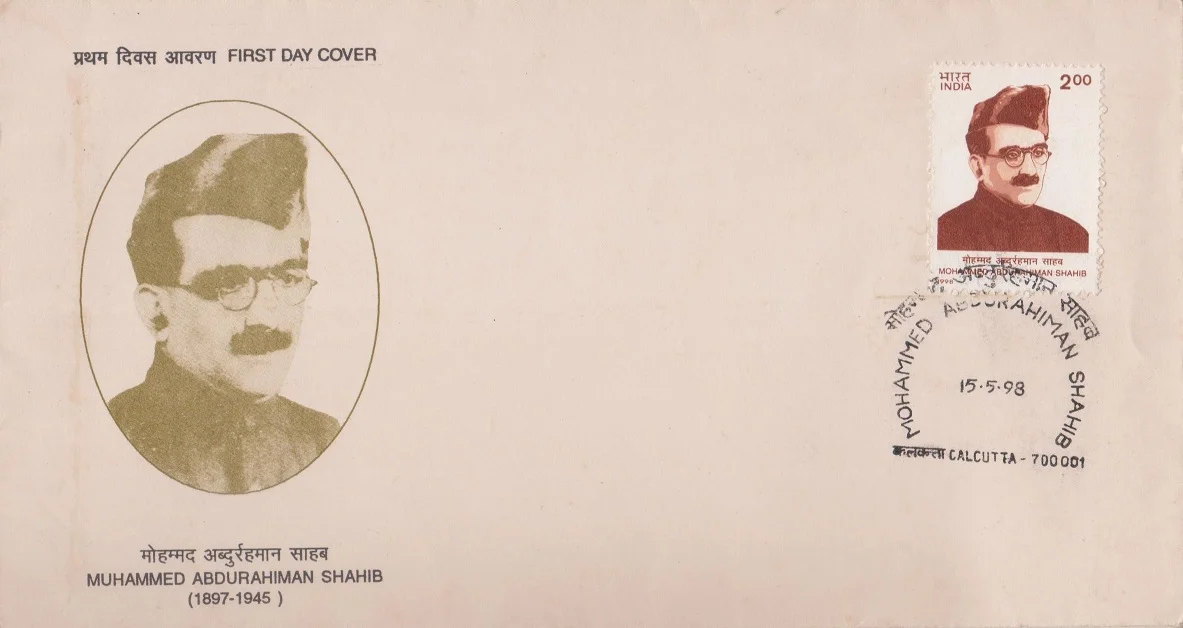
Muhammed Abdurahiman Shahib (1898-1945)
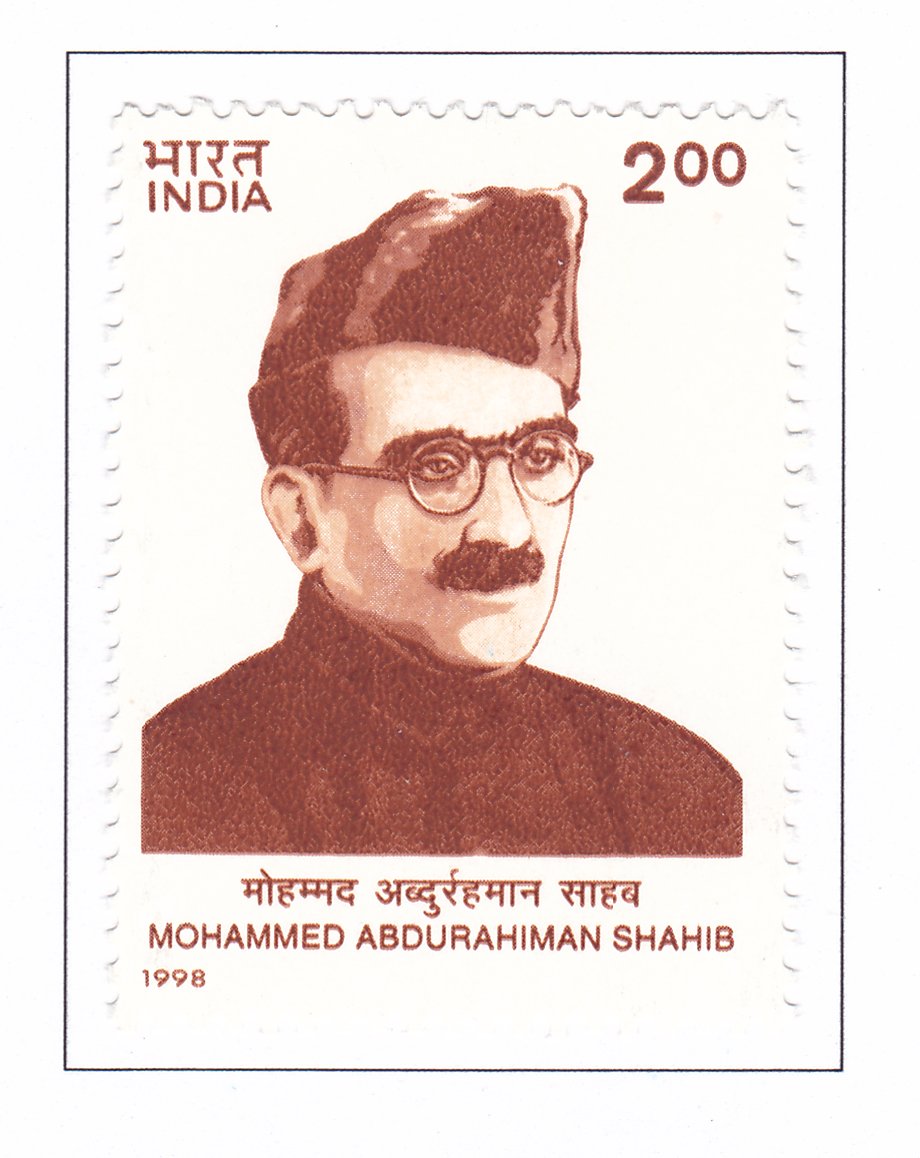
Technical Data
| Date of Issue | May 15, 1998 |
|---|---|
| Denomination | Rs. 2 |
| Quantity | 400,000 |
| Perforation | comb 13 x 13½ |
| Printer | Security Printing Press, Nashik |
| Printing Process | Photogravure |
| Watermark | No Watermark |
| Colors | Chestnut |
| Credit (Designed By) | |
| Catalog Codes |
Michel IN 1625 Stamp Number IN 1690 Yvert et Tellier IN 1392 Stanley Gibbons IN 1789 |
| Themes | Commemoration | Famous people | Headgear | Men | Optical Instruments |
Introduction
Muhammed Abdurahiman Shahib was a prominent freedom fighter, journalist, and social reformer from Kerala who made valuable contributions to India’s struggle for independence. He was known for his courage, leadership, and dedication to national unity.
Early Life and Education
He was born in 1898 at Kodungallur in Kerala in a respected Mopla Muslim family. After completing his early education, he joined Presidency College, Madras, and later shifted to the National Muslim College at Aligarh. However, inspired by Mahatma Gandhi and the national movement, he left his studies in 1921 to serve the country.
Role in Freedom Struggle
Muhammed Abdurahiman Shahib actively joined the Khilafat Movement and the Indian National Congress. He worked for Hindu-Muslim unity during the Mopla rebellion of 1921. As General Secretary of the Kerala Khilafat Committee, he organized people and spread the message of freedom.
He was arrested in 1922 for writing against British rule and was imprisoned for two years.
Contribution through Journalism
He founded the Malayalam newspaper Al-Amin in 1928. Later, it became a daily newspaper in 1930. Through this publication, he promoted nationalism and encouraged the Muslim community to participate in the freedom movement.
Participation in Salt Satyagraha
During the Salt Satyagraha in 1930, he inspired many people in Kerala to join the movement. While protesting at Calicut beach, he was brutally beaten by police officers and arrested. He was sentenced to nine months in prison.
Political Leadership
Later, he became associated with the left wing of the Congress. In 1939, he became President of the Kerala Forward Bloc. In 1940, he was again arrested and remained in Vellore Central Jail until 1945.
Legacy
Muhammed Abdurahiman Shahib was a fearless patriot and a strong voice of the people of Malabar. He inspired many young people and worked selflessly for India’s freedom and communal harmony.
Commemorative Stamp
The Department of Posts is happy to issue a commemorative postage stamp on Muhammed Abdurahiman Shahib in honour of his great service and sacrifice for the nation.
Conclusion
He passed away on 22 November 1945 while campaigning for Congress candidates. His life remains a shining example of sacrifice, patriotism, and service to the nation.
First Day Cover