Mumbai Port Trust – 125th Anniversary
Technical Data
| Date of Issue | June 26, 1999 |
|---|---|
| Denomination | Rs. 3 |
| Quantity | 700,000 |
| Perforation | comb 13 |
| Printer | Security Printing Press, Nashik |
| Printing Process | Photogravure |
| Watermark | No Watermark |
| Colors | Slate blue |
| Credit (Designed By) | |
| Catalog Codes |
Michel IN 1686 Stamp Number IN 1747 Yvert et Tellier IN 1453 Stanley Gibbons IN 1849 |
| Themes | Anniversaries and Jubilees | Ports | Ships |
Celebrating 125 Years of India’s Premier Port
Mumbai Port, often called the “Gateway of India” and the “Nation’s Window to the Outside World,” has played a vital role in India’s trade, commerce, and economic development. Located strategically on the west coast of India, Mumbai Port is blessed with a magnificent natural harbor spread across nearly 400 square kilometres.
For several decades, Mumbai Port remained the country’s premier port and served as one of the most important maritime centres in India.
Formation of the Mumbai Port Trust
The Mumbai Port Trust, then known as the Bombay Port Trust, was established on 26 August 1873. It was created to administer the affairs of the port and protect the interests of trade, which had been affected by the monopoly of private companies controlling landing and shifting facilities.
Soon after its formation, the Mumbai Port Trust began building modern port facilities to support the growing volume of trade.
Development of Mumbai Port
The first major dock developed by the Port Trust was Prince’s Dock, which was completed in 1880. It was followed by Victoria Dock in 1888.
With these two wet docks in operation, the Port Trust shifted its attention to the development of infrastructure, transportation, equipment, and storage facilities.
The expansion of the Suez Canal led to the arrival of larger and deeper-drafted ships. Recognizing this change in maritime trade, the Mumbai Port Trust constructed Alexandra Dock in 1914. Today, Alexandra Dock is known as Indira Dock.
Indira Dock was designed with a basin draft of 9.14 metres and an entrance lock that allowed ships to berth at any time of the day.
Railway and Road Connectivity
To handle the increasing movement of goods and passengers, Mumbai Port developed extensive road and railway infrastructure.
The Port Trust operated its own railway line from Wadala to Ballard Pier. This railway served all cargo berths in the docks as well as the passenger berth at Ballard Pier. It was also connected to the national railway network, giving the port direct access to the rest of India.
This strong transportation system helped Mumbai Port become one of the busiest and most efficient ports in the country.
Modern Facilities at Mumbai Port
Today, Mumbai Port has:
- 50 berths across its three dock systems for handling general cargo and containers
- 6 berths at Jawahar Dweep and Pir Pau for liquid cargo
- Modern equipment and crafts for cargo handling
- Covered storage space of nearly 5 lakh square metres
- Two dry docks providing ship repair facilities
These facilities have enabled Mumbai Port to continue playing a major role in India’s maritime trade and logistics sector.
Contribution of Mumbai Port to the City of Mumbai
Mumbai Port has had a major influence on the growth and development of Mumbai city. The port created large-scale employment opportunities and encouraged the expansion of trade, finance, and industry.
Because of the success of the port, Mumbai gradually emerged as the commercial and financial capital of India.
The Mumbai Port Trust also contributed directly to the city’s infrastructure. Several important public roads in Mumbai were originally built by the Port Trust and later handed over to the Municipal Corporation.
The development of Mumbai city is closely linked with the growth and success of Mumbai Port.
125th Anniversary Commemorative Stamp of Mumbai Port Trust
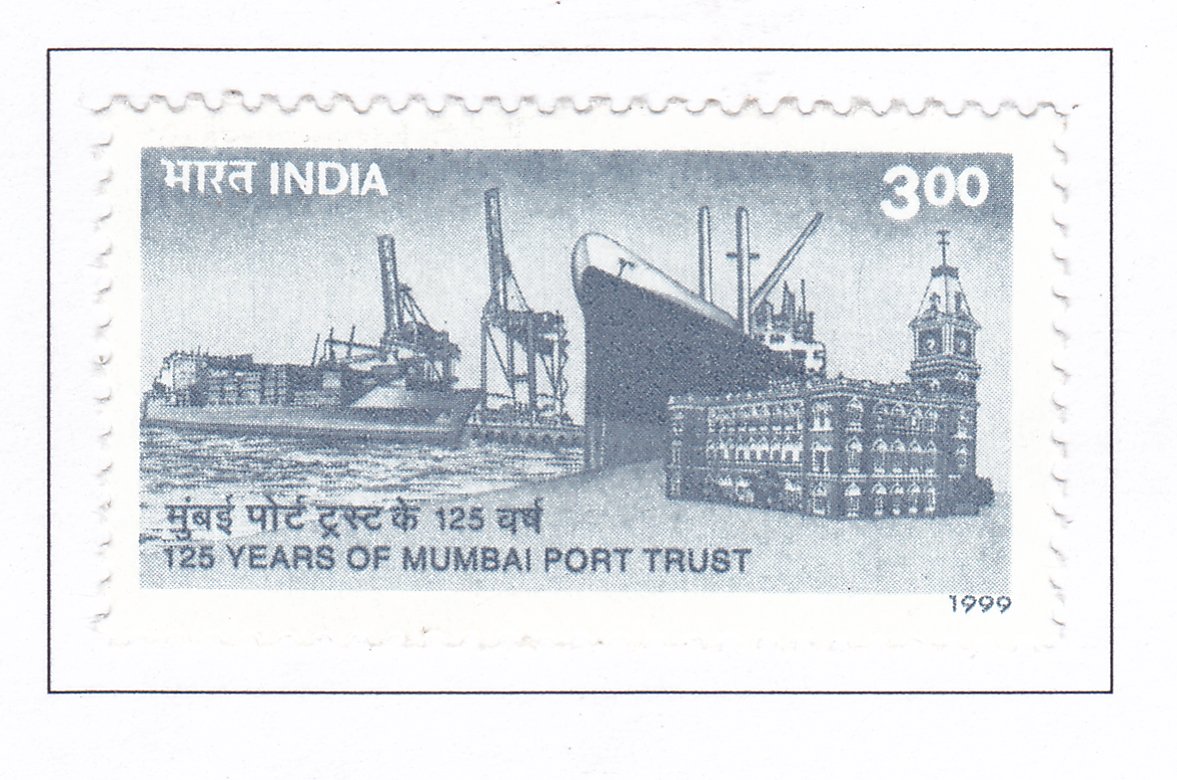
To celebrate the 125th anniversary of the Mumbai Port Trust, the Department of Posts issued a commemorative postage stamp.
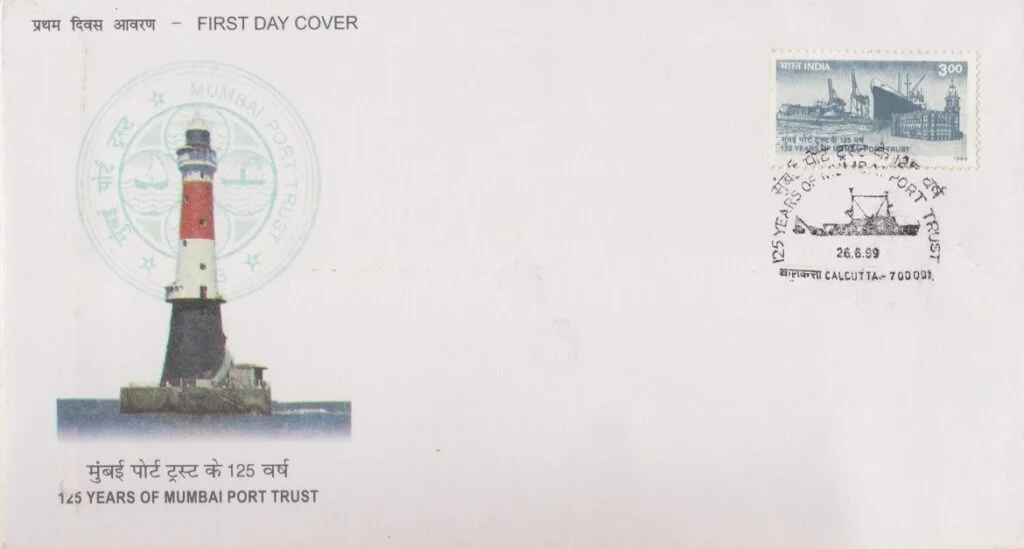
The First Day Cover of the stamp features the historic Prongs Lighthouse superimposed on the logo of the Mumbai Port Trust. This design reflects the long maritime history of Mumbai Port and its continuing importance to India’s economy.
The commemorative stamp honors Mumbai Port Trust for its remarkable contribution to India’s trade, shipping, infrastructure, and urban development over the past 125 years.
First Day Cover