About this stamp
Symbolism, Craftsmanship, and Cultural Significance
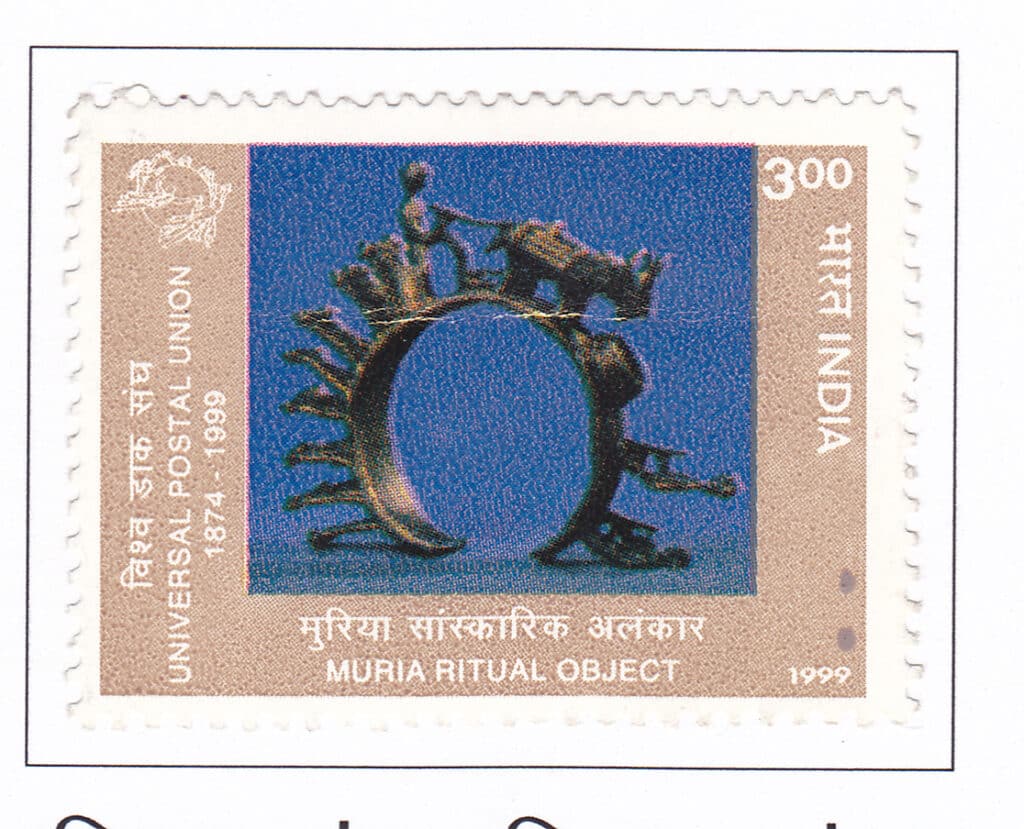
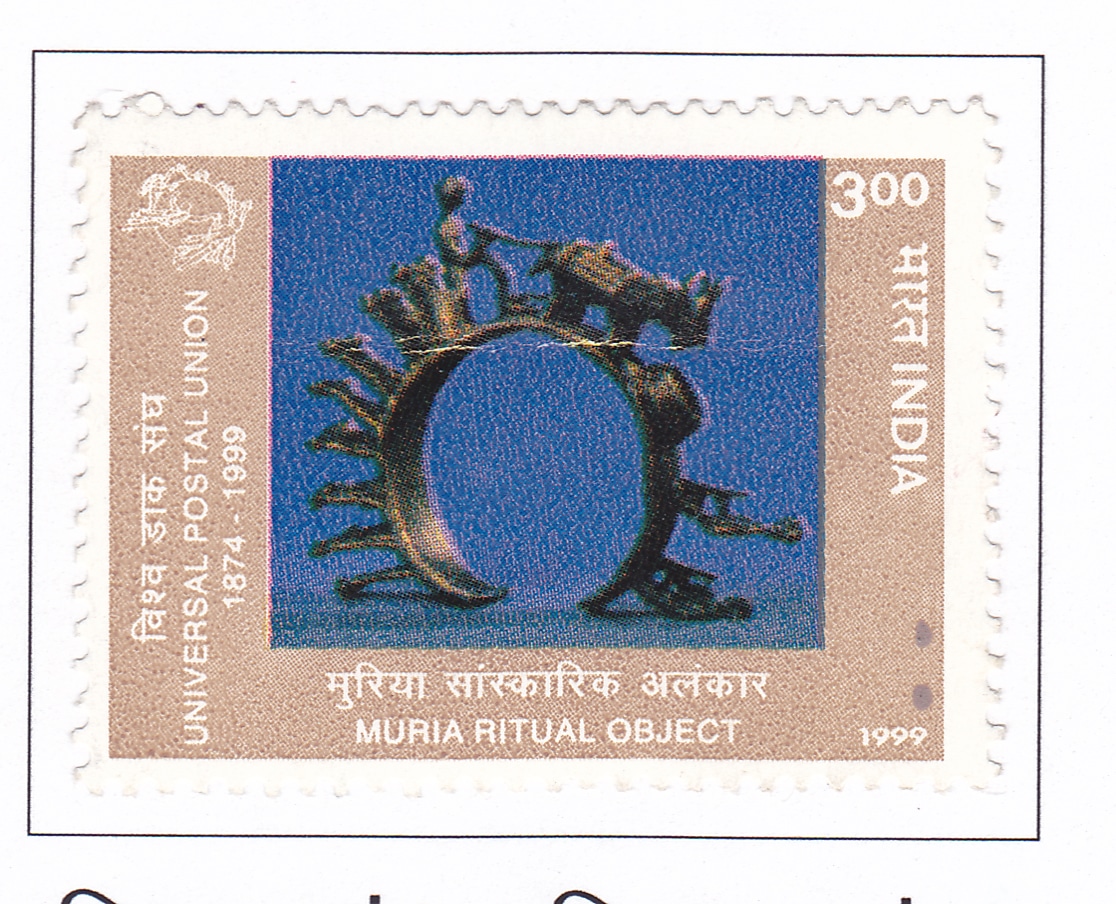
The Muria Ritual Object is a remarkable example of India’s rich rural arts and crafts traditions, reflecting the deep connection between art, culture, and spirituality in tribal communities. Created by the Muria Tribe, this object is not merely decorative but holds profound ritual and symbolic importance.
The Muria Ritual Object, often represented as a fertility ring, is a unique metal craft traditionally used in ceremonies, especially during marriage and agricultural rituals. It embodies the tribal worldview, where art serves both functional and spiritual purposes.
Symbolism and Meaning
The Muria Ritual Object is rich in symbolism and reflects the agrarian lifestyle of the Muria community. Common motifs depicted on the fertility ring include:
- A farmer with a pair of bullocks
- A field with a rich harvest
- A draw well symbolizing water and sustenance
- Landlords collecting their share
These elements collectively represent:
- Prosperity and fertility
- Agricultural abundance
- Social and economic relationships
The object is typically presented to the bride during marriage and is also worn during seed-sowing ceremonies, symbolizing hope for a fruitful harvest and a prosperous life.
Craftsmanship and Technique
The Muria Ritual Object is crafted using the traditional lost-wax casting process, an ancient technique practiced in India for over 5,000 years. Tribal metal artisans create these objects by:
- Shaping wax into intricate designs
- Covering it with clay to form a mold
- Melting the wax and pouring molten metal into the mold
This process results in highly detailed and durable metal artifacts. The craftsmanship is passed down through generations, preserving the cultural heritage of the Muria tribe.
Cultural and Ritual Importance
For the Muria community, the ritual object is more than a piece of art—it is a sacred symbol. Each object is believed to carry metaphysical significance, representing the harmony between humans, nature, and the spiritual world.
It plays a vital role in:
- Marriage ceremonies
- Agricultural rituals
- Community traditions
The object reflects a collective cultural identity, where creativity is a shared expression rather than an individual pursuit.
Representation in Indian Art and Stamps
The Muria Ritual Object has been featured in commemorative stamps issued by India Post as part of the theme “Rural Arts and Crafts Traditions of India.”
This recognition highlights:
- The artistic excellence of tribal metalwork
- The cultural depth of rural traditions
- The importance of preserving indigenous art forms
Conclusion
The Muria Ritual Object stands as a powerful symbol of India’s tribal heritage, blending art, ritual, and daily life into a single creation. Its intricate design, deep symbolism, and cultural relevance make it an enduring representation of the Rural Arts and Crafts Traditions of India.
For More Information
Read more here: