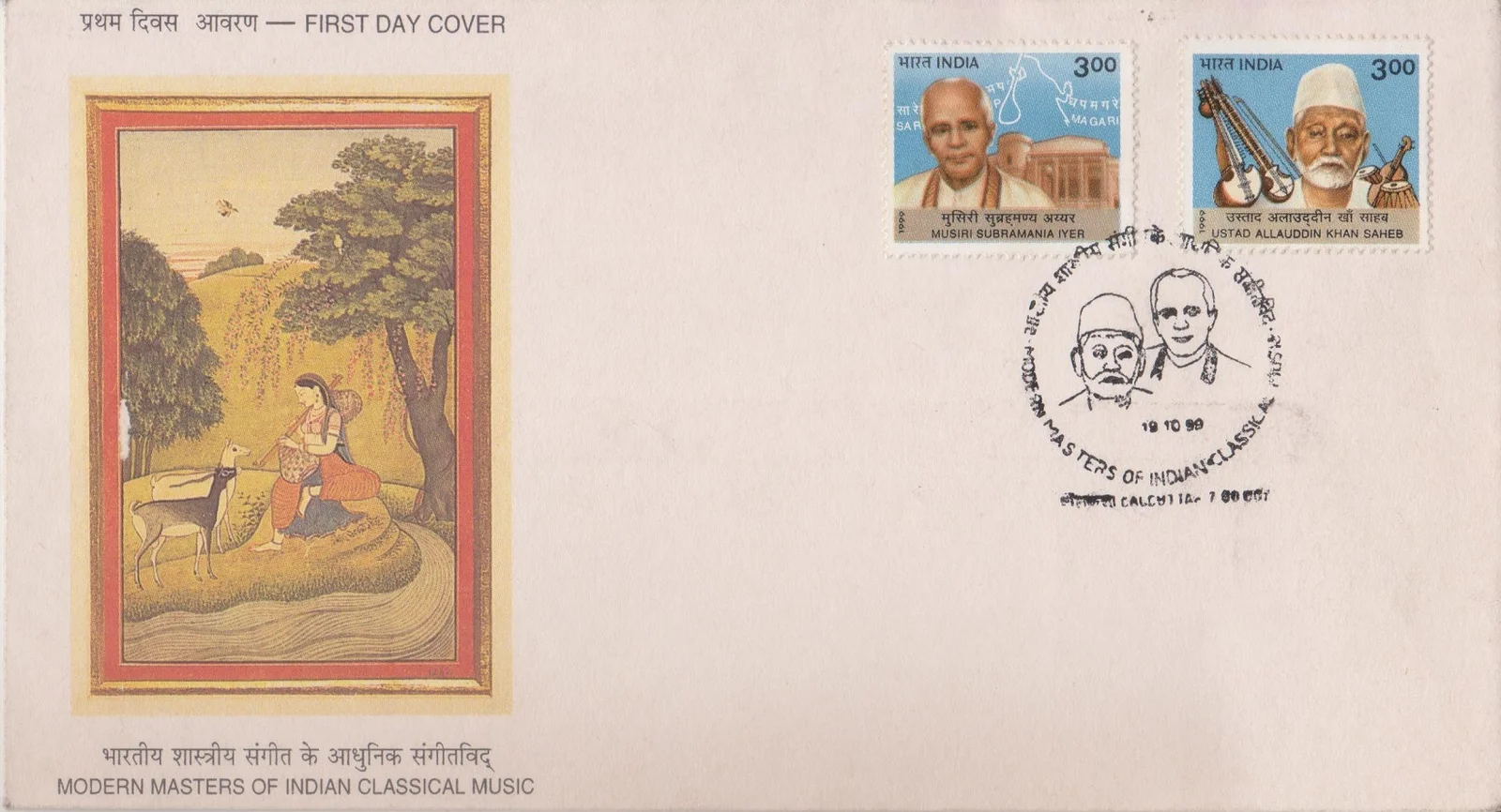
Musiri Subramania Iyer
Technical Data
| Stamp Set | Modern Masters of Indian Classical Music |
|---|---|
| Date of Issue | October 19, 1999 |
| Denomination | Rs. 3 |
| Quantity | 400,000 |
| Perforation | comb 13½ x 14 |
| Printer | Security Printing Press, Nashik |
| Printing Process | Photogravure |
| Watermark | No Watermark |
| Colors | Multicolor |
| Credit (Designed By) | |
| Catalog Codes |
Michel IN 1718 Stamp Number IN 1779 Yvert et Tellier IN 1485 Stanley Gibbons IN 1881 |
| Themes | Famous people | Men | Music | Singers |
Legendary Carnatic Vocalist and Master of Bhava
Musiri Subramania Iyer (1899–1975) was one of the greatest exponents of Carnatic music in India. Renowned for his deeply emotive singing style and exceptional teaching legacy, he remains a towering figure in the history of Indian classical music.
Early Training and Musical Journey
Musiri Subramania Iyer received his musical training under the legendary Sabhesa Iyer. After years of rigorous training, he began his career as a concert artist and soon gained recognition for his unique style and expressive performances.
Blessed with a high-pitched voice of perfect tonal purity (Sruthi), he captivated audiences with his ability to convey deep emotion through music.
Unique Style and Musical Excellence
Musiri Subramania Iyer was widely admired for his mastery of Bhava—the emotional expression in music. His renditions brought out the full depth and meaning of Krithis, leaving a lasting impact on listeners.
His musical strengths included:
- Vilamba Sangitam (slow tempo singing), known for its calm and meditative quality
- Neraval singing, where he displayed exceptional creativity and emotional depth
His performances were known to be deeply moving, creating a spiritual connection with the audience.
Contribution as a Teacher
Beyond performance, Musiri Subramania Iyer was an influential teacher. In 1949, he became the first Principal of the Central College of Carnatic Music, where he mentored and shaped a generation of musicians.
His teaching methods and dedication helped preserve and promote the traditions of Carnatic music.
Awards and Recognition
Musiri Subramania Iyer received numerous prestigious awards in recognition of his contributions:
- Sangita Kalanidhi (1939) from the The Music Academy Chennai
- Fellowship of the Sangeet Natak Akademi (1967)
- Padma Bhushan (1971)
He was also a devoted follower of the great composer Tyagaraja, whose compositions he rendered with exceptional devotion and feeling.
Indian Classical Music: Unity in Diversity
Indian music has a rich and continuous tradition dating back to the Vedic era. It evolved from folk roots into sophisticated classical systems, reflecting regional diversity while maintaining a unified cultural essence.
The two primary systems of Indian classical music are:
- Carnatic music (South India)
- Hindustani music (North India)
These traditions are complemented by folk music, bhajans, and kirtans, showcasing India’s cultural richness.
Commemoration and Legacy
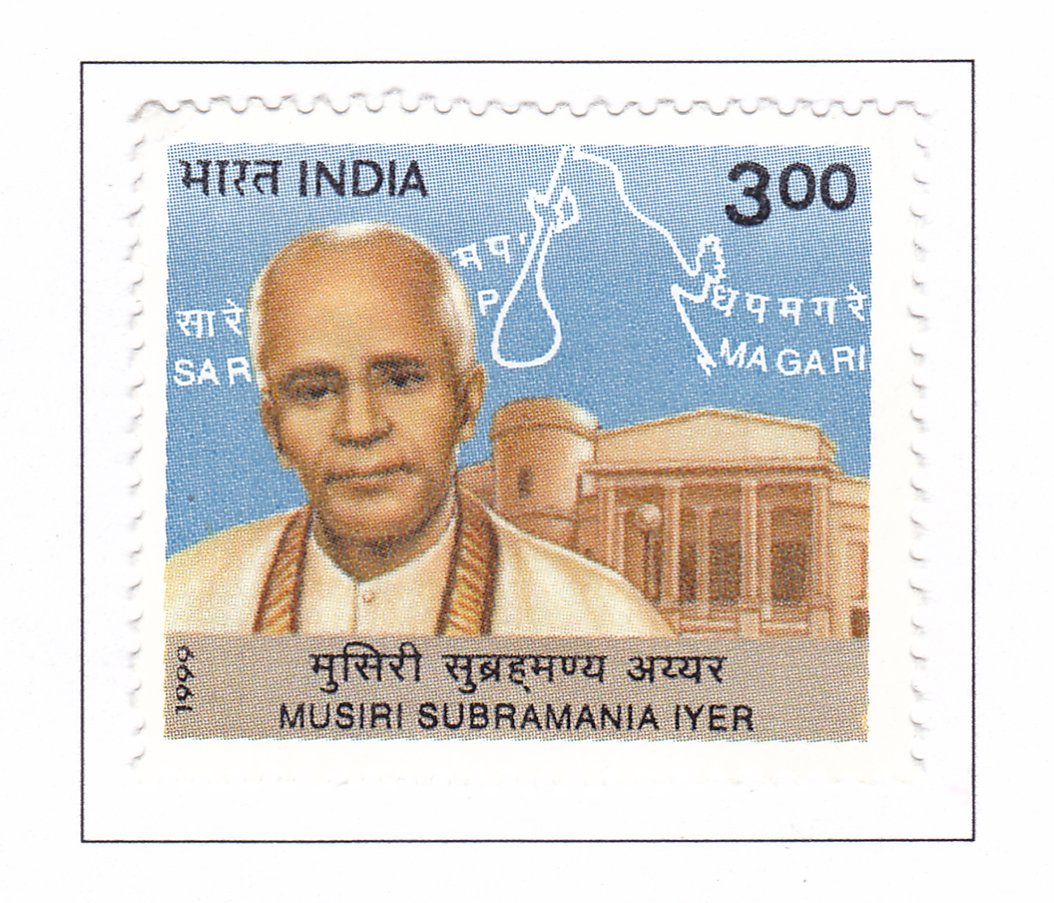
To honor his immense contribution, India Post issued a commemorative postage stamp featuring Musiri Subramania Iyer as part of the series “Modern Masters of Indian Classical Music.”
This series celebrates the legacy of great musicians from both Carnatic and Hindustani traditions, highlighting the unity and diversity of Indian music.
Conclusion
Musiri Subramania Iyer remains an iconic figure in Carnatic music. His soulful singing, mastery of emotional expression, and dedication as a teacher have left an enduring legacy. His contributions continue to inspire musicians and preserve the rich traditions of Indian classical music.
First Day Cover