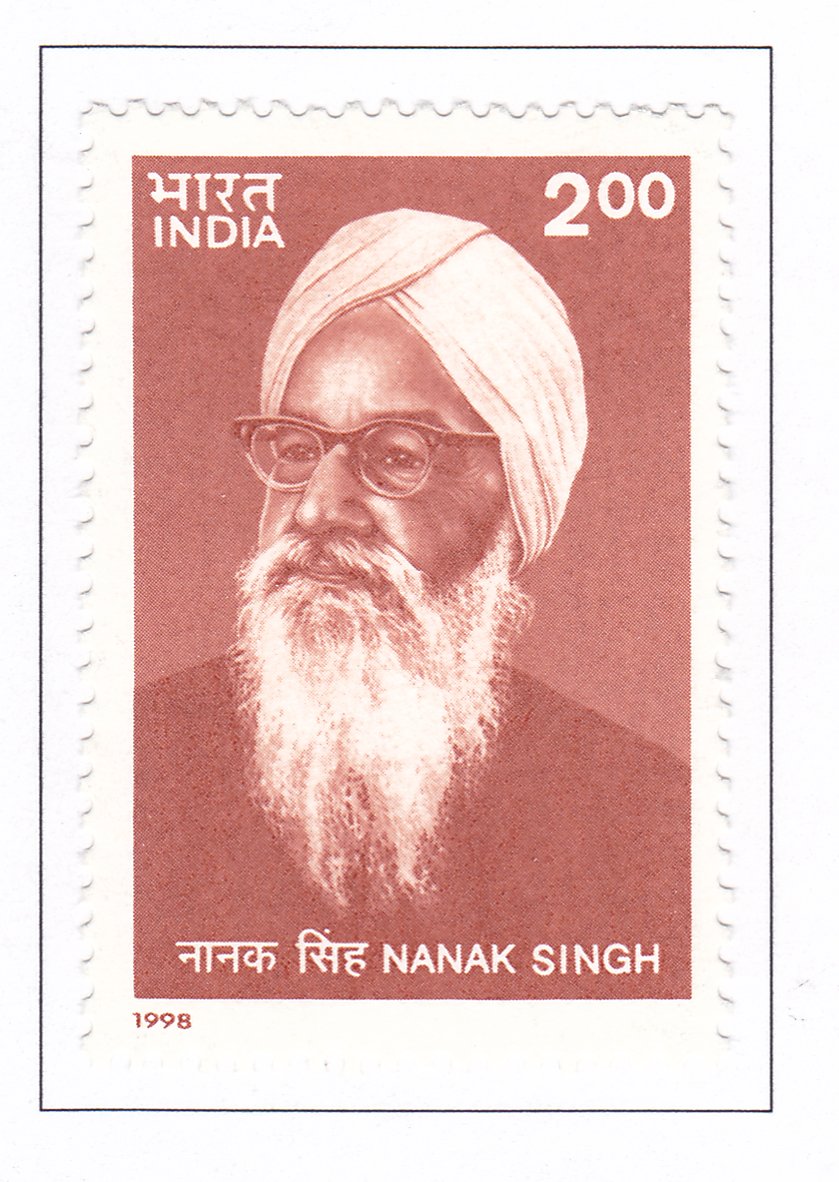
Nanak Singh (1897-1971)
Technical Data
| Stamp Set | Birth Centenary |
|---|---|
| Date of Issue | January 10, 1998 |
| Denomination | Rs. 2 |
| Quantity | 400,000 |
| Perforation | comb 13 |
| Printer | Security Printing Press, Nashik |
| Printing Process | Photogravure |
| Watermark | No Watermark |
| Colors | Red |
| Credit (Designed By) | |
| Catalog Codes |
Michel IN 1605 Stamp Number IN 1664 Yvert et Tellier IN 1372 Stanley Gibbons IN 1769 |
| Themes | Anniversaries and Jubilees | Authors | Famous people | Headgear | Literary People (Poets and Writers) | Literature | Men | Optical Instruments |
Pioneer of Modern Punjabi Literature
Nanak Singh was one of the most influential figures in modern Punjabi literature. Known for his powerful storytelling and reformist vision, he played a key role in shaping the Punjabi novel in the 20th century.
Early Life and Background
Nanak Singh was born as Hans Raj on 4th July 1897 in Chak Hamid, Tehsil Dadan Khan, District Jhelum (now in Pakistan). Born into a Hindu family, he later embraced Sikhism, deeply influenced by the patriotic spirit of the time.
Literary Journey and Inspiration
Nanak Singh began his literary career as a poet but soon moved to novel writing after being inspired by Munshi Premchand. His passion for social reform and desire to bring change in society led him to write numerous impactful novels.
From the 1920s to the 1960s, he produced a remarkable body of work that sparked a literary awakening in Punjab. His writing combined realism with idealism, addressing social issues and human values.
Influence of Freedom Movement
The tragic Jallianwala Bagh massacre had a profound impact on Nanak Singh. It inspired him to write the powerful poem “Blood-Stained Baisakhi”, which was later banned due to its revolutionary message.
His involvement in the freedom movement also led to his imprisonment in 1922, reflecting his deep commitment to the nation.
Major Works and Recognition
Nanak Singh authored:
- 38 novels
- Numerous poems and literary works across genres
His contributions were widely recognized:
- Sahitya Akademi Award in 1962, presented by Sarvepalli Radhakrishnan
- Honoured by the Government of Punjab for his literary achievements
Renowned scholar Hazari Prasad Dwivedi described him as “not just a Punjabi writer, but a great writer of India.”
Literary Style and Impact
Nanak Singh’s writings stand out for:
- Strong social and moral themes
- Simple yet powerful language
- Deep connection with common readers
His works transcended linguistic boundaries, being translated into Hindi, Russian, Tajik, and several other languages. He emerged as a national literary icon, not limited to Punjabi readership.
Legacy and Death
Nanak Singh passed away on 28th December 1971 at Preet Nagar. His legacy continues to inspire writers and readers across generations.
To honour his immense contribution, India Post issued a commemorative postage stamp on his birth centenary.
Conclusion
Nanak Singh remains a towering figure in Indian literature. His dedication to social reform, literary excellence, and human values has secured him a lasting place in the history of modern Punjabi writing.
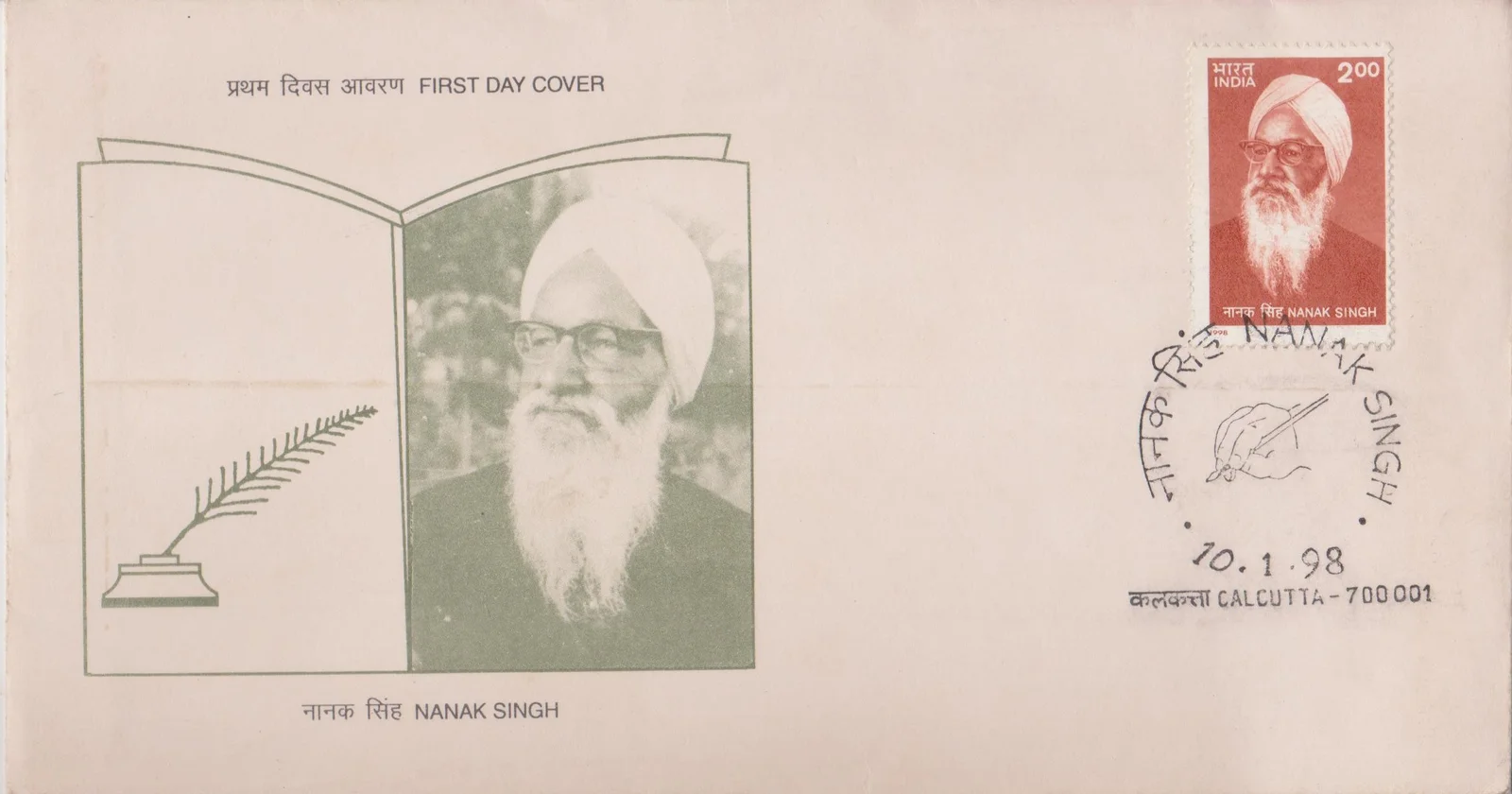
First Day Cover