Indian National Savings Organisation
Technical Data
| Date of Issue | June 30, 1998 |
|---|---|
| Denomination | Rs. 6 |
| Quantity | 700,000 |
| Perforation | comb 13½ x 13 |
| Printer | Security Printing Press, Nashik |
| Printing Process | Photogravure |
| Watermark | No Watermark |
| Colors | Multicolor |
| Credit (Designed By) | |
| Catalog Codes |
Michel IN 1633 Stamp Number IN 1694 Yvert et Tellier IN 1399 Stanley Gibbons IN 1797 |
| Themes | Anniversaries and Jubilees | Coins | Hands | Organizations |
Origins of the Savings Movement
The organised savings movement in India has a history of more than 120 years. Some experts trace its beginning to 1834, when the Government established the first Savings Bank in Calcutta.
Later, the Government Savings Bank Act of 1873 was passed, and the Post Office was declared its agent. However, a structured nationwide savings movement did not emerge until the period of the Second World War.
National Savings Central Bureau
In 1943, the Government of India established the National Savings Central Bureau with headquarters in Shimla. Its purpose was:
- To encourage thrift among citizens
- To counter wartime inflation
- To collect funds for the war effort
Since the war was seen as foreign and imposed, the movement initially received limited public support.
Establishment of the National Savings Organisation
In June 1948, after Independence, the Government of India formally recognised the savings movement and established the National Savings Organisation.
Jawaharlal Nehru emphasized the importance of domestic savings for national development, noting that people’s savings could directly contribute to development plans and make citizens partners in nation-building.
Major Achievements
The National Savings Organisation played a major role in promoting savings across the country. Its achievements include:
- Growth in gross collections under small savings schemes and PPF from Rs. 243 crores during the First Five Year Plan to around Rs. 50,000 crores during the Eighth Five Year Plan.
- Reaching nearly 48 million small savers at the grassroots level.
- Helping finance national and state development programmes.
Contribution to Development
Funds mobilised through small savings schemes became an important source of plan finance for the Union Government. 75% of the collections were returned to States as long-term loans repayable over 25 years for development works such as:
- Building roads
- Providing drinking water
- Supporting infrastructure projects
This made ordinary citizens active participants in the construction of the nation.
Headquarters and Symbolism
The organisation was headquartered at Nagpur, led by the National Savings Commissioner.
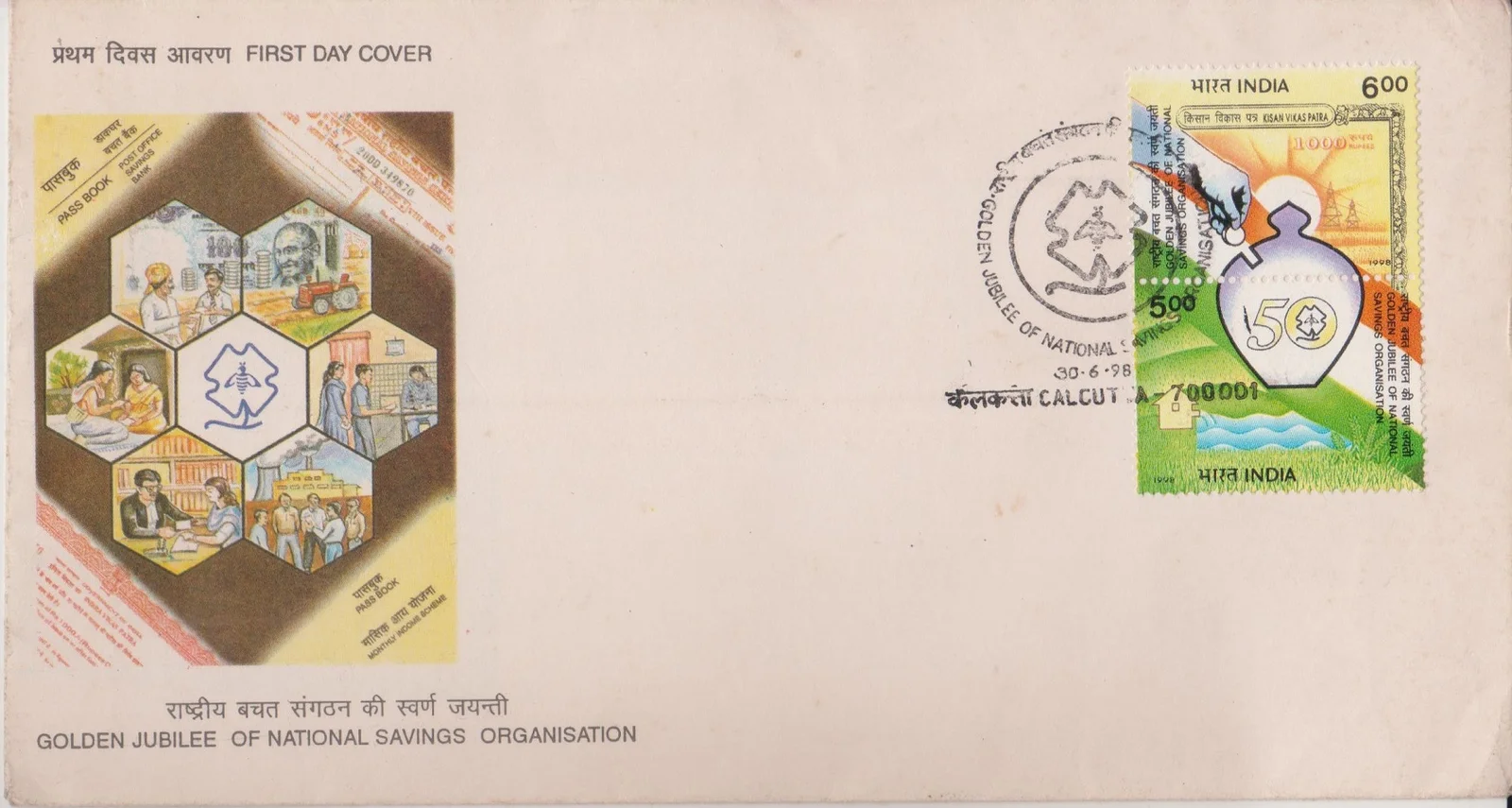
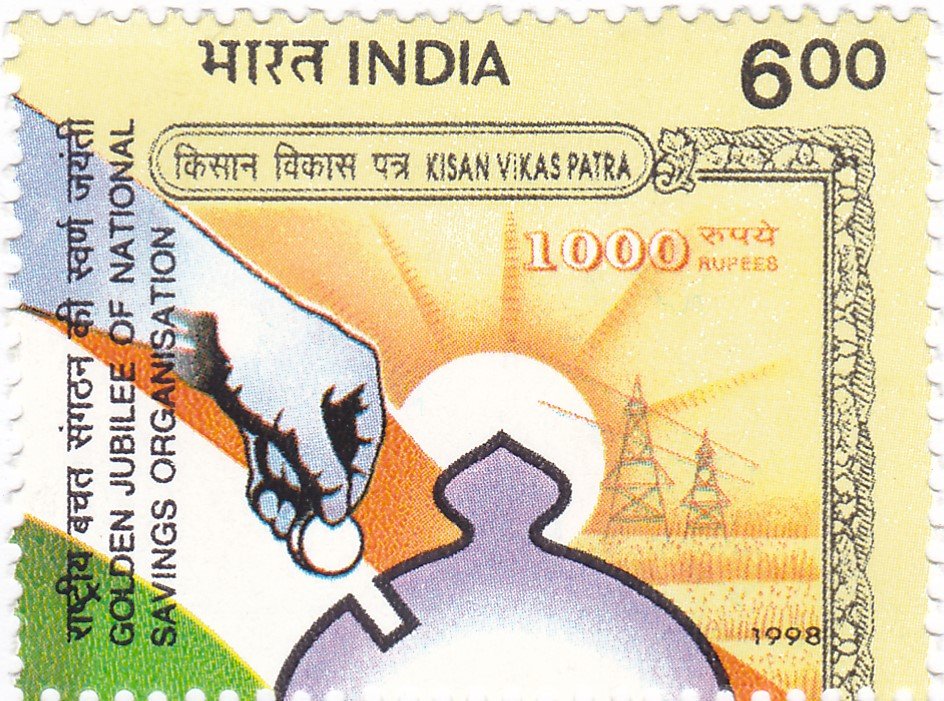
The theme of the commemorative stamp was “Collective Thrift in the March of the Nation.”
The First Day Cover displayed various activities of the organisation, while the cancellation mark featured the honeybee logo, symbolising:
- Untiring effort
- Safety
- Security
- Good returns in small savings
Commemoration
The Department of Posts issued a commemorative postage stamp on the Golden Jubilee of the National Savings Organisation of India.
First Day Cover