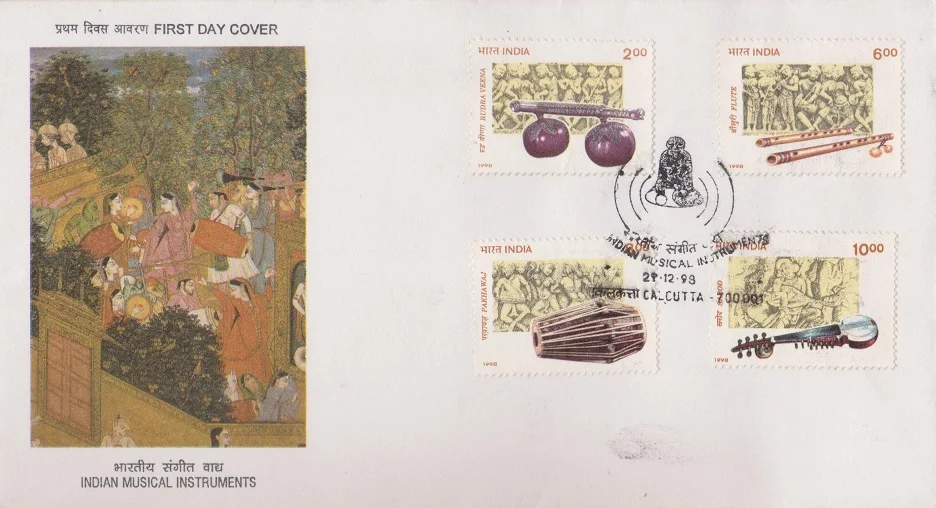
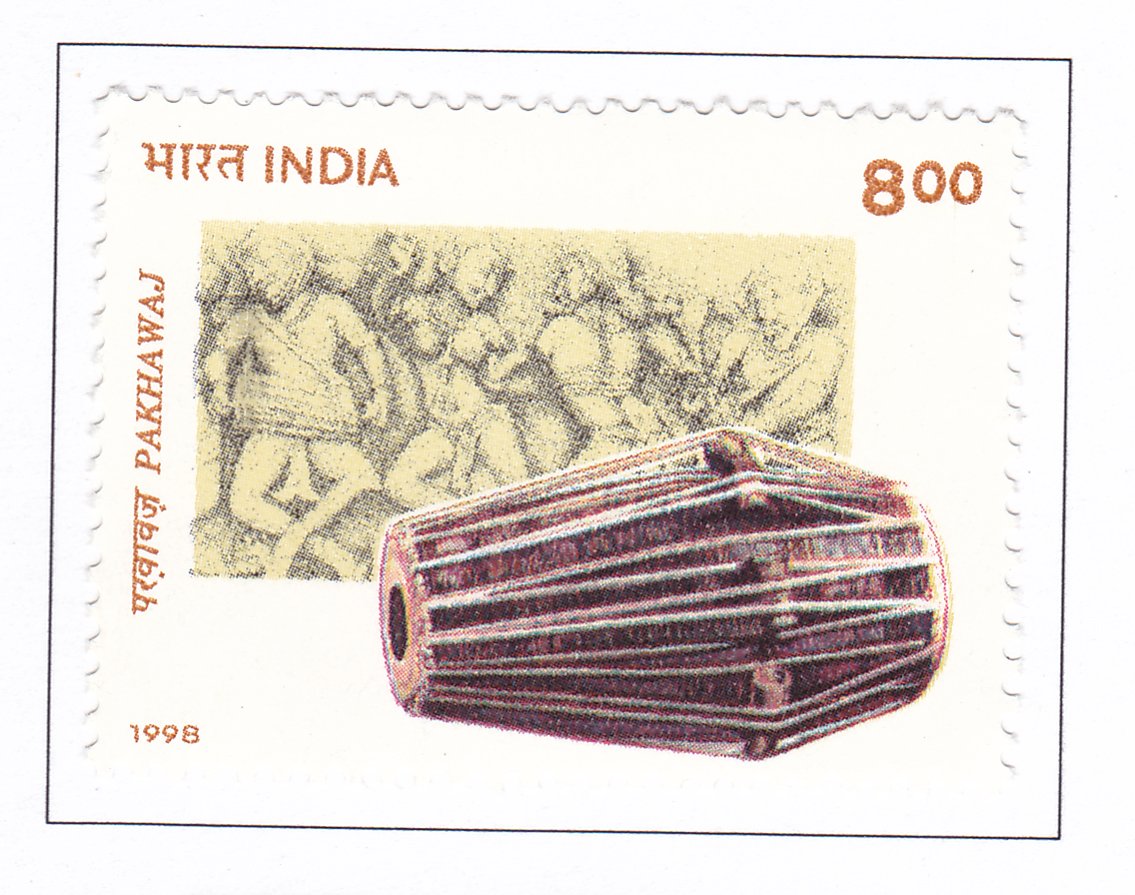
Pakhawaj (wooden barrel drum)
Technical Data
| Stamp Set | Indian Musical Instruments |
|---|---|
| Date of Issue | December 29, 1998 |
| Denomination | Rs. 8 |
| Quantity | 700,000 |
| Perforation | comb 13½ x 13 |
| Printer | Security Printing Press, Nashik |
| Printing Process | Photogravure |
| Watermark | No Watermark |
| Colors | Multicolor |
| Credit (Designed By) | Sh. Sankha Samanta |
| Catalog Codes |
Michel IN 1665 Stamp Number IN 1723 Yvert et Tellier IN 1430 Stanley Gibbons IN 1828 |
| Themes | Musical Instruments |
The Ancient Percussion Instrument of Indian Classical Music
The Pakhawaj is one of the oldest and most important musical instruments of India, known for its deep, resonant tones and strong rhythmic presence. As a key example of Avanaddha Vadya (percussion instruments), it plays a vital role in Indian classical music and traditional dance forms.
Origin and Classification
The Pakhawaj belongs to the category of percussion instruments described in the Natya Shastra, compiled by Bharat Muni.
In this classification, Avanaddha Vadya instruments produce sound through the vibration of stretched membranes (usually animal skin). The Pakhawaj creates rhythmic patterns by striking these surfaces with the hands.
Structure and Design
The Pakhawaj has a distinctive and traditional design:
- A wooden, barrel-shaped body
- Bulging in the middle and tapering at both ends
- Two drumheads made of stretched skin
- Played horizontally while seated
This structure allows the instrument to produce a wide range of bass and treble sounds, creating rich rhythmic textures.
Musical Characteristics
The Pakhawaj is known for:
- Deep, powerful, and resonant tones
- Complex rhythmic patterns (taals)
- Strong accompaniment in classical performances
It is particularly associated with the Dhrupad style of music, where it provides a steady and majestic rhythmic foundation.
Role in Dance and Music
The Pakhawaj plays a significant role in:
- Classical vocal and instrumental music
- Traditional dance forms like Kathak and Odissi
- Devotional and temple music
Its rhythmic patterns enhance the performance and help maintain the tempo and structure of compositions.
Historical Significance
As one of the earliest percussion instruments in North India, the Pakhawaj represents the evolution of rhythmic traditions in Indian music. It is considered a precursor to later instruments like the tabla.
Its long-standing presence highlights the continuity of India’s musical heritage from ancient to modern times.
Representation in Commemorative Stamps
The importance of the Pakhawaj has been recognized by India Post, which featured it in a commemorative stamp series on Musical Instruments of India.
This series showcases:
- The diversity of Indian instruments
- Their cultural and historical significance
- The richness of India’s musical traditions
Conclusion
The Pakhawaj is a powerful symbol of rhythm and tradition in Indian classical music. With its deep sound and historical importance, it continues to be an essential instrument that preserves and enriches India’s musical legacy.
First Day Cover