
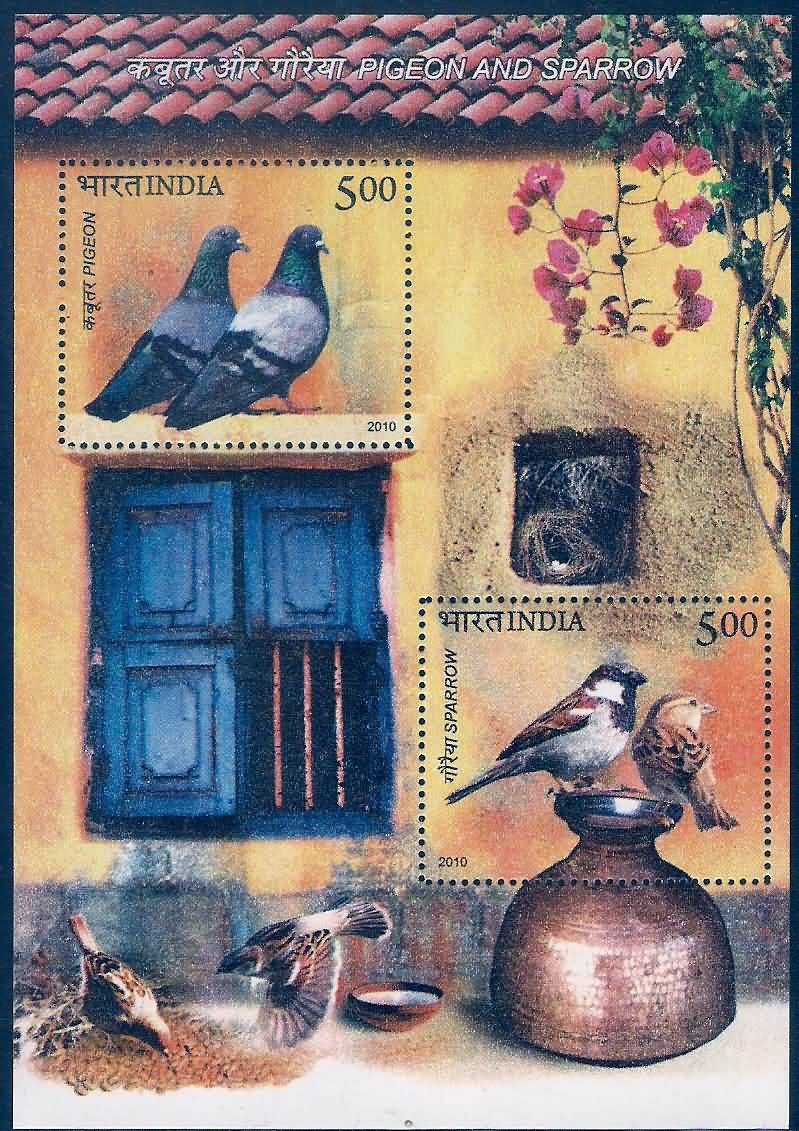
Pigeon and Sparrow (Birds of India)
Technical Data
| Date of Issue | July 9, 2010 |
|---|---|
| Denomination | Rs. 10 |
| Quantity | 400,000 |
| Printer | India Security Press, Nashik |
| Printing Process | Photo Gravure |
| Watermark | No Watermark |
| Colors | Multicolor |
| Credit (Designed By) | Sh. Sankha Samanta |
| Catalog Codes |
Michel IN BL83 Stamp Number IN 2436a Stanley Gibbons IN MS2731 |
| Themes | Animals (Fauna) | Birds | Pigeons |
Stamps in this Miniature Sheet
Rock Pigeon (Columba livia)
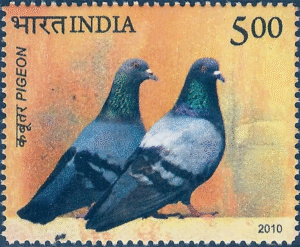
The Rock Pigeon, also known as the Rock Dove, belongs to the family Columbidae, which includes doves and pigeons. Commonly referred to simply as the “pigeon,” this bird is widely recognized in both urban and rural environments.
In the wild, Rock Pigeons are pale grey with two distinctive black bars on each wing. Domestic and feral pigeons, however, show a wide variety of colors and patterns. Males and females look very similar, making them difficult to differentiate at a glance. These birds are generally monogamous, raising two young (squabs) per brood, with both parents involved in caring for their offspring.
Habitat and Behavior:
Rock Pigeons thrive in open and semi-open habitats, including agricultural lands and cities. In the wild, they nest on cliffs and rocky ledges, while in urban areas, they utilize roof ledges, buildings, and other artificial structures.
Physical Description:
- Size: 32–37 cm long
- Wingspan: 64–72 cm
- Flight: Extremely agile, capable of speeds up to 85 mph
- Coloration: Dark bluish-grey head, neck, and chest, with glossy iridescence in green, purple, and reddish hues along the neck and wings
- Eyes: Orange, red, or golden with a pale inner ring
- Bill and Feet: Grey-black bill with off-white cere; purplish-red feet
The female Rock Pigeon is almost identical to the male but has less intense iridescence on the neck and chest. The white lower back is a key identifying feature, along with the black wing bars and the black-tipped tail edged with white.
Diet and Social Behavior:
Pigeons feed on the ground, either in flocks or individually. They roost communally on buildings, statues, or walls. When drinking, they can sip water continuously without tilting their heads back. Disturbances trigger noisy take-offs, producing a characteristic clapping sound.
Vocalizations:
Rock Pigeons are moderately vocal, with a rapid, undulating “croooo-croooo” call. Due to their adaptation to human presence, they often appear semi-tame and may approach people for food.
House Sparrow (Passer domesticus)
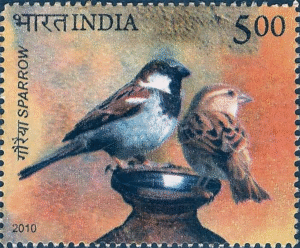
The House Sparrow is a small, robust bird, measuring 14–18 cm in length. It has a rounded head, short tail, and stout bill. Males are typically larger in winter, while females may appear larger during the breeding season.
Plumage and Identification:
- Males: Grey crown, black throat patch (“bib”), pale grey cheeks and underparts; warm brown streaked upper back
- Females and Juveniles: Buff-colored with brown streaked upper parts, lacking black markings
Behavior and Habitat:
House Sparrows are highly social birds, feeding in flocks and roosting communally. Their nests are often clustered together, and they engage in social behaviors such as dust and water bathing and “social singing” in bushes.
These birds primarily feed on the ground but also forage in trees and shrubs. Once abundant, House Sparrows are now declining in India and worldwide due to rapid urbanization.
Vocalizations:
All vocalizations of the House Sparrow revolve around short, repeated chirps, giving the species its familiar and constant background chatter in urban and rural areas.
Birds of India Commemorative Miniature Sheet
A miniature sheet featuring two commemorative stamps celebrates the iconic Birds of India, highlighting the Rock Pigeon and House Sparrow. These stamps honor the beauty and ecological importance of these familiar species while raising awareness about their conservation.
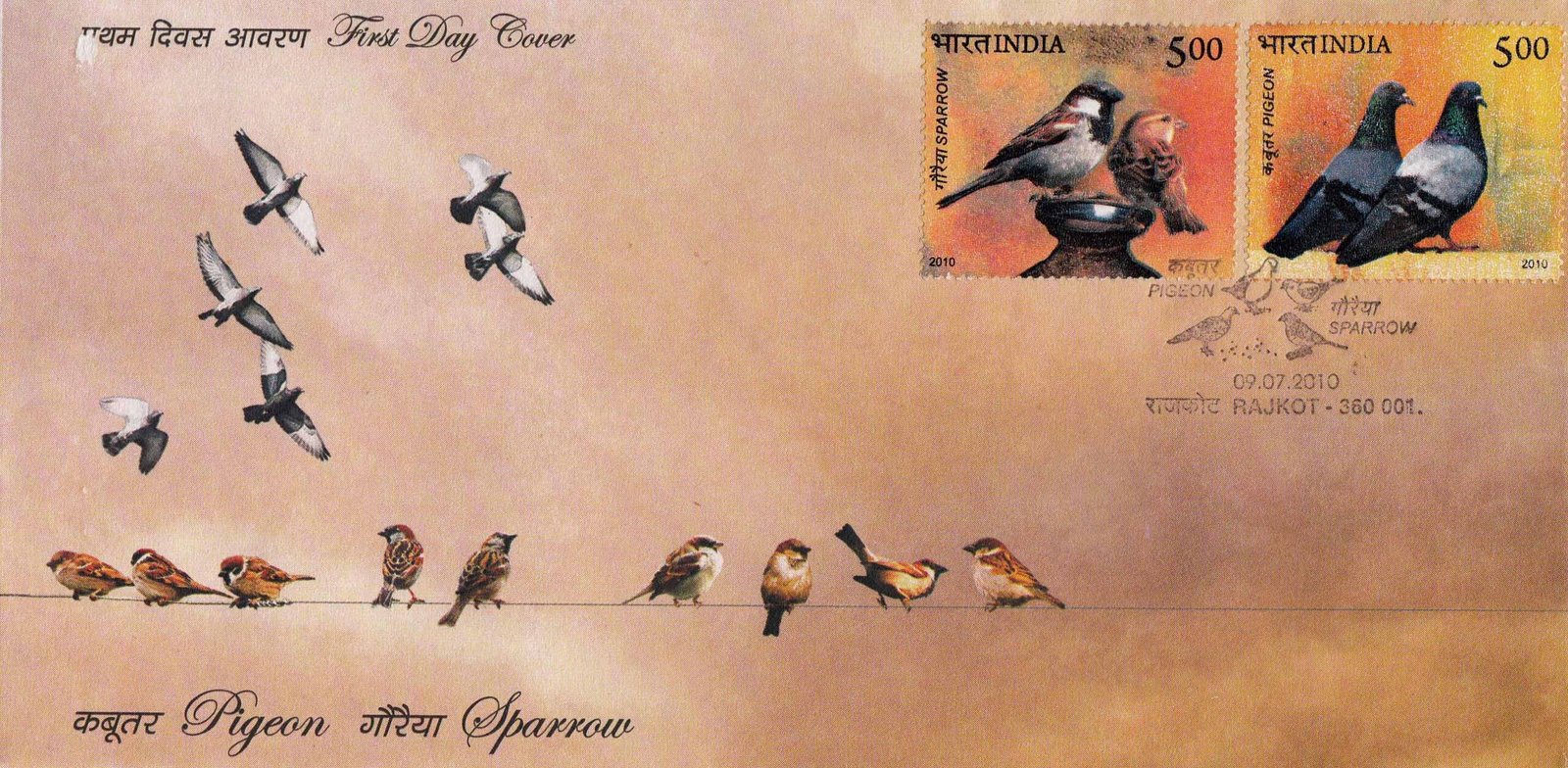
First Day Cover
Leave a Comment
You must be logged in to post a comment.