
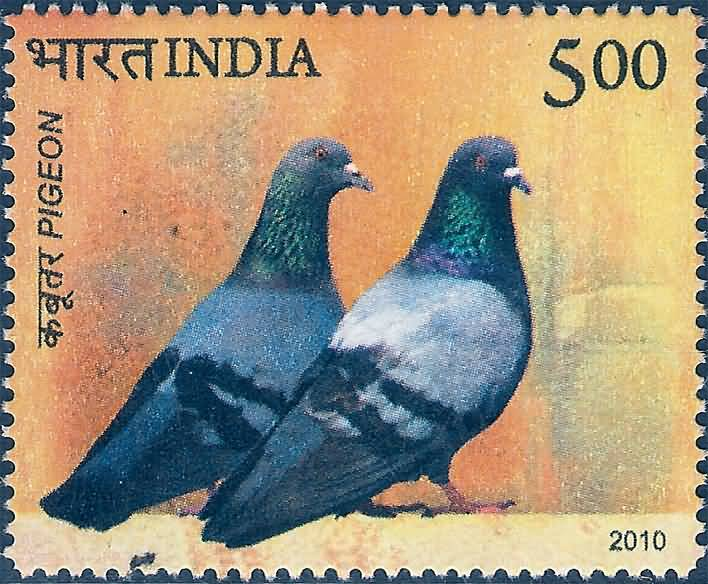
Pair of Rock Pigeons
Technical Data
| Date of Issue | July 9, 2010 |
|---|---|
| Denomination | Rs. 5 |
| Quantity | 800,000 |
| Printer | India Security Press, Nashik |
| Printing Process | Photo Gravure |
| Watermark | No Watermark |
| Colors | Multicolor |
| Credit (Designed By) | Sh. Sankha Samanta |
| Catalog Codes |
Michel IN 2497 Stamp Number IN 2435 Yvert et Tellier IN 2261 Stanley Gibbons IN 2729 WADP Numbering System - WNS IN043.2010 |
| Themes | Animals (Fauna) | Birds | Pigeons |
The Familiar Rock Dove
The Rock Pigeon, also known as the Rock Dove, belongs to the bird family Columbidae, which includes doves and pigeons. In everyday language, it is simply referred to as the “pigeon.”
Appearance and Identification
Wild Rock Pigeons are generally pale grey with two distinctive black bars on each wing. Domestic and feral pigeons, however, display a wide range of colors and patterns. Males and females look very similar, though the female’s iridescent neck feathers are usually less intense, and the breast may show minimal gloss.
Key identification features include:
- Size: 32–37 cm in length
- Wingspan: 64–72 cm
- Coloration: Dark bluish-grey head, neck, and chest with glossy yellow, green, and reddish-purple iridescence along the neck and wings
- Eyes: Orange, red, or golden with a pale inner ring
- Bill and Feet: Grey-black bill with an off-white cere; purplish-red feet
- Tail: Black band at the tip with white margins on the outer tail feathers
- White lower back: A distinct feature of the pure Rock Pigeon
Habitat and Behavior
Rock Pigeons are adaptable birds found in open and semi-open habitats, including agricultural lands and urban areas. In the wild, they nest on cliffs and rocky ledges, while cities provide artificial nesting sites such as ledges, rooftops, and building crevices.
Pigeons are generally monogamous, raising two squabs per brood with both parents participating in care.
These birds are highly agile fliers, capable of speeds up to 85 miles per hour with their tapered, falcon-like wings. They feed on the ground, either in flocks or alone, and roost together on buildings, walls, or statues.
When drinking, pigeons can either take small sips while tilting their heads or drink continuously by dipping their bills without tilting. When disturbed, a group of pigeons takes off with a characteristic noisy clapping sound.
Vocalizations and Human Interaction
Rock Pigeons are moderately vocal, especially in large flocks, producing a rapid, undulating “croooo-croooo” call. Accustomed to human presence, they often appear semi-tame and may approach people for food. Large flocks are commonly seen foraging together or roosting in close contact.
Commemorative Postage Stamps
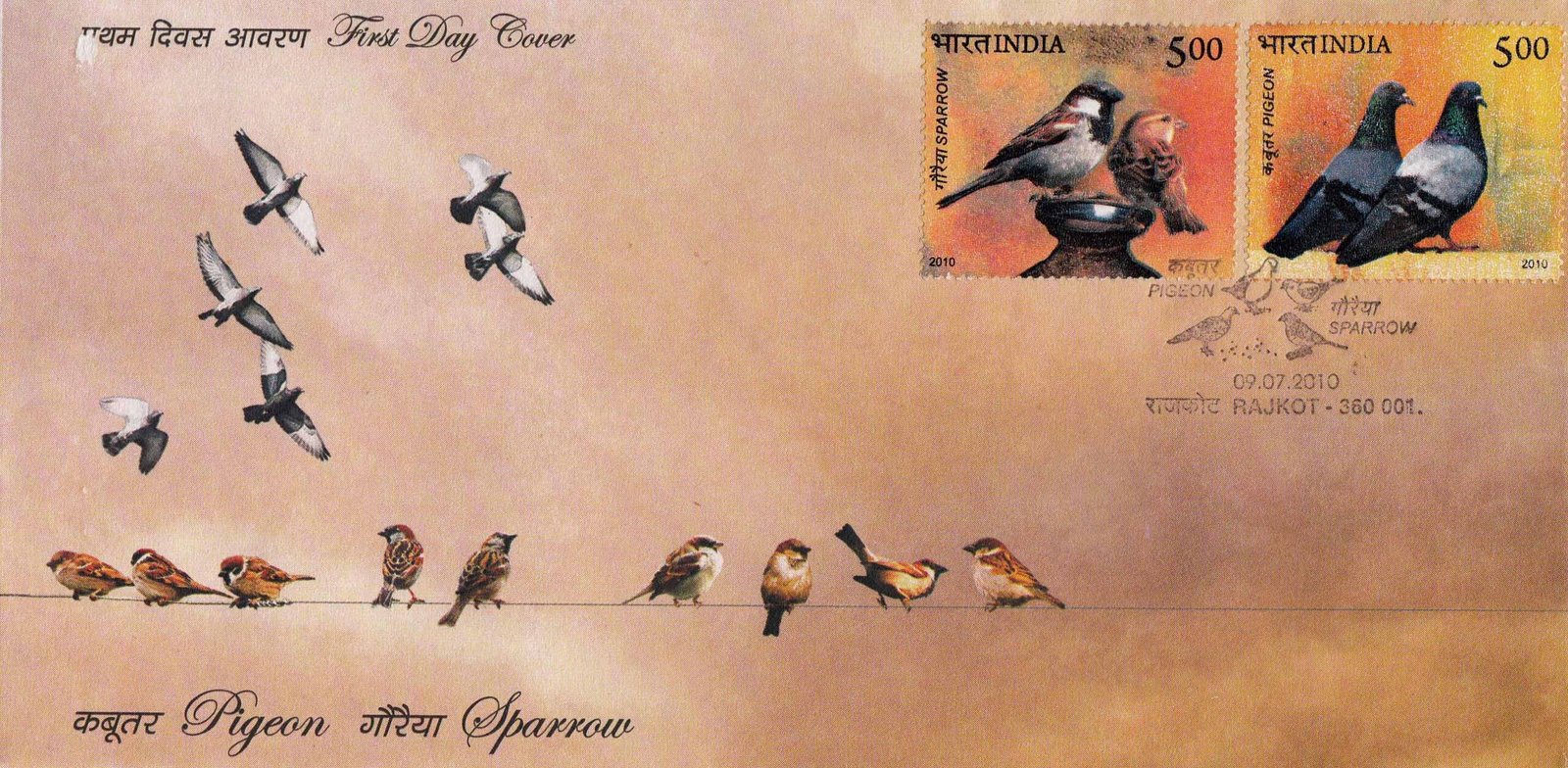
To honor this iconic bird, the Department of Posts has issued a set of special commemorative postage stamps featuring the Rock Pigeon. This stamp celebrate the familiar and beloved birds of India, highlighting their importance in urban and rural environments.
First Day Cover
Leave a Comment
You must be logged in to post a comment.