
Pterospermum Acerifolium
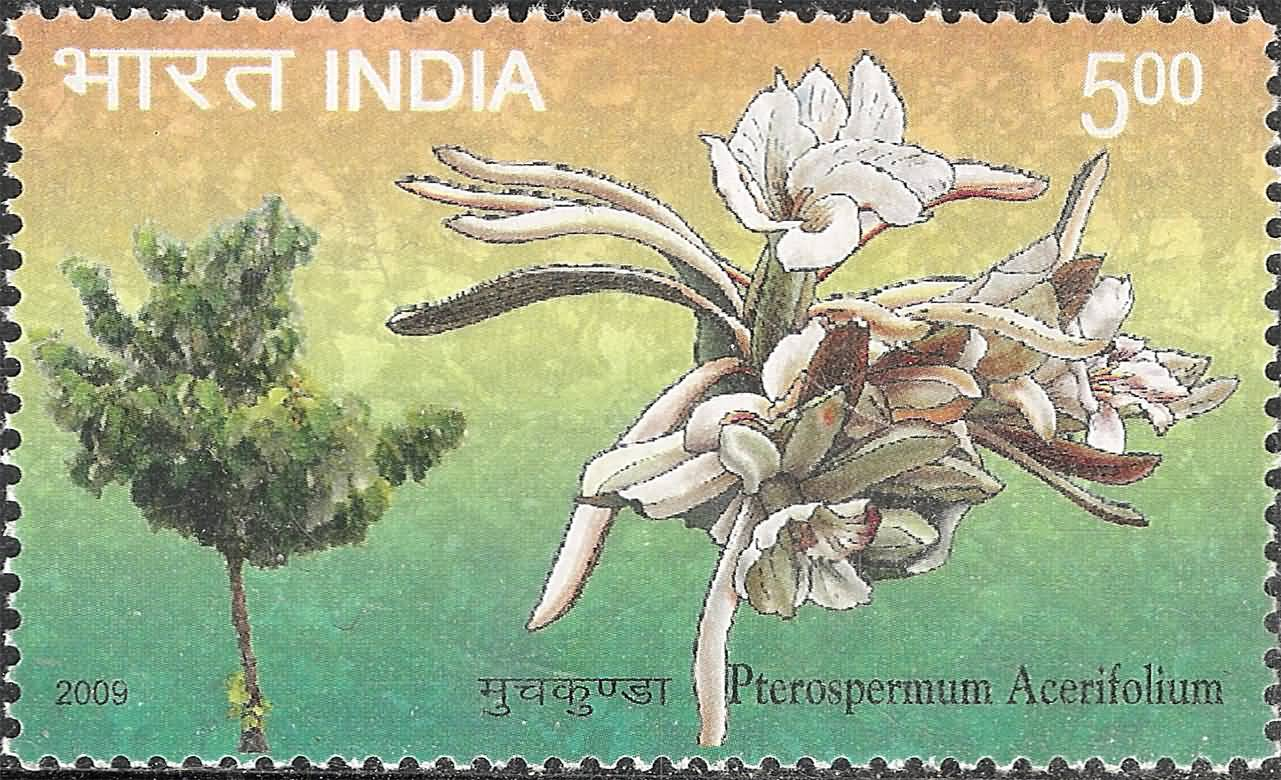
Technical Data
| Date of Issue | March 6, 2009 |
|---|---|
| Denomination | Rs. 5 |
| Quantity | 3,000,000 |
| Perforation | 13 |
| Printer | Security Printing Press, Hyderabad |
| Printing Process | Wet Offset |
| Watermark | No Watermark |
| Colors | Multicolor |
| Credit (Designed By) | Mr. Suresh Kumar |
| Catalog Codes |
Michel IN 2361 Stamp Number IN 2318 Yvert et Tellier IN 2120 Stanley Gibbons IN 2580 WADP Numbering System - WNS IN017.2009 |
| Themes | Flowers | Plants (Flora) | Trees |
The Ornamental Karnikar of India
Pterospermum acerifolium, commonly known as the Bayur Tree, Dinnerplate Tree, Maple-leaved Bayur, Mayeng, Kanakchampa, Kaniar or Katha Champa, is a magnificent flowering tree native to the Indian subcontinent. Revered for its beauty, fragrance, and medicinal value, it holds both botanical and cultural importance in India.
Botanical Description
Belonging to the family Sterculiaceae, this impressive tree typically grows to a height of 50–70 feet. The name “Pterospermum” is derived from the Greek words petron (wing) and sperma (seed), referring to its winged seeds.
- Leaves: Simple, alternate, stipulate, and palmately ribbed. The underside is pale grey, while young leaves have a soft, downy covering that sheds as they mature.
- Bark: Soft and grey in colour.
- Twigs: Feathery and rusty-brown.
- Flowers: Large, fragrant, nocturnal white blossoms occurring in axillary fascicles.
- Fruit/Wood: Produces reddish wood used for planking, boxes, and spars.
The tree is native to Northern India, Assam, and Burma (Myanmar). In northern regions, it grows tall and slender, while in southern regions, it does not attain the same height.
Distinctive Features
Often referred to as the Karnikar tree, it is admired for its exceptionally large leaves and flowers. The broad, round leaves are traditionally used as natural plates and for wrapping materials. In rural practices, leaves have also been placed beneath roofs to prevent leakage.
The tree’s golden-hued flowers have a striking tassel-like form, making it highly ornamental. Their intense fragrance can be sensed from a considerable distance, though it fades soon after plucking.
Medicinal and Practical Uses
Various parts of the tree are valued in traditional medicine:
- Flowers are used to prepare tonics.
- Remedies derived from them are traditionally used for inflammation, ulcers, and tumours.
- Wood is used for planking, boxes, and structural purposes.
The tree is also widely planted as an ornamental or shade tree due to its majestic appearance.
Cultural Significance
The Karnikar flower holds a special place in Indian mythology. In the Bhagavata Purana, the golden pendant flowers of Karnikar are described as adorning the ears of Krishna, symbolizing divine beauty and grace.
Philatelic Recognition
Recognizing its botanical beauty and cultural importance, India Post issued a commemorative postage stamp on Pterospermum acerifolium, celebrating this remarkable tree of India’s natural heritage.
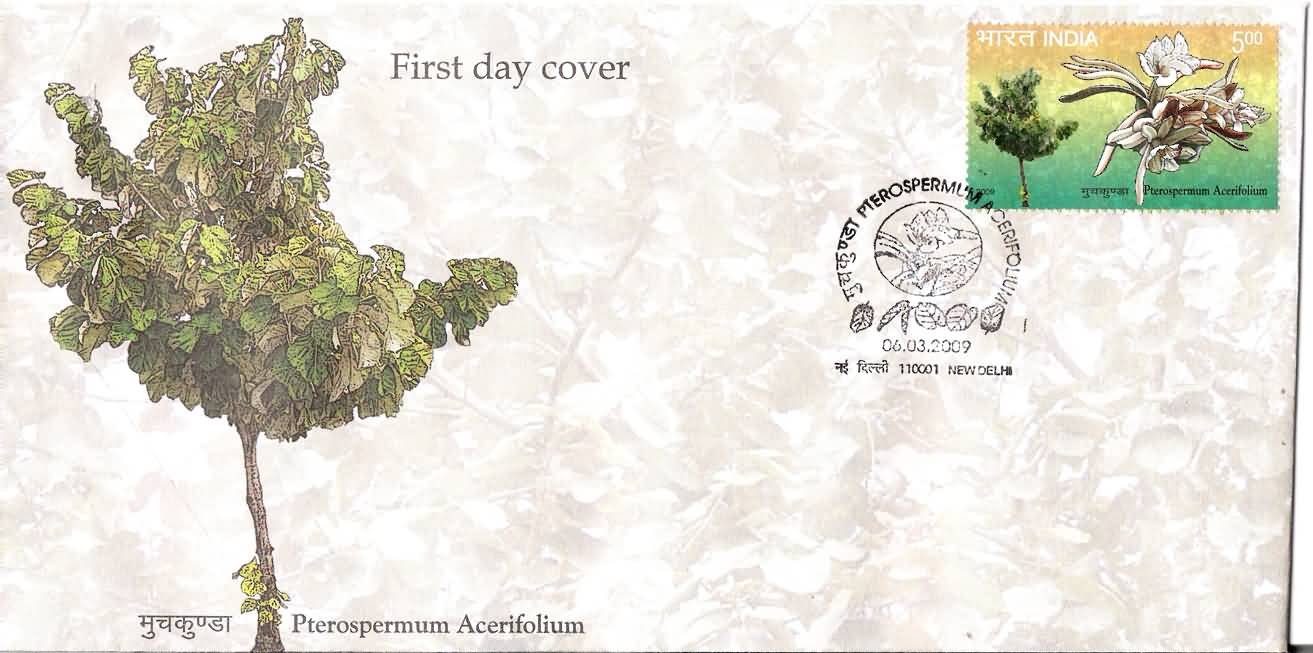
First Day Cover
Leave a Comment
You must be logged in to post a comment.