
Prafulla Chandra Chaki
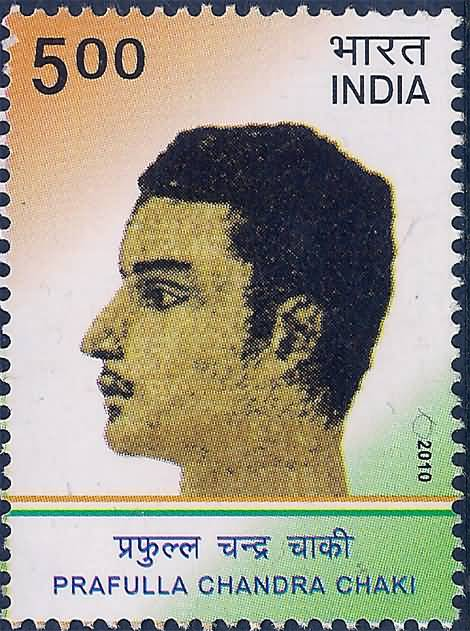
Technical Data
| Date of Issue | December 11, 2010 |
|---|---|
| Denomination | Rs. 5 |
| Quantity | 300,000 |
| Perforation | 13 |
| Printer | India Security Press, Nashik |
| Printing Process | Photo Gravure |
| Watermark | No Watermark |
| Colors | Multicolor |
| Credit (Designed By) | Ms. Nenu Gupta |
| Catalog Codes |
Michel IN 2534 Stamp Number IN 2472 Yvert et Tellier IN 2297 Stanley Gibbons IN 2773 WADP Numbering System - WNS IN080.2010 |
| Themes | Commemoration | Famous people | Men | Revolutionaries |
A Revolutionary Martyr of India’s Freedom Struggle
Early Life and Awakening of Revolutionary Spirit
Prafulla Chandra Chaki was born on December 11, 1888, in the village of Bagra (then in Bihar district of Bengal Presidency, now in Bangladesh) to Shri Raj Narain and Smt. Swarnmai Devi. From a young age, he displayed a deep sense of patriotism and resistance against British rule.
While studying in Class 9 at Rangpur Zilla School, he participated in a student demonstration protesting against the repressive Carlile Circular issued by the Government of Eastern Bengal and Assam. For defying this directive, he was expelled from school. He later joined Rangpur National School, where he came into close contact with prominent revolutionaries such as Jitendra Narayan Roy, Abinash Chakravarti, and Ishan Chandra Chakravarti. These associations shaped his belief in armed resistance as a means to secure India’s freedom.
Association with Jugantar Party
Prafulla Chaki was brought to Kolkata by Barindra Kumar Ghosh and became a member of the revolutionary organization Jugantar. His early assignment involved a plan to assassinate Sir Joseph Bampfylde Fuller, the first Lieutenant Governor of the newly formed province of Eastern Bengal and Assam. However, this plan did not materialize.
Subsequently, Prafulla Chaki, along with Khudiram Bose, was entrusted with the mission of targeting Kingsford, the then Calcutta Presidency Magistrate, who was later transferred to Muzaffarpur in Bihar due to threats against him.
The Muzaffarpur Incident
On the evening of April 30, 1908, the two young revolutionaries carried out their plan. They waited outside Kingsford’s residence and hurled bombs at a carriage believed to be carrying him. Tragically, the carriage was occupied not by Kingsford but by two British women, Mrs. and Miss Kennedy, who were killed in the explosion.
Following the incident, both revolutionaries fled separately. Prafulla Chaki disguised himself and boarded a train to Kolkata. However, he was suspected by Sub-Inspector Nandlal Banerjee at Samastipur. When surrounded by police at Mokameh station on May 2, 1908, Prafulla Chaki chose to sacrifice his life rather than be captured. He shot himself, embracing martyrdom at the age of just 19. Khudiram Bose was later arrested and executed by hanging.
Commemorative Postage Stamp
To honor the courage, commitment, and supreme sacrifice of Prafulla Chandra Chaki, India Post issued a commemorative postage stamp on the occasion of his 123rd Birth Anniversary. The stamp stands as a tribute to his unwavering dedication to India’s freedom struggle and immortalizes the memory of a young revolutionary who gave his life for the nation.
Legacy
Prafulla Chandra Chaki remains a symbol of youthful bravery and revolutionary zeal. His sacrifice, alongside fellow revolutionaries, contributed significantly to inspiring future generations in the fight for independence. The commemorative stamp not only recognizes his martyrdom but also serves as a reminder of the immense sacrifices made by countless freedom fighters in India’s journey toward independence.
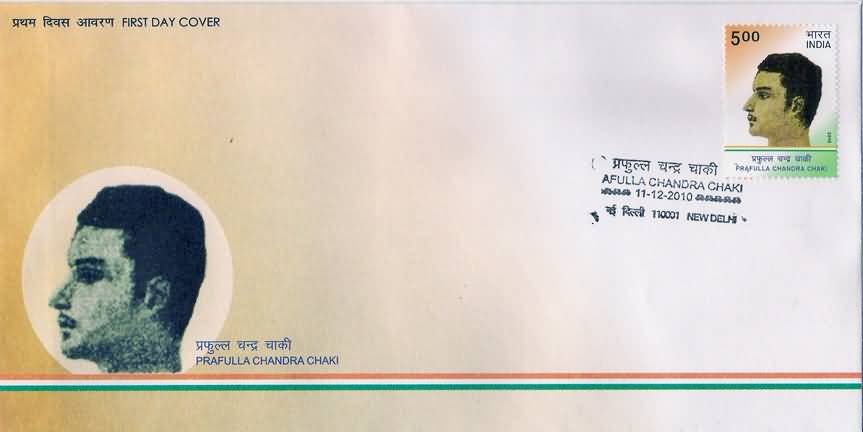
First Day Cover
Leave a Comment
You must be logged in to post a comment.