
Preserve the Polar Regions and Glaciers
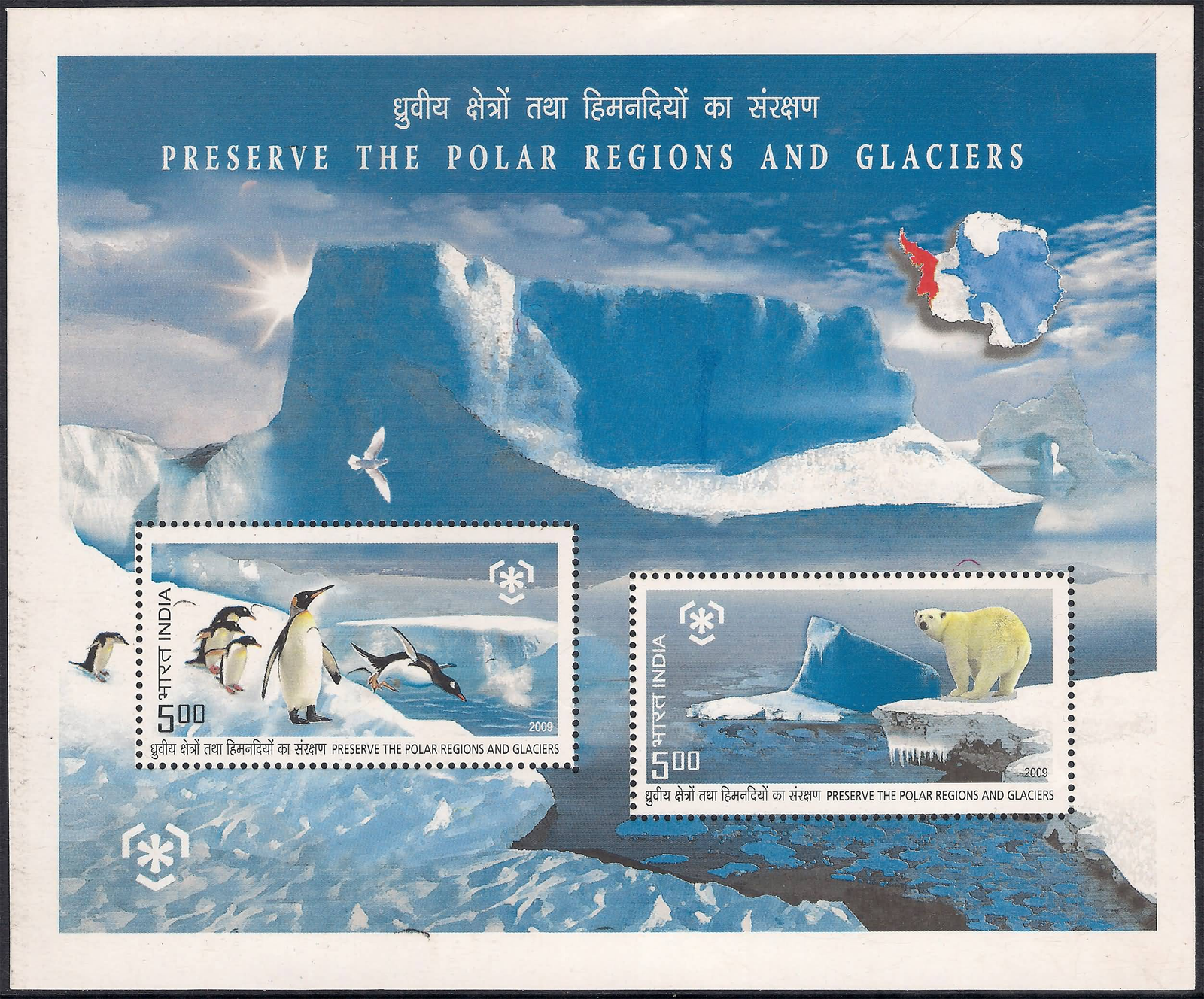
Technical Data
| Date of Issue | December 19, 2009 |
|---|---|
| Denomination | Rs. 10 |
| Quantity | 800,000 |
| Perforation | 13 |
| Printer | Security Printing Press, Hyderabad |
| Printing Process | Wet Offset |
| Watermark | No Watermark |
| Colors | Multicolor |
| Credit (Designed By) | Sh. Sankha Samanta |
| Catalog Codes |
Michel IN BL78 Stamp Number IN 2390a Stanley Gibbons IN MS2680 WADP Numbering System - WNS 105MS.2009 |
| Themes | Environment Protection | Glaciers | Penguins | Polar Bears |
Stamps in this Miniature Sheet
Climate Change, Wildlife, and the Urgent Need for Conservation
Earth’s Polar Regions, also known as the Frigid Zones, include the North Pole and the South Pole. These regions are covered by vast polar ice caps, resting over the Arctic Ocean in the north and the continent of Antarctica in the south.
Though remote and icy, the Polar Regions play a critical role in regulating the planet’s climate and sustaining global ecological balance.
Why the Polar Regions Are Crucial to the Planet
The Arctic and Antarctic regions act as Earth’s natural cooling systems. The white ice reflects a large portion of the sun’s heat back into space, helping to regulate global temperatures. This process, known as the albedo effect, prevents excessive warming of the planet.
However, due to anthropogenic global warming, polar sea ice is rapidly diminishing. Scientists estimate that the Arctic could experience nearly ice-free summers by 2040—or even sooner.
Over the past 50 years, temperatures in the Polar Regions have risen by approximately 2.5°C. This warming trend is accelerating the melting of ice and snow, leading to:
- Rising global sea levels
- Changes in atmospheric circulation
- Disruption of global weather patterns
- Impact on coastal communities worldwide
The effects of climate change in the Polar Regions are not confined to the poles—they influence climates as far away as the tropics.
Impact of Climate Change on Polar Wildlife
The Polar Regions are home to uniquely adapted species that thrive in extreme cold conditions. From tiny lichens on Arctic tundra rocks to massive whales in icy oceans, life here is both diverse and fragile.
Iconic animals of the Polar Regions include:
- Polar bear – The largest bear species, heavily dependent on sea ice for hunting.
- Emperor penguin – The world’s largest penguin, reliant on stable Antarctic sea ice.
- Seals and walruses
- Whales, including blue whales in the Southern Ocean
Melting sea ice threatens the survival of these species. Studies suggest that Emperor penguins could face extinction by the end of this century if Antarctic ice loss continues. Similarly, polar bears in the Arctic are increasingly at risk as shrinking sea ice limits their hunting grounds.
Climate change disrupts breeding cycles, feeding patterns, and habitats—placing entire populations under stress.
Ecological Interconnectedness: A Global Responsibility
The Polar Regions remind us of a fundamental truth: the Earth’s ecosystems are interconnected. Environmental changes in the Arctic and Antarctic affect weather systems, ocean currents, and sea levels worldwide.
The famous phrase, “No man is an island,” reflects today’s scientific reality—human life is deeply linked to animal species, plant life, oceans, climate, and air quality. Protecting the Polar Regions is not just about saving distant icy lands; it is about safeguarding the planet’s future.
Maintaining ecological balance requires commitment, awareness, and responsible action at both individual and global levels.
Miniature Sheet on Saving the Polar Regions
To raise awareness about the urgent need to protect Earth’s fragile Polar Regions, India Post issued a Miniature Sheet consisting of two commemorative postage stamps carrying the message to save the Polar Regions.
These commemorative stamps highlight:
- The environmental importance of the Arctic and Antarctic
- The impact of climate change on polar ice caps
- The need for global cooperation in conservation efforts
By releasing this Miniature Sheet, India Post contributes to sensitizing people about climate change and encourages collective responsibility to leave the Earth a better place for future generations.
Conclusion: Protecting the Frigid Zones for Future Generations
Earth’s Polar Regions are not isolated, frozen wastelands—they are powerful climate regulators and vital ecosystems. Rapid ice loss and global warming threaten wildlife, coastal communities, and the stability of global weather systems.
Protecting the Arctic and Antarctic is a shared global responsibility. Through awareness initiatives such as commemorative postage stamps and environmental campaigns, we can inspire action and preserve these majestic yet vulnerable regions for generations to come.
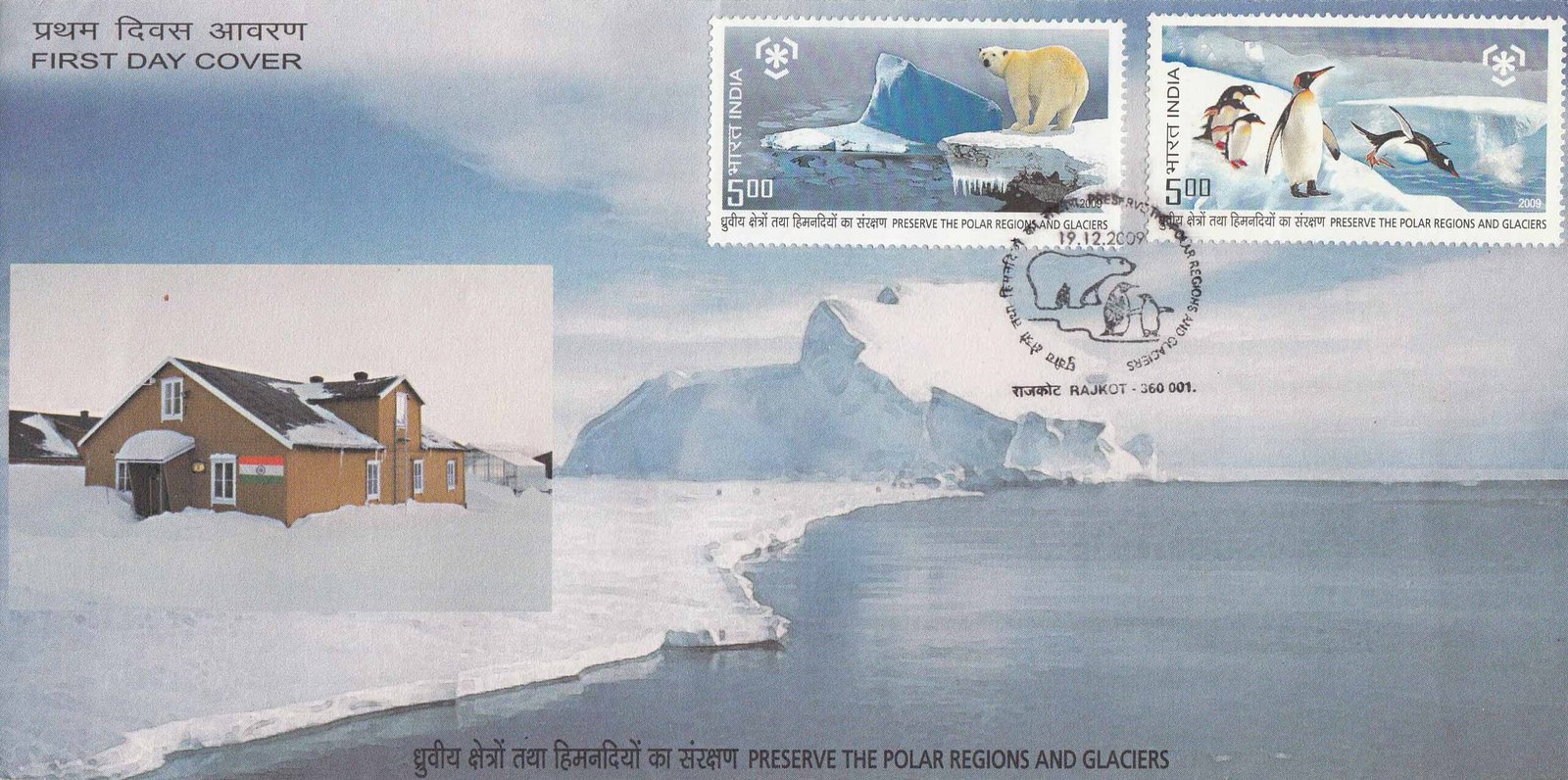
First Day Cover
Leave a Comment
You must be logged in to post a comment.