
Penguins
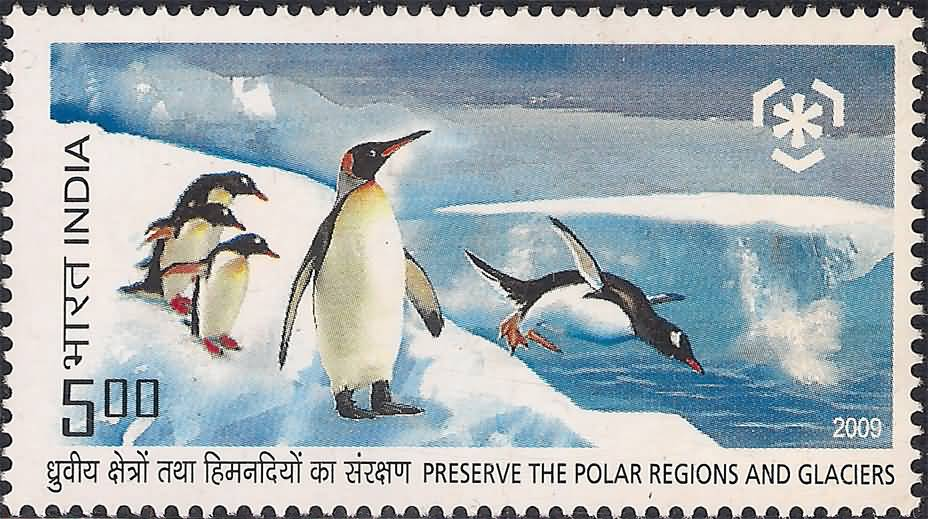
Technical Data
| Date of Issue | December 19, 2009 |
|---|---|
| Denomination | Rs. 5 |
| Quantity | 3,000,000 |
| Perforation | 13 |
| Printer | Security Printing Press, Hyderabad |
| Printing Process | Wet Offset |
| Watermark | No Watermark |
| Colors | Multicolor |
| Credit (Designed By) | Sh. Sankha Samanta |
| Catalog Codes |
Michel IN 2451 Stamp Number IN 2389 Stanley Gibbons IN 2678 WADP Numbering System - WNS IN104.2009 |
| Themes | Animals (Fauna) | Birds | Glaciers | Penguins |
The Majestic Survivor of Antarctica
The Emperor penguin is the largest and most iconic penguin species in the world. Native to the icy wilderness of Antarctica, this remarkable bird symbolizes endurance, adaptation, and the fragile beauty of Earth’s Polar Regions.
As climate change accelerates and Antarctic sea ice continues to decline, the survival of the Emperor penguin is increasingly at risk.
Habitat of the Emperor Penguin
Emperor penguins live exclusively in Antarctica and depend heavily on stable sea ice for survival. Unlike many other species, they breed during the harsh Antarctic winter, enduring temperatures that can drop below –50°C.
Sea ice is essential for:
- Breeding and nesting
- Raising chicks
- Accessing feeding grounds
- Protection from predators
The Southern Ocean surrounding Antarctica provides abundant marine life, including fish, squid, and krill, which form the primary diet of Emperor penguins.
Extraordinary Adaptations to Extreme Cold
The Emperor penguin is uniquely adapted to survive in one of the harshest climates on Earth:
- Thick layers of insulating fat
- Dense waterproof feathers
- Huddling behavior to conserve warmth
- Ability to dive more than 500 meters deep in search of food
One of the most remarkable features of this species is its breeding behavior. After the female lays a single egg, the male balances it carefully on his feet under a fold of skin called a brood pouch, protecting it from freezing temperatures while fasting for weeks.
Climate Change and the Threat to Emperor Penguins
The greatest threat to the Emperor penguin is the melting of Antarctic sea ice due to global climate change.
Rising temperatures in the Polar Regions are causing:
- Early sea ice breakup
- Reduced breeding platforms
- Increased chick mortality
- Limited access to food
Scientific studies suggest that if sea ice decline continues at the current rate, Emperor penguin populations could face severe decline—or even near extinction—by the end of this century.
Because the Polar Regions act as Earth’s natural cooling system, ice loss in Antarctica not only threatens Emperor penguins but also affects global sea levels and weather systems.
Ecological Importance
As a key species in the Antarctic ecosystem, Emperor penguins play an important role in the marine food chain. Changes in their population reflect broader environmental shifts in the Southern Ocean.
Their vulnerability serves as a powerful reminder that the Earth’s ecosystems are interconnected. Environmental disturbances in Antarctica influence climates and communities far beyond the continent itself.
Conservation and Awareness Initiatives
Protecting Emperor penguins requires urgent global efforts to reduce greenhouse gas emissions and slow climate change. Conservation measures include:
- Monitoring penguin colonies
- Studying sea ice patterns
- Promoting environmental awareness
To highlight the urgent need to protect the Polar Regions and their wildlife, including the Emperor penguin, India Post issued a commemorative postage stamp carrying the message to save the Polar Regions.
Such commemorative stamp not only honor the beauty of these extraordinary birds but also serve as reminders of our shared responsibility to protect fragile ecosystems.
Conclusion
The Emperor penguin stands as a powerful symbol of resilience in one of the planet’s harshest environments. Yet its future depends on the preservation of Antarctic sea ice and global commitment to environmental sustainability.
Saving the Emperor penguin means protecting Antarctica—and ultimately safeguarding Earth’s climate for generations to come.
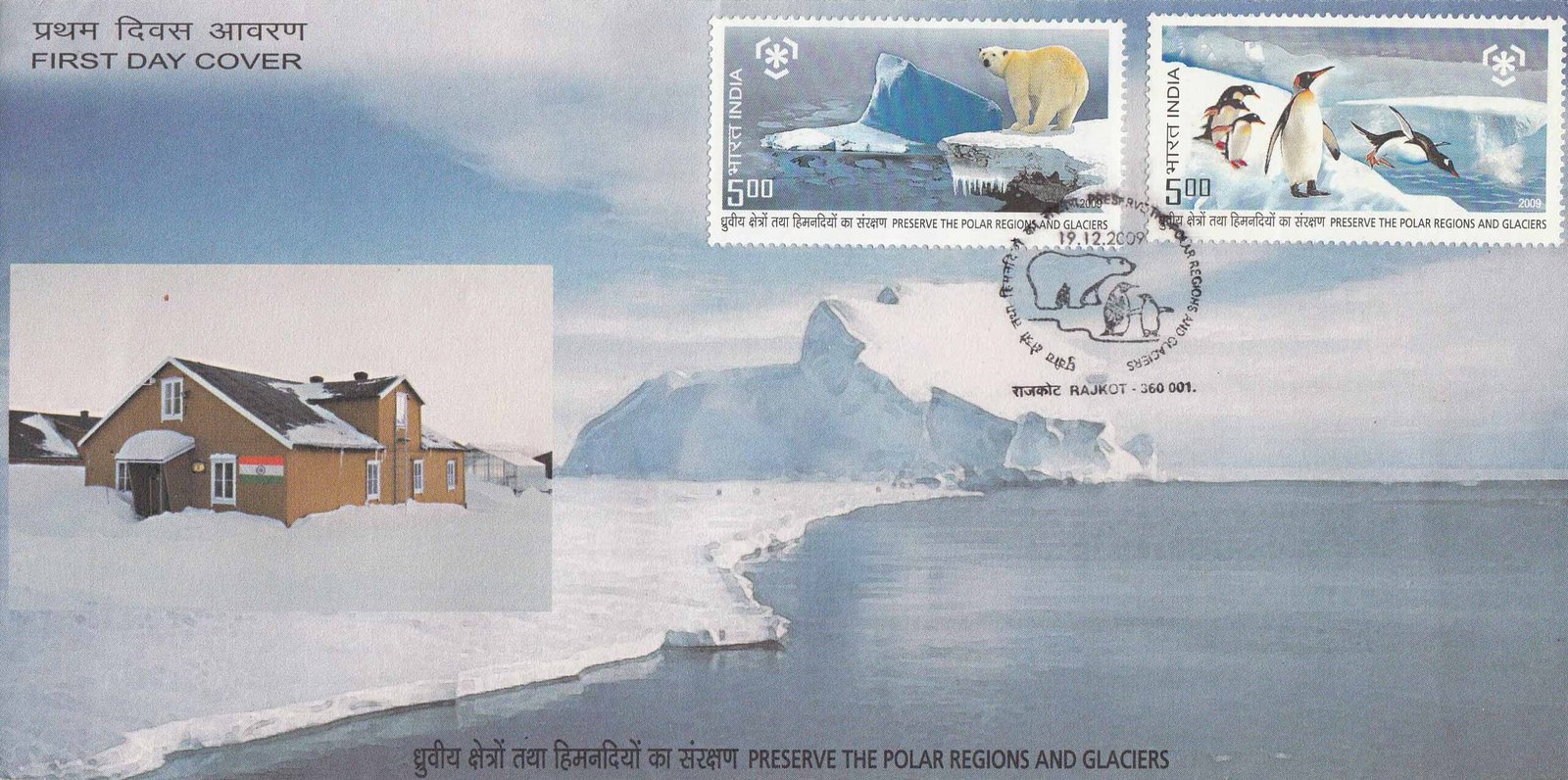
First Day Cover
Leave a Comment
You must be logged in to post a comment.