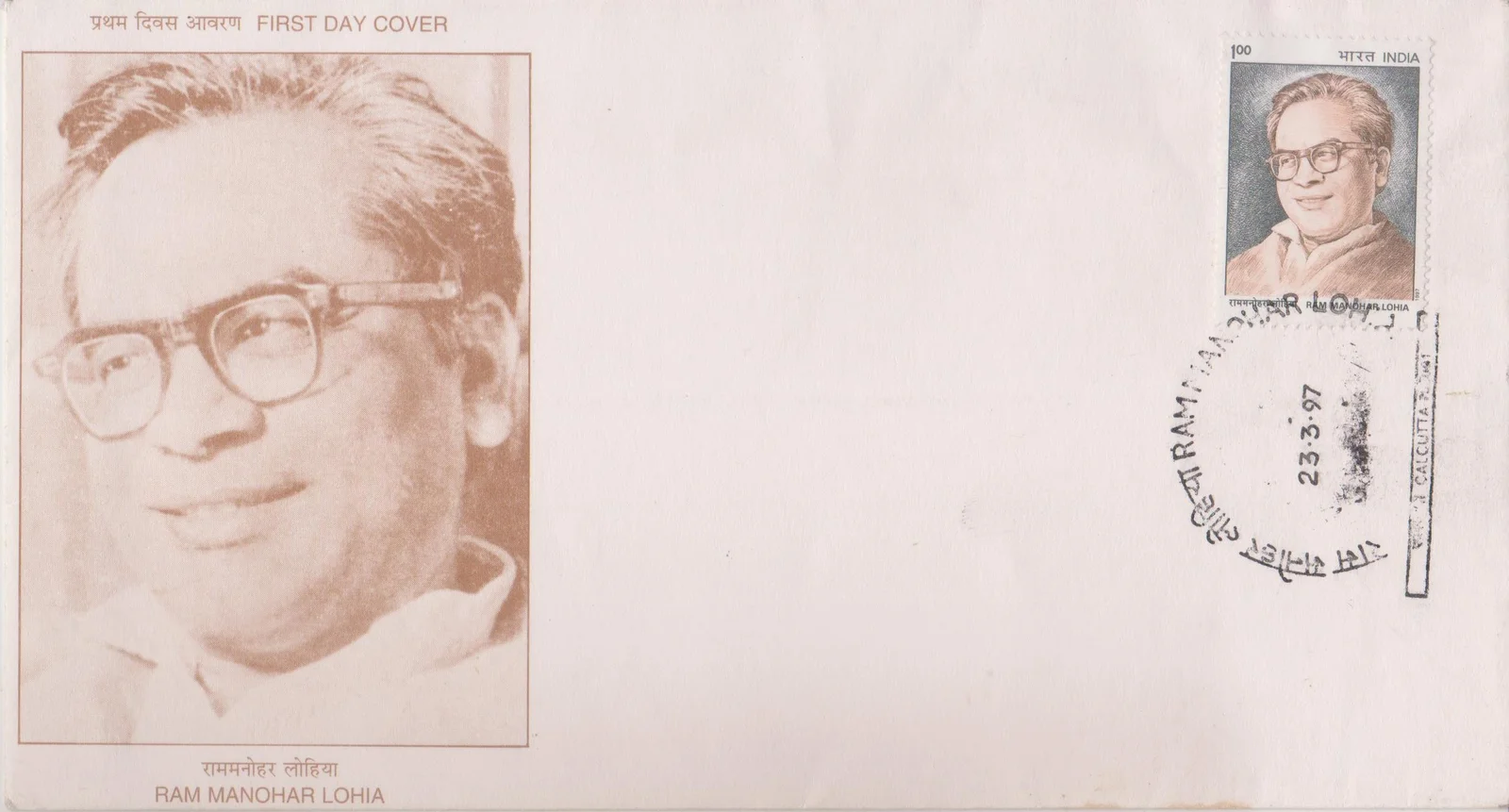
Ram Manohar Lohia (1910-1967)
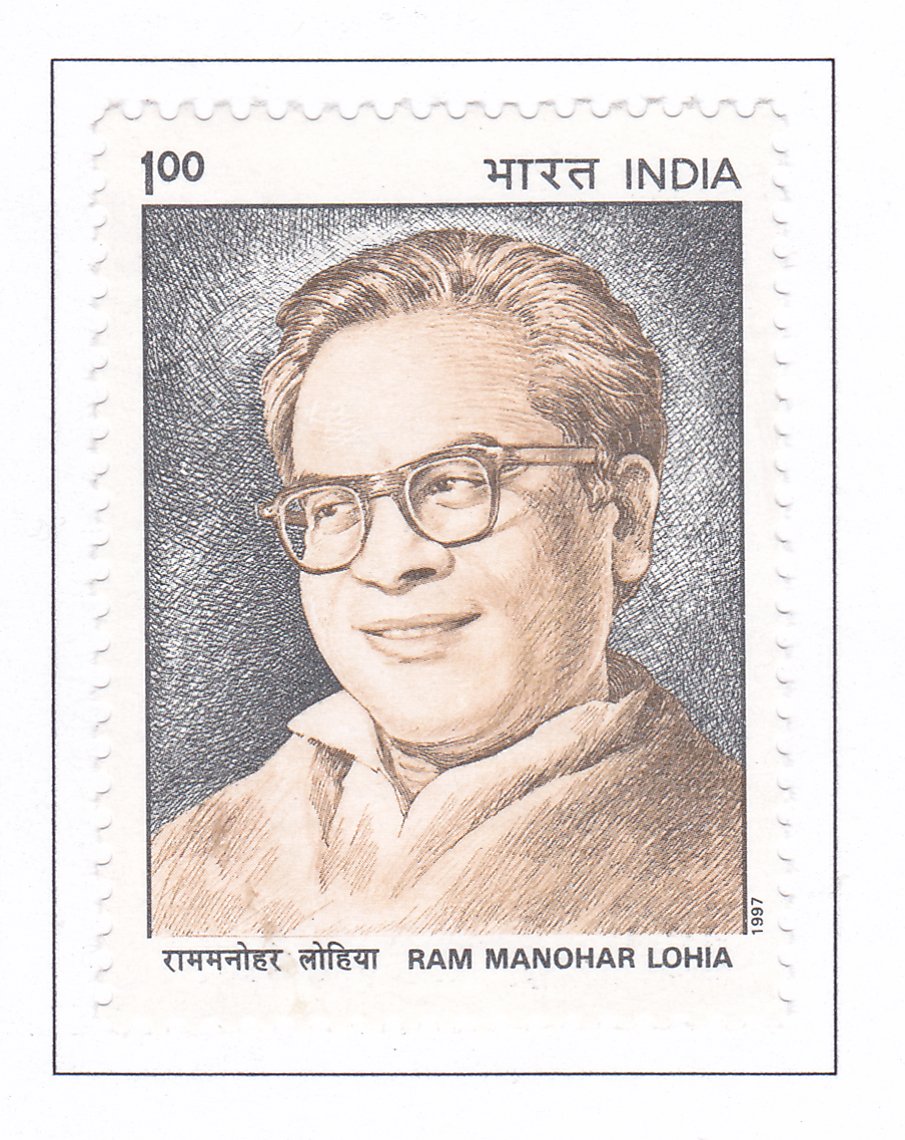
Technical Data
| Date of Issue | March 13, 1997 |
|---|---|
| Denomination | Rs. 1 |
| Quantity | 400,000 |
| Perforation | comb 13 x 13½ |
| Printer | Calcutta Security Printers Ltd |
| Printing Process | Offset Lithography |
| Watermark | No Watermark |
| Colors | Multicolor |
| Credit (Designed By) | Sh. Sankha Samanta |
| Catalog Codes |
Michel IN 1544 Stamp Number IN 1606 Yvert et Tellier IN 1313 Stanley Gibbons IN 1708 |
| Themes | Commemoration | Famous people | Men | Optical Instruments | Politicians |
Introduction
Ram Manohar Lohia was one of India’s most influential socialist thinkers, political leaders, and champions of social justice. He is remembered for his progressive ideas, intellectual brilliance, patriotism, and tireless struggle against inequality. A strong advocate of socialism, Lohia dedicated his life to building a just and democratic society.
Early Life and Education
Ram Manohar Lohia was born on 23 March 1910 at Akbarpur in the Faizabad district of Uttar Pradesh. He lost his mother at an early age and was raised by his grandmother and aunt. He was an outstanding student and later earned a Ph.D. from Berlin University in 1932 for his thesis titled Salt and Civil Disobedience.
Role in Freedom Struggle
Lohia became politically active while still a student. He participated in protests after the death of Bal Gangadhar Tilak. In 1934, he became a founding member of the Congress Socialist Party and served as the first editor of its weekly newspaper, Congress Socialist.
During the Quit India Movement of 1942, Lohia went underground and operated secret radio broadcasts from Bombay and Calcutta. He was arrested in 1944 and suffered severe torture in Lahore Jail for his nationalist activities.
Political Career and Socialist Vision
As a Member of the Lok Sabha from Farrukhabad since 1963, Lohia was known for his powerful speeches and fearless criticism of injustice. He proposed the idea of New Socialism, adapted to Indian realities. His ideas included:
- Permanent civil disobedience against injustice
- Ending caste discrimination
- Balancing centralisation and decentralisation
- Strong village-based democracy
- Functional federalism
Social Reforms
Lohia strongly supported:
- Hindi as a medium of instruction
- Effective birth control measures
- Abolition of dowry
- Inter-caste marriages
- Social equality across caste and class lines
Literary Contributions
He was also a prolific writer whose works inspired generations of political thinkers and activists. His writings combined deep scholarship with practical solutions for India’s problems.
Death and Legacy
Ram Manohar Lohia passed away on 12 October 1967 in New Delhi after an operation. His ideas continue to influence Indian politics, especially movements for social justice, equality, and democratic rights.
Conclusion
Dr. Ram Manohar Lohia was a visionary leader who fought throughout his life for freedom, equality, and dignity. His legacy remains an enduring symbol of courage, intellect, and commitment to the common people.
First Day Cover