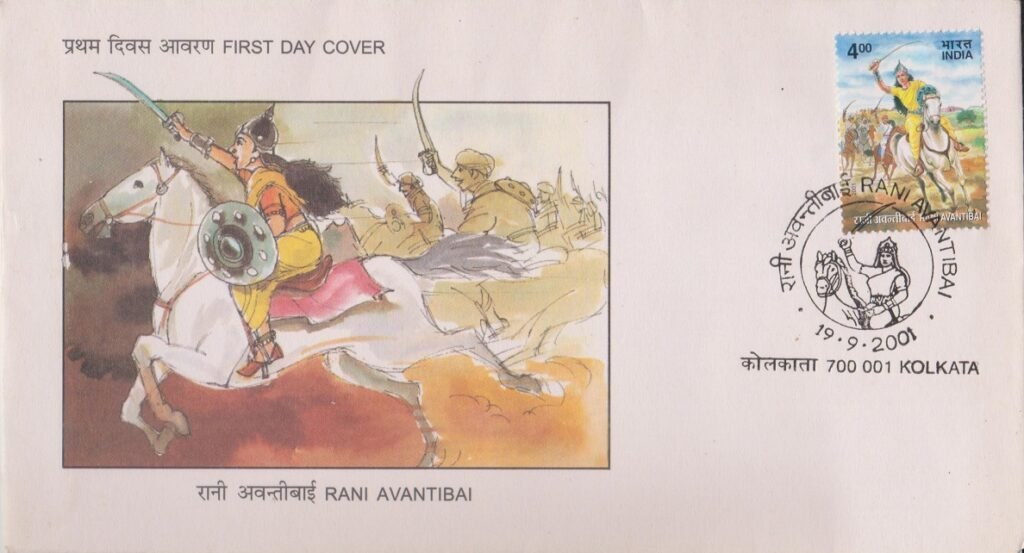
Rani Avantibai

Technical Data
| Date of Issue | September 19, 2001 |
|---|---|
| Denomination | Rs. 4 |
| Quantity | 400,000 |
| Perforation | comb 13 |
| Printer | Eagle Press Ltd. |
| Printing Process | Offset Lithography |
| Watermark | No Watermark |
| Colors | Multicolor |
| Credit (Designed By) | Mr. Suresh Kumar |
| Catalog Codes |
Michel IN 1850 Stamp Number IN 1909 Yvert et Tellier IN 1616 Stanley Gibbons IN 2016 |
| Themes | Animals (Fauna) | Commemoration | Equestrianism and horse riding | Famous people | Horses | Queens | Women |
Brave Queen of the 1857 Revolt
Rani Avantibai, the queen of Ramgarh in central India, is remembered for her extraordinary courage and sacrifice during the Indian Rebellion of 1857. She laid down her life while fighting against British rule, becoming a symbol of bravery and patriotism.
Historical Background of the 1857 Revolt
The Revolt of 1857, which shook the foundations of British rule in India, was the result of long-standing resistance to colonial domination. Its roots can be traced back to events like the Battle of Plassey.
The uprising saw participation from peasants, artisans, soldiers, and traditional rulers such as princes, zamindars, and local chieftains. British policies of annexation and confiscation of estates had created deep resentment among Indian rulers, turning them into strong opponents of colonial rule.
Leadership and Administration
Rani Avantibai was the wife of Vikramaditya Singh. When the king fell ill and was unable to govern, she took charge of the administration of Ramgarh.
Her governance was marked by fairness and justice, earning her the respect and loyalty of her subjects.
Resistance Against British Rule
In 1851, the appointment of a British Tehsildar in Ramgarh deeply offended Rani Avantibai. Recognizing it as a strategy for annexation, she resolved to resist British control and reclaim her state.
Despite facing personal tragedy with the death of her husband, she remained determined to fight for independence.
Role in the Revolt of 1857
When the 1857 uprising began, Rani Avantibai raised an army of around 4,000 soldiers and led them into battle. In the first major encounter at Kheri village, her forces successfully defeated the British troops.
However, the British retaliated with greater force and attacked Ramgarh. Despite her courage, she was forced to retreat to the forests of Devharigarh due to the overwhelming strength of the enemy.
Sacrifice and Legacy
Surrounded by British forces and facing inevitable defeat, Rani Avantibai chose martyrdom over surrender. On 20 March 1858, she sacrificed her life for the freedom of her motherland.
Rani Avantibai remains an enduring symbol of courage, sacrifice, and resistance in India’s freedom struggle.
Commemoration
In recognition of her bravery and contribution to the freedom movement, the Department of Posts issued a commemorative postage stamp in her honor.
First Day Cover