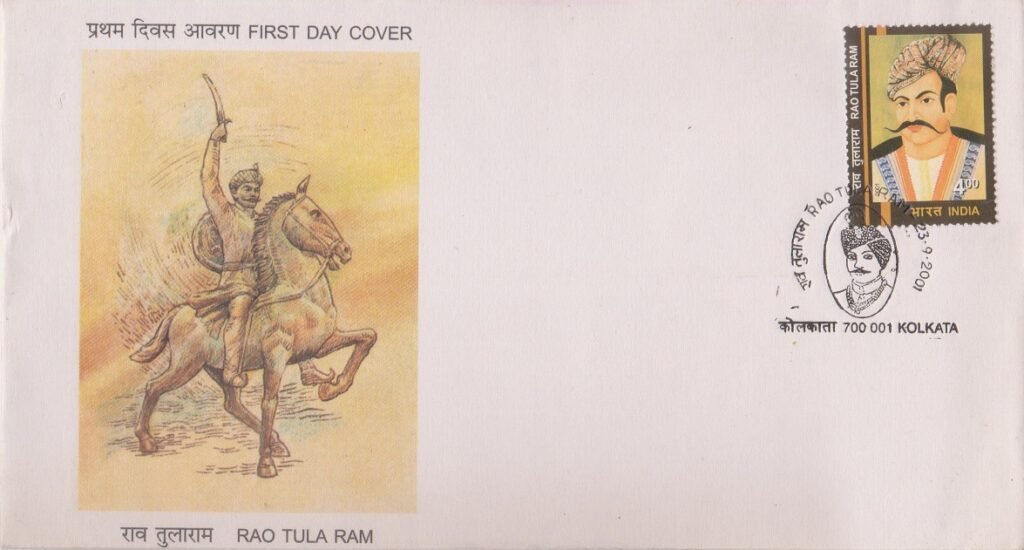
Rao Tula Ram (1825-1863) of Rewari
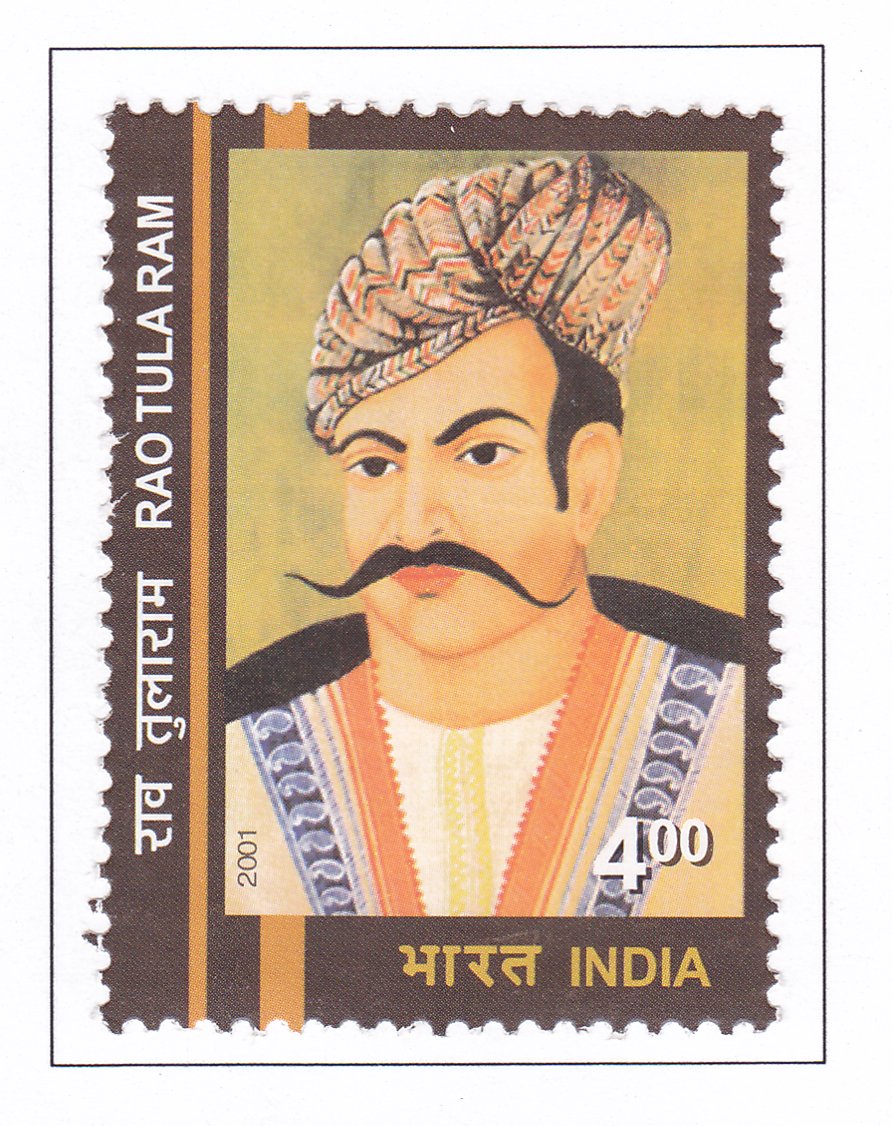
Technical Data
| Date of Issue | September 23, 2001 |
|---|---|
| Denomination | Rs. 4 |
| Quantity | 400,000 |
| Perforation | comb 13 |
| Printer | Eagle Press Ltd. |
| Printing Process | Offset Lithography |
| Watermark | No Watermark |
| Colors | Multicolor |
| Credit (Designed By) | Sh. Sankha Samanta |
| Catalog Codes |
Michel IN 1852 Stamp Number IN 1911 Yvert et Tellier IN 1617 Stanley Gibbons IN 2017 |
| Themes | Commemoration | Famous people | Kings | Men |
Hero of the Revolt of 1857
Rao Tula Ram (1825–1863) was a prominent leader of the Indian Rebellion of 1857. Hailing from Rewari in present-day Haryana, he played a crucial role in resisting the rule of the British East India Company and fighting for India’s independence.
Early Life and Leadership in Rewari
Rao Tula Ram was the traditional ruler of a small state in the Rewari region. Like many Indian rulers of his time, he resented the British for annexing large parts of his ancestral territory.
When the Revolt of 1857 began in Meerut, he acted swiftly. He took control of the administration in Rewari, removed British-supported officials, and declared his authority under the nominal leadership of Bahadur Shah II, who was regarded as the symbolic head of the rebellion.
Administrative Reforms and Military Strength
Understanding the importance of strong governance, Rao Tula Ram focused on maintaining law and order and ensuring the safety of his people. He restructured the revenue system and efficiently collected land taxes to fund his administration.
With these resources, he built a well-organized army of around 5,000 soldiers, structured into artillery, infantry, cavalry, and police units. His leadership earned the trust and support of the local population during a time of widespread unrest.
Battle of Narnaul and Resistance
As British forces regained control over key regions, including Delhi, they turned their attention to Rewari. This led to several confrontations between the British and Rao Tula Ram’s forces.
The final and decisive battle took place at Narnaul in November 1857. Despite fierce resistance, the British forces emerged victorious, marking the decline of the rebellion in the region and the restoration of British dominance.
Efforts to Unite Forces Against the British
After the defeat at Narnaul, Rao Tula Ram moved to Rajasthan, where he attempted to unite Rajput rulers against the British. However, by that time, British authority had been firmly re-established, and his efforts did not receive the expected support.
Recognizing the global nature of colonial power, he also sought international alliances. He reportedly traveled to countries like Afghanistan, Iran, and Russia in an attempt to gather support against British rule.
Final Years and Legacy
Rao Tula Ram spent his final years continuing his struggle for India’s freedom. However, the hardships of travel and changing climates took a toll on his health, and he passed away in Kabul in September 1863.
He is remembered as a brave patriot who fought relentlessly against colonial rule and remained committed to India’s independence until his last breath.
Commemoration and Recognition
In honor of his courage and sacrifice, the Department of Posts issued a commemorative postage stamp, paying tribute to one of the key heroes of the 1857 uprising.
First Day Cover