
Rare Fauna of North East India
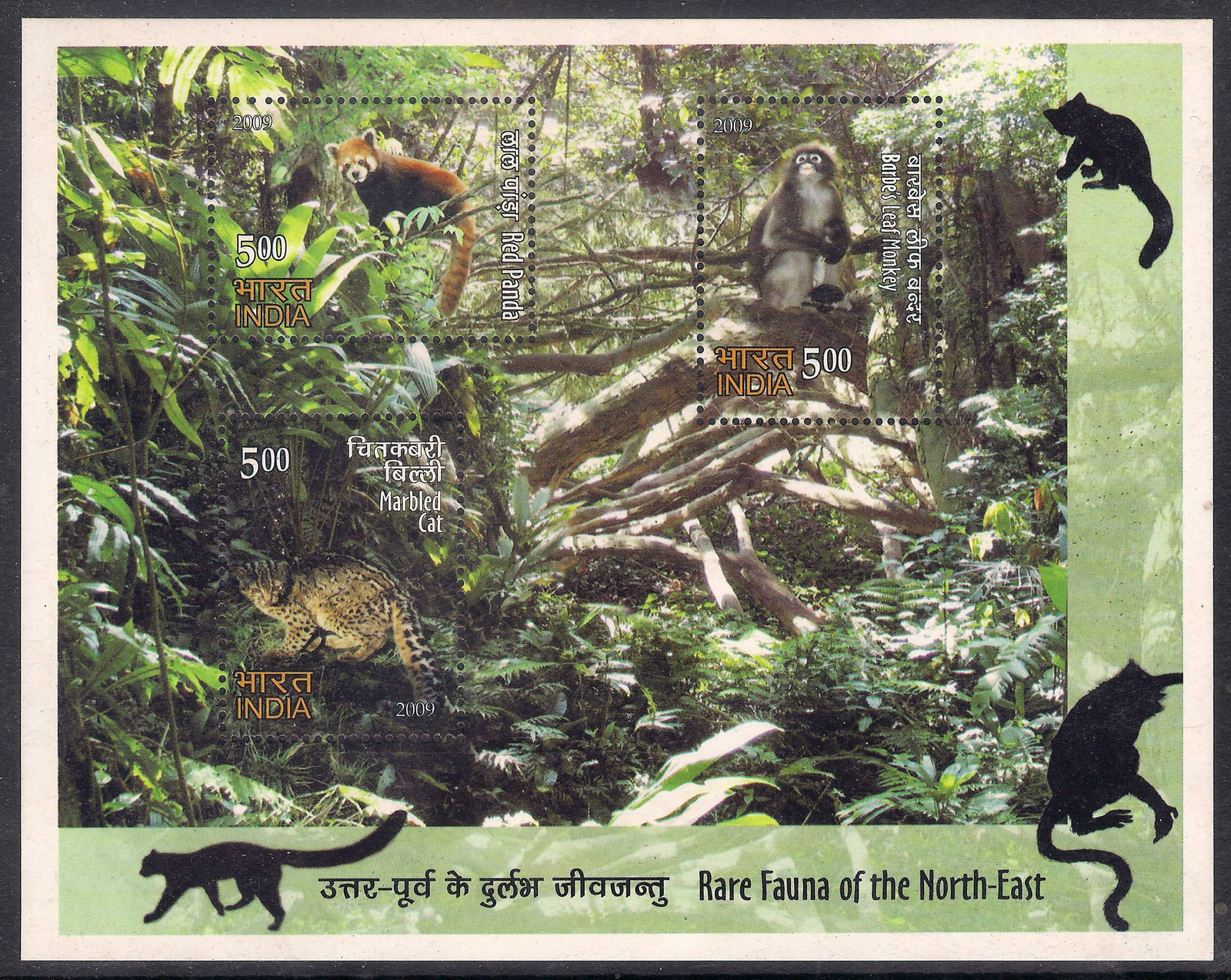
Technical Data
| Date of Issue | October 1, 2009 |
|---|---|
| Denomination | Rs. 15 |
| Quantity | 200,000 |
| Perforation | 13½ |
| Printer | Security Printing Press, Hyderabad |
| Printing Process | Wet Offset |
| Watermark | No Watermark |
| Colors | Multicolor |
| Credit (Designed By) | Mr. Suresh Kumar |
| Catalog Codes |
Michel IN BL72 Stamp Number IN 2348a Stanley Gibbons IN MS2629 |
| Themes | Animals (Fauna) | Mammals | Monkeys | Wild Cats |
Stamps in this Miniature Sheet

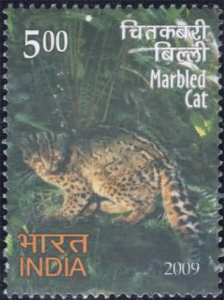
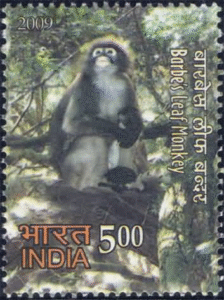
Red Panda, Phayre’s Leaf Monkey and Marbled Cat
The North-East of India is often described as a geographical gateway for the country’s rich flora and fauna. Comprising eight states—Arunachal Pradesh, Assam, Meghalaya, Manipur, Mizoram, Nagaland, Tripura, and Sikkim—the region is blessed with diverse physiographic and eco-climatic conditions.
Its forests range from tropical and temperate ecosystems to alpine meadows and cold deserts. Recognized as one of the richest biodiversity zones in India, the region has high levels of endemism and supports many rare and endangered species. However, habitat degradation due to shifting cultivation (slash-and-burn farming), deforestation, and fragmentation poses serious threats to this fragile ecological landscape.
Among its most remarkable wildlife species are the Red Panda, Phayre’s Leaf Monkey, and the Marbled Cat.
Red panda: The Bamboo-Eating Climber
The Red Panda is one of the most charismatic mammals of the Himalayan temperate forests. Found at elevations above 5,000 feet, it inhabits cool, dense forests rich in bamboo.
Key Characteristics:
- Rounded head with large, pointed ears
- Bright chestnut-red coat with ringed bushy tail
- White facial markings and “spectacled” eye patches
- Semi-retractile claws and a unique “false thumb” (an extension of the wrist bone)
- Short, hairy soles adapted for cold climates
Despite having a digestive system suited to carnivores, the Red Panda primarily feeds on bamboo. The name “panda” is derived from “poonya,” meaning bamboo eater. Also called “Wah” due to its distinctive cry, this shy and agile climber spends much of the day sleeping in trees and becomes active during the evening.
Habitat loss and forest degradation threaten its survival across the Himalayan belt.
Phayre’s leaf monkey: The Spectacled Langur of Tripura
Phayre’s Leaf Monkey, also known as the spectacled langur, is primarily found in Tripura, with occasional movement into adjoining districts of Assam and parts of Bangladesh.
Distinct Features:
- Grey to black body with silvery-grey limbs
- Prominent white eye rings resembling spectacles
- White markings around upper and lower lips
- Orange-colored newborns whose coat changes after three months
This arboreal species rarely descends to the ground, even for drinking water, relying instead on dew and rainwater collected on leaves. Feeding mainly on fruits, flowers, and leaves, it is shy, vigilant, and highly social. Interestingly, group members show strong affection toward newborns, often competing to care for them.
Due to poor reproductive capacity and habitat destruction, the species faces a serious risk of decline in the coming decades.
Marbled cat: The Secretive Forest Predator
About the size of a domestic cat, the Marbled Cat is one of the least-seen wild felines of North-East India.
Physical Characteristics:
- Body length: 45–62 cm
- Weight: 2–5 kg
- Extremely long, bushy tail
- Coat color ranges from dark grey-brown to reddish-brown
- Large irregular dark-edged blotches on flanks and back
- Spotted forehead and striped neck
Primarily inhabiting moist tropical forests, the Marbled Cat is found from sea level up to 3,000 meters. Though once believed to be nocturnal, recent observations show it is active during both day and night. Birds and rodents form a major part of its diet.
The species is also distributed across Nepal, China, Southeast Asia, and Indonesia. However, it remains rarely seen due to its secretive nature and preference for undisturbed forest habitats.
Threats:
- Habitat destruction due to logging and shifting cultivation
- Human disturbance
- Poaching for skin, bones, and meat
Preserving North-East India’s Zoological Heritage
The biodiversity of North-East India represents an irreplaceable ecological treasure. However, rapid habitat loss and unsustainable land-use practices are pushing many species toward endangerment.
By issuing Miniature sheet featuring the Red Panda, Phayre’s Leaf Monkey, and Marbled Cat, India Post has drawn attention to the region’s rich zoological heritage and emphasized the urgent need for conservation.
Protecting these rare species means safeguarding the forests, ecosystems, and natural legacy of North-East India for future generations.
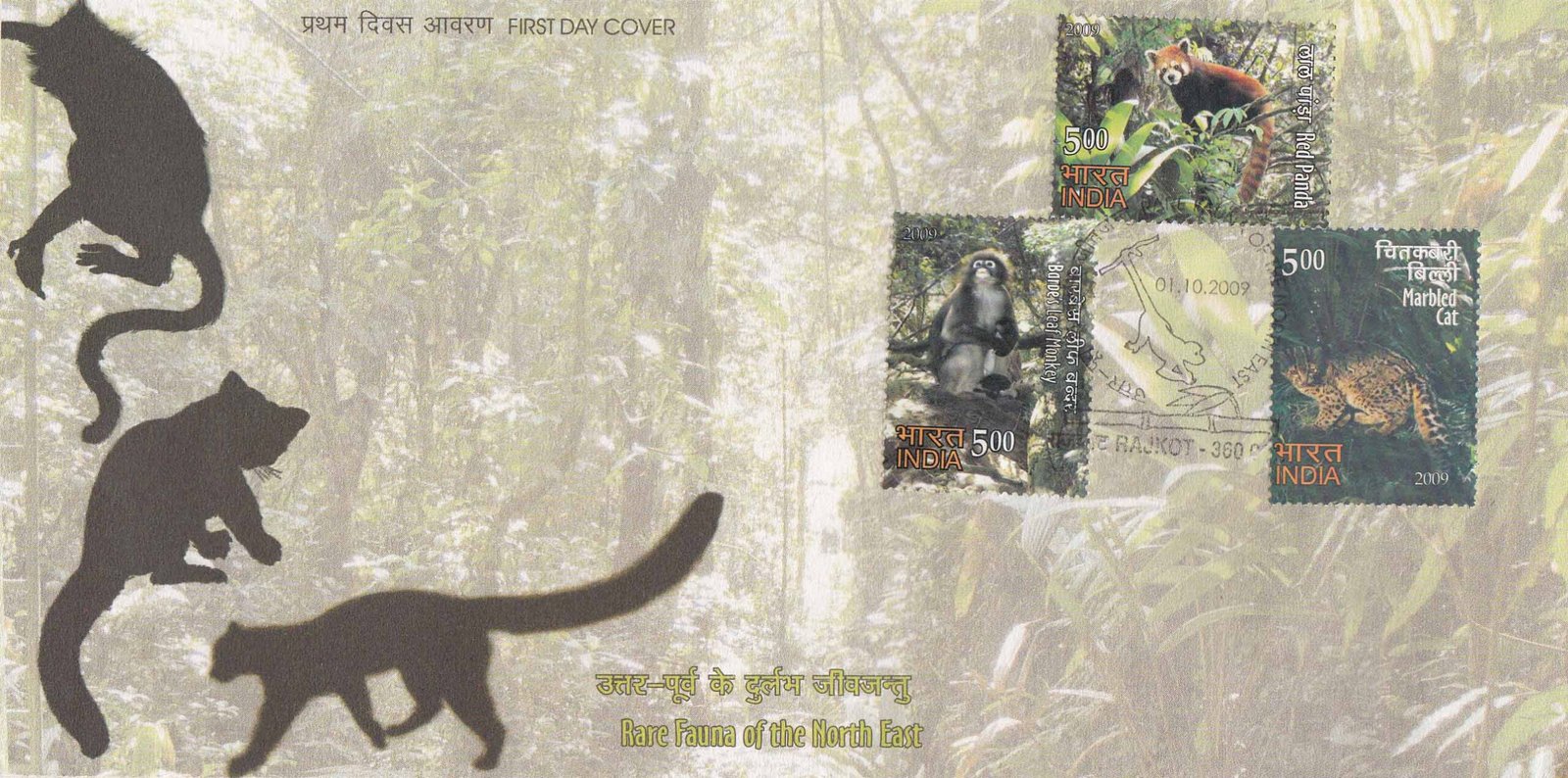
First Day Cover
Leave a Comment
You must be logged in to post a comment.