
Barbe’s Leaf Monkey

Technical Data
| Date of Issue | October 1, 2009 |
|---|---|
| Denomination | Rs. 5 |
| Quantity | 800,000 |
| Perforation | 13½ |
| Printer | Security Printing Press, Hyderabad |
| Printing Process | Wet Offset |
| Watermark | No Watermark |
| Colors | Multicolor |
| Credit (Designed By) | Mr. Suresh Kumar |
| Catalog Codes |
Michel IN 2407 Stamp Number IN 2348 Stanley Gibbons IN 2626 WADP Numbering System - WNS IN061.2009 |
| Themes | Animals (Fauna) | Mammals | Monkeys |
The Barbe’s leaf monkey, also known as Barbe’s langur, is a rare and little-known primate species found in the forested regions of North-East India and parts of Myanmar. This elusive leaf-eating monkey is an important component of the region’s rich biodiversity and highlights the ecological significance of India’s northeastern forests.
Habitat and Distribution
Barbe’s Leaf Monkey primarily inhabits subtropical and tropical evergreen forests. It prefers dense canopies and is highly arboreal, spending most of its life in trees. In India, its presence has been recorded in areas of Assam and Arunachal Pradesh, where forest ecosystems provide the foliage and shelter essential for its survival.
Physical Characteristics
This species is distinguished by its dark grey to blackish coat, lighter underparts, and expressive facial features. Like other leaf monkeys, it has a slender body, long limbs, and a lengthy tail that helps maintain balance while moving across treetops. Its specialized digestive system enables it to feed mainly on leaves, young shoots, fruits, and seeds.
Behavior and Diet
Barbe’s Leaf Monkey is diurnal, meaning it is active during the day. It lives in social groups and communicates through vocal calls and body language. Its leaf-based diet makes it highly dependent on forest vegetation, and any disturbance to its habitat directly impacts its survival.
Conservation Status and Threats
Habitat loss due to deforestation, logging, and shifting cultivation remains the biggest threat to Barbe’s Leaf Monkey. Fragmentation of forests reduces food availability and isolates populations, increasing their vulnerability. Conservation efforts are essential to protect this species and maintain ecological balance in North-East India.
Commemorative Stamp Recognition
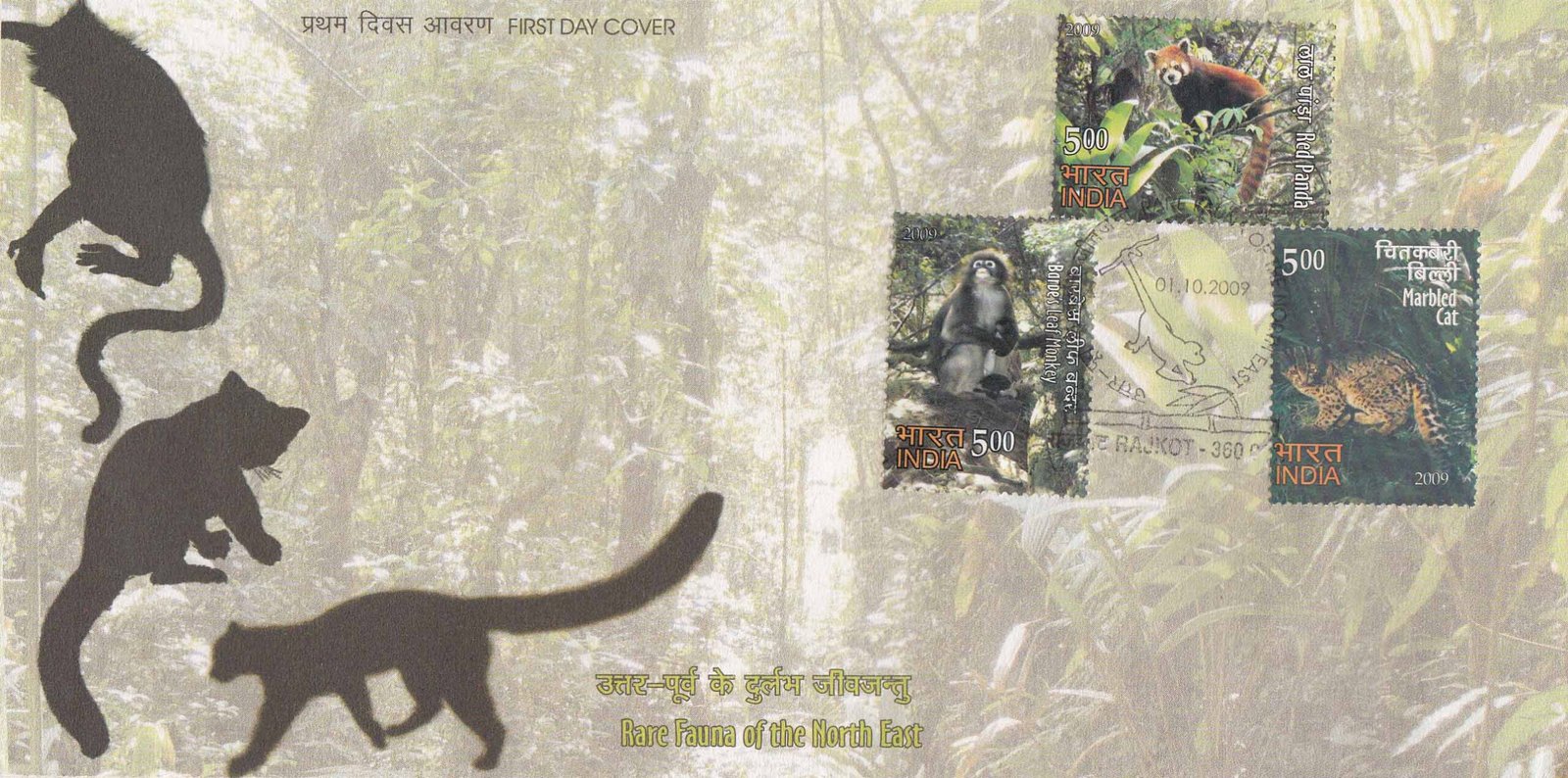
In an effort to raise awareness about endangered wildlife, India Post has issued commemorative stamp featuring rare species from North-East India. Such philatelic initiatives draw attention to the conservation needs of species like Barbe’s Leaf Monkey and encourage public participation in wildlife protection.
First Day Cover
Leave a Comment
You must be logged in to post a comment.