
Rath Yatra of Puri
Technical Data
| Date of Issue | July 9, 2010 |
|---|---|
| Denomination | Rs. 5 |
| Quantity | 400,000 |
| Perforation | 13 |
| Printer | India Security Press, Nashik |
| Printing Process | Photo Gravure |
| Watermark | No Watermark |
| Colors | Multicolor |
| Credit (Designed By) | Sh. Sankha Samanta |
| Catalog Codes |
Michel IN BL84 Stamp Number IN 2437a Stanley Gibbons IN MS2733 |
| Themes | Festivals | Folklore | Religion |
The Grand Car Festival of Lord Jagannath
The world-famous Rath Yatra of Puri, also known as Gundichi Yatra and Ghosla Yatra, is regarded as the largest and grandest chariot festival in the world. So immense is its scale that it gave the English language the word “juggernaut.”
This sacred festival commemorates the annual journey of Jagannath (a form of Lord Krishna), who travels from his main abode at the Jagannath Temple to the Gundicha Temple, accompanied by his brother Balabhadra and sister Subhadra. The deities remain there for nine days before returning to their main temple.
Held annually on Asadha Sukla Dwitiya (June–July) in Puri, Odisha, the Rath Yatra is both a religious and cultural spectacle, drawing lakhs of devotees from across India and around the world.
The Grand Procession – Pahandi
On the day of Rath Yatra, the richly adorned deities are ceremonially brought out of the temple in a traditional ritual known as “Pahandi.” Amidst chants, music, and devotional fervor, the idols are placed on their respective chariots and pulled through the streets of Puri to Gundicha Temple by thousands of pilgrims.
The Sacred Chariots
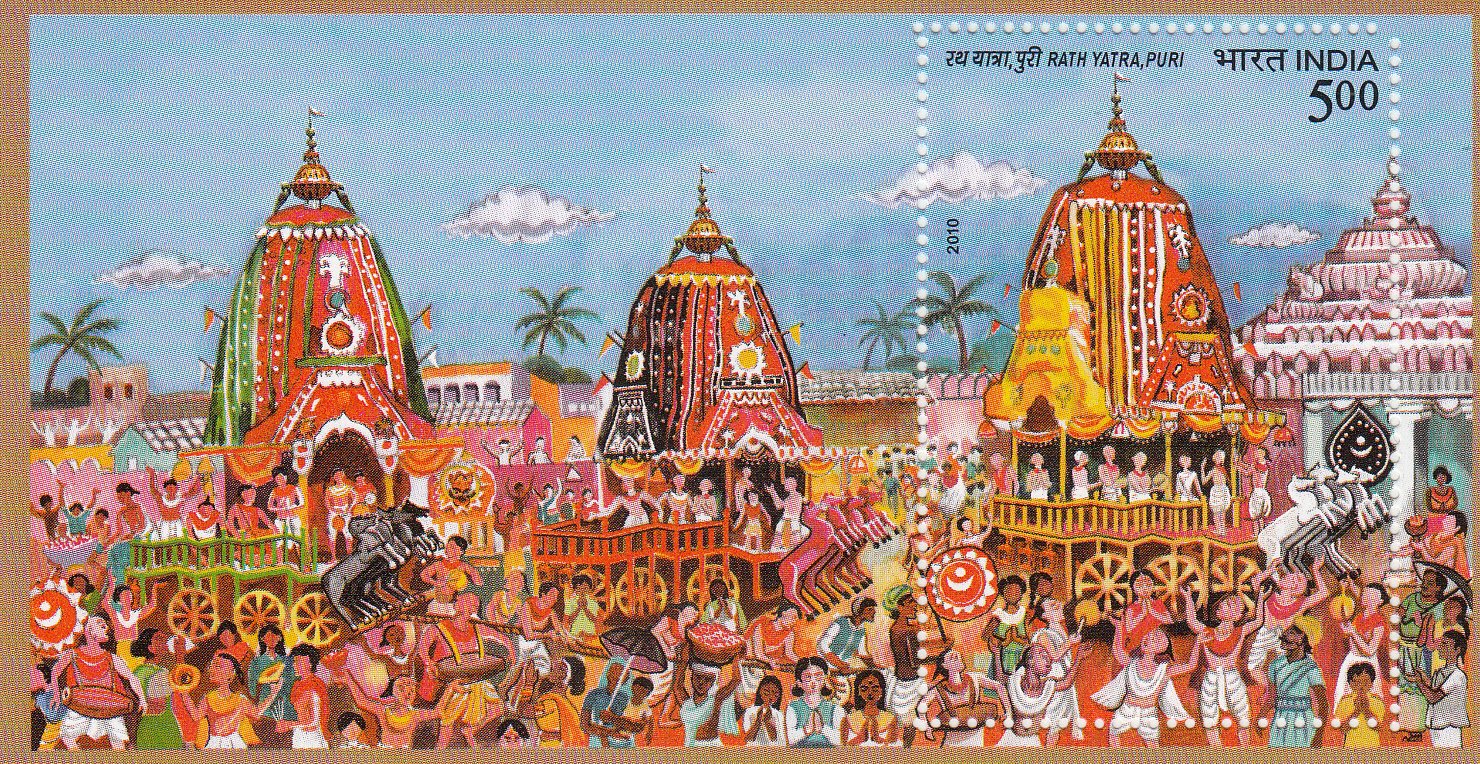
The three majestic chariots are newly constructed every year using specific types of wood brought from Dasapalla. A hereditary team of skilled carpenters crafts them according to traditional temple specifications.
- Nandighosh – The chariot of Lord Jagannath
- 16 wheels
- Red and yellow canopy
- Taladhwaja – The chariot of Lord Balabhadra
- 14 wheels
- Red and green canopy
- Deva Dalan (Darpa Dalan) – The chariot of Devi Subhadra
- Decorated in red and black
- Sudarshan is seated beside Subhadra
Additionally, Madanmohan (a representative deity of Jagannath) rides in Nandighosh, while small idols of Ram and Krishna accompany Balabhadra.
The chariots travel nearly 3 kilometers to Gundicha Temple, with Balabhadra’s chariot leading, followed by Subhadra and Jagannath.
Important Rituals During Rath Yatra
- Hera Panchami (5th Day): Goddess Laxmi visits Gundicha Temple to see Lord Jagannath.
- Return Car Festival (9th Day): The deities return to the Lion’s Gate of Jagannath Temple.
- Hari Sayan Ekadasi (10th Day): The deities are adorned with gold ornaments.
- Adharapana Bhog (12th Day): A sacred sweet drink is offered to the deities.
After the concluding rituals, the deities are ceremoniously taken back into the temple amidst immense devotion and celebration.
Spiritual Significance of Rath Yatra
A glimpse of Lord Jagannath on the chariot is considered extremely auspicious. Devotees believe that touching the chariot or even the sacred ropes used to pull it grants the merit of numerous pious deeds. During the festival, the chariot, its wheels, and even the grand avenue are believed to embody the divine presence of Lord Jagannath himself.
The philosophical meaning of Rath Yatra is beautifully reflected in the Kathopanishad, which compares the human body to a chariot, the soul to the deity within, and wisdom to the charioteer guiding the mind. Thus, Rath Yatra symbolizes the spiritual journey of life and the soul’s evolution toward divine realization.
Miniature Sheet on Rath Yatra
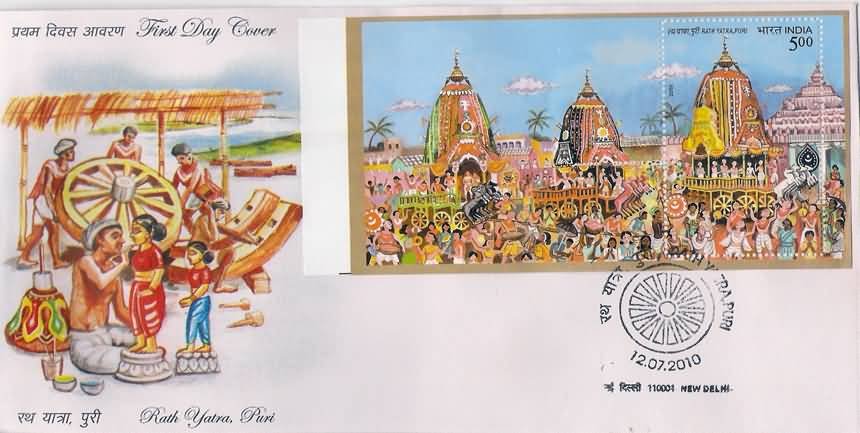
To honor this iconic Hindu festival, a Miniature Sheet featuring one commemorative postage stamp has been issued celebrating the Rath Yatra of Puri, Odisha, India. The stamp captures the grandeur, devotion, and cultural heritage of this extraordinary chariot festival associated with Lord Jagannath.
First Day Cover
Leave a Comment
You must be logged in to post a comment.