
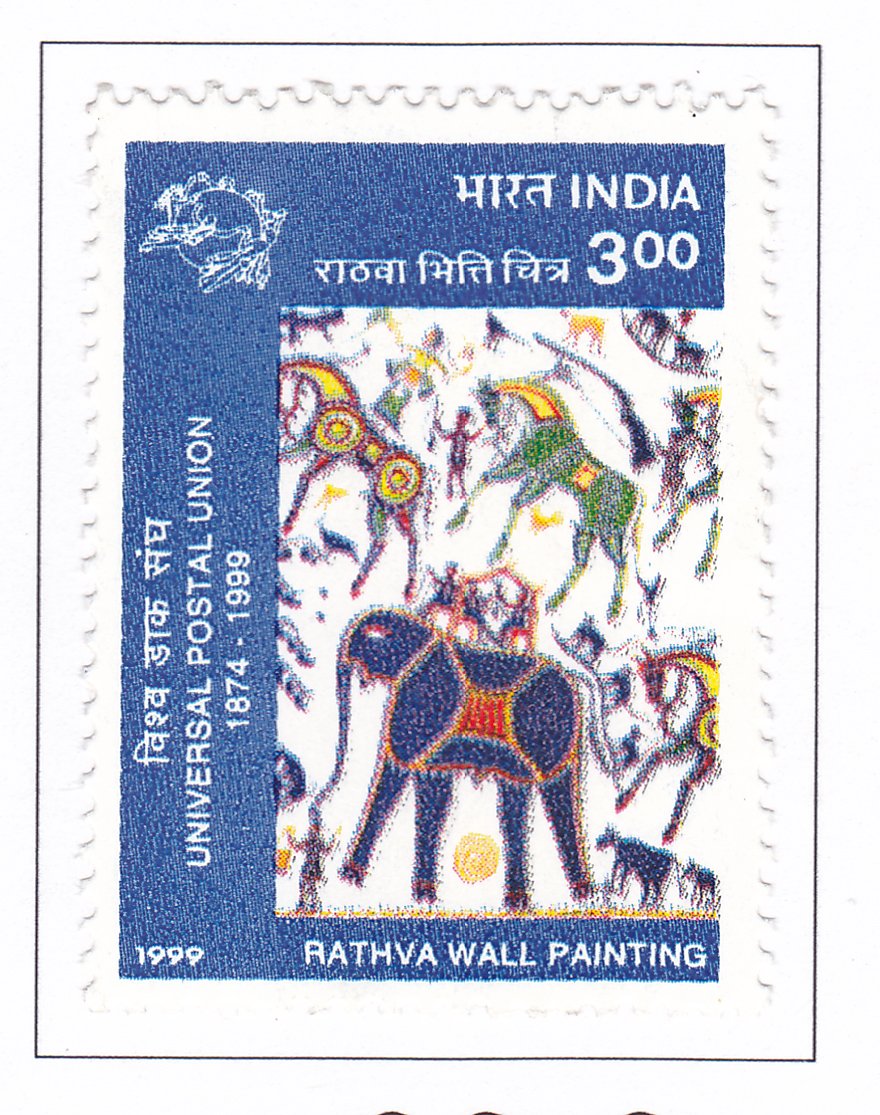
Universal Postal Union – (Rathva wall painting)
Technical Data
| Stamp Set | 125th Anniversary of Universal Postal Union (U.P.U.) |
|---|---|
| Date of Issue | October 9, 1999 |
| Denomination | Rs. 3 |
| Quantity | 1,000,000 |
| Perforation | comb 13 x 13½ |
| Printer | Security Printing Press, Nashik |
| Watermark | No Watermark |
| Colors | Multicolor |
| Catalog Codes |
Michel IN 1712 Stamp Number IN 1771 Yvert et Tellier IN 1479 Stanley Gibbons IN 1876 |
| Themes | Animals (Fauna) | Anniversaries and Jubilees | Elephants | Horses | Paintings | Postal Unions | Seals(Emblems) | U.P.U. |
Tribal Art, Mythology, and Ritual Traditions
Rathva Wall Painting is a vibrant expression of India’s rich rural arts and crafts traditions, deeply rooted in tribal culture and spiritual beliefs. Practiced by the Rathva Tribe, this art form is not merely decorative but serves important ritual and storytelling purposes.
Rathva Wall Painting, also known as Pithora painting, is a traditional form of bhitti-chitra (wall painting) created on the interior walls of tribal homes. These paintings are closely associated with religious rituals and are considered sacred.
They are usually created during festivals or special occasions within a designated ceremonial space inside the house.
Mythology and Symbolism
The central theme of Rathva Wall Painting revolves around tribal myths, especially the story of creation and the legends of ancestral deities like Pithoro and Babo Ind.
A common depiction includes:
- The marriage procession of Pithoro and Pithori
- Presence of gods and mythological figures
- Scenes representing important cultural narratives
These paintings act as visual storytelling mediums, preserving the oral traditions of the Rathva community.
Artistic Style and Execution
Rathva Wall Paintings are characterized by:
- Bright, natural colors
- Stylized human and animal figures
- Detailed and symbolic compositions
The paintings are created using traditional techniques and are often executed by specialized artists within the community. The process itself is ritualistic and follows specific cultural guidelines.
Cultural and Ritual Importance
For the Rathva tribe, these wall paintings hold deep spiritual significance. They are created:
- To honor deities and seek blessings
- During important life events and festivals
- As part of sacred rituals within the household
The paintings are believed to bring prosperity, harmony, and protection to the family.
Representation in Indian Art and Stamps
The cultural importance of Rathva Wall Painting has been recognized through commemorative stamps issued by India Post under the theme of “Rural Arts and Crafts Traditions of India.”
These stamps showcase:
- The richness of tribal art
- The continuity of ancient traditions
- The unity in India’s cultural diversity
Conclusion
Rathva Wall Painting is a powerful blend of art, mythology, and ritual. As a living tradition, it continues to preserve the cultural identity and spiritual beliefs of the Rathva tribe. This unique art form stands as a testament to India’s enduring tribal heritage and creative expression.