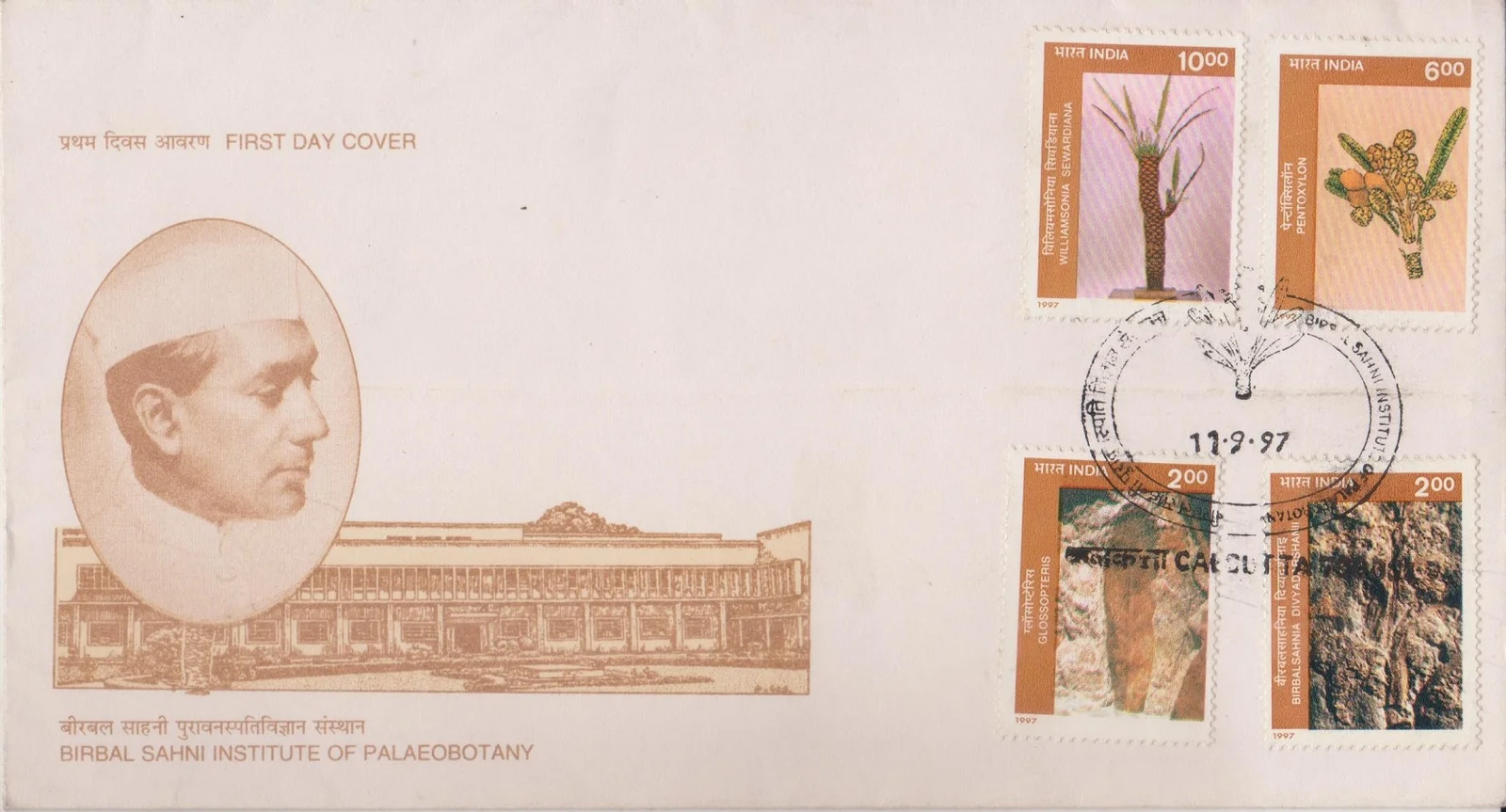
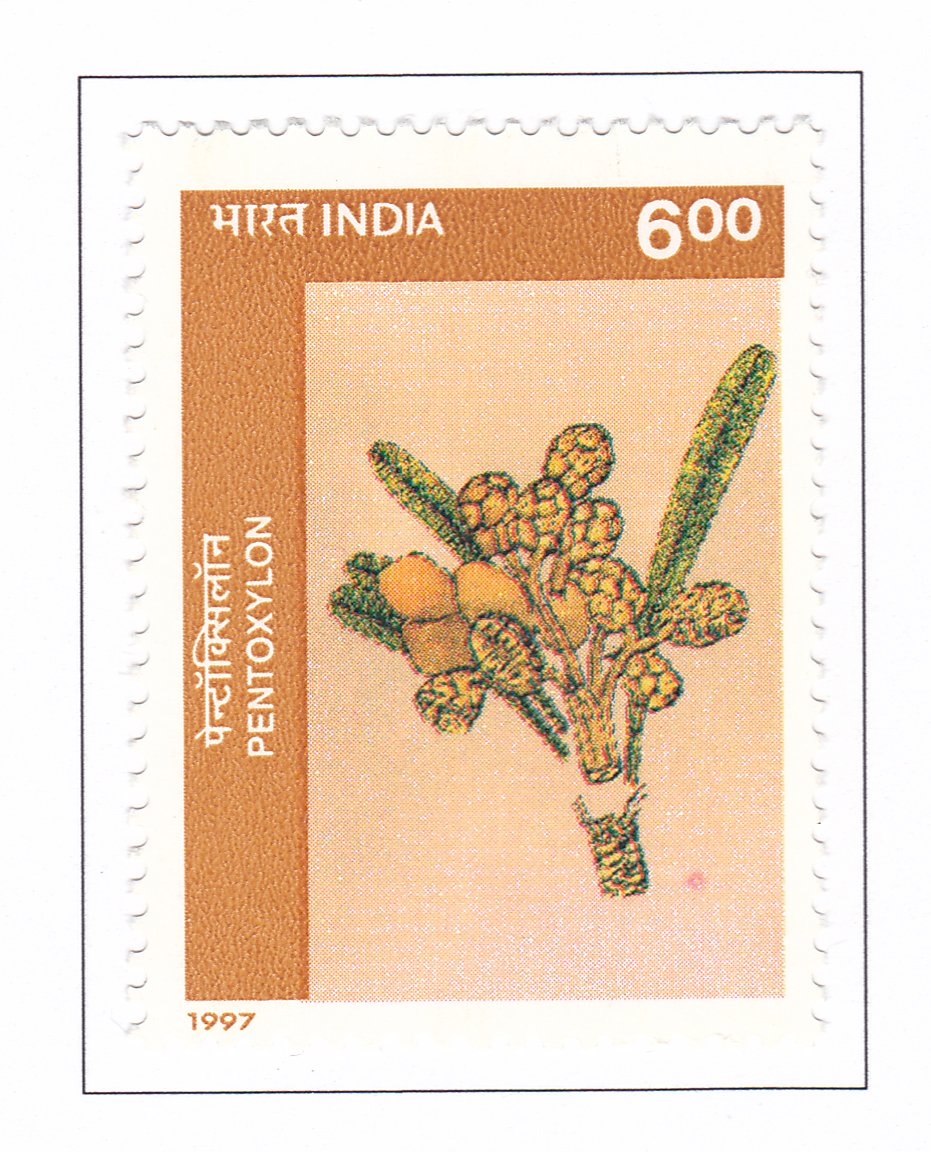
Reconstructed Fossil of Pentoxylon
Technical Data
| Stamp Set | 50th Ann. of Birbal Sahni Institute of Palaeobotany, Lucknow |
|---|---|
| Date of Issue | September 11, 1997 |
| Denomination | Rs. 6 |
| Quantity | 400,000 |
| Perforation | comb 13 x 13½ |
| Printer | Security Printing Press, Nashik |
| Printing Process | Photogravure |
| Watermark | No Watermark |
| Colors | Multicolor |
| Credit (Designed By) | |
| Catalog Codes |
Michel IN 1570 Stamp Number IN 1624 Yvert et Tellier IN 1340 Stanley Gibbons IN 1734 |
| Themes | Anniversaries and Jubilees | Flowers | Fossils | Plants (Flora) |
Introduction
Pentoxylon is an important extinct plant group known from fossil discoveries in India. It is regarded as one of the most remarkable contributions of Indian palaeobotanical research and provides valuable insight into the evolution of ancient plants.
Discovery
The fossil remains of Pentoxylon were discovered by Professor Birbal Sahni from Nipania in the Dumka district of the Rajmahal Hills, Bihar. This discovery became a landmark achievement in the study of prehistoric vegetation.
Geological Age
Pentoxylon dates back to approximately 110 to 114 million years ago. It belonged to the age when dinosaurs still existed and flowering plants were beginning to diversify.
Reconstruction
The reconstructed fossil of Pentoxylon presents the probable appearance of the plant with its stem, leaves, and reproductive organs. Such reconstructions help scientists visualize extinct species and understand their growth patterns and structure.
Scientific Importance
Pentoxylon is significant because it represents a unique extinct group called Pentoxylae. Its unusual features help researchers study the transitional stages in plant evolution and the diversity of vegetation that once existed in ancient India.
Commemorative Stamp
The Department of Posts featured the reconstructed fossil of Pentoxylon in a commemorative stamp series issued on the Golden Jubilee of the Birbal Sahni Institute of Palaeobotany, Lucknow, celebrating India’s fossil plant heritage.
First Day Cover