Renewable Energy

Technical Data
| Date of Issue | November 22, 2007 |
|---|---|
| Denomination | Rs. 20 |
| Quantity | 200,000 |
| Perforation | Various |
| Printer | India Security Press, Nasik |
| Printing Process | Photogravure |
| Watermark | No Watermark |
| Colors | Multicolor |
| Credit (Designed By) | Sh. Sankha Samanta |
| Catalog Codes |
Michel IN BL50 Stamp Number IN 2220a Stanley Gibbons IN MS2445 WADP Numbering System - WNS IN059MS.2007 |
| Themes | Energy | Sun | Towers | Windmills |
Stamps in this Miniature Sheet
Powering Sustainable Economic Growth
Energy is a fundamental driver of economic development. Every sector of the economy—agriculture, industry, transport, commercial services, and households—depends on a reliable supply of energy. Since independence, India’s development plans have required steadily increasing amounts of energy, leading to a continuous rise in energy consumption across the country.
This growing demand has made India increasingly dependent on fossil fuels such as coal, oil, and natural gas. However, rising global prices, the risk of future shortages, and concerns over energy security pose serious challenges to sustaining long-term economic growth. In addition, excessive reliance on fossil fuels has resulted in significant environmental impacts, both at the local and global levels.
The Need for a Sustainable Energy Path
In this context, India urgently needs to pursue a sustainable energy development strategy. The promotion of energy conservation and the expanded use of renewable energy sources form the two essential pillars of a secure and sustainable energy future.
India is fortunately endowed with a wide range of renewable energy resources. The major sources include solar energy, wind energy, biomass, biogas, and small hydropower, all of which offer clean and reliable alternatives to conventional fuels.
Advantages of Renewable Energy
Renewable energy offers several important benefits:
- Perennial availability, as these sources are naturally replenished
- Local availability, reducing dependence on long-distance fuel transportation
- Modular and scalable systems, where small-scale installations can be as economical as large ones
- Environment-friendly, with minimal pollution and lower carbon emissions
- Ideal for decentralised use, especially in rural and remote areas
These advantages make renewable energy particularly suitable for a country like India, with diverse geography and widespread rural populations.
India’s Progress in Renewable Energy Development
The Government of India has been implementing comprehensive national programmes for the development and deployment of renewable energy technologies for over two decades. As a result, many renewable energy systems have moved from the experimental stage to commercial viability.
Widely used technologies include:
- Biogas plants
- Improved biomass cookstoves
- Solar water heaters and solar cookers
- Solar lanterns, street lights, and water pumps
- Wind electric generators and water-pumping windmills
- Biomass gasifiers
- Small hydroelectric generators
In addition, future energy technologies such as hydrogen energy, fuel cells, and biofuels are under active development.
India today operates one of the largest renewable energy programmes in the world. The country ranks second globally in biogas utilisation and fourth in wind power generation. Renewable energy sources currently contribute approximately 16,500 MW, accounting for about 7.5% of the total installed power capacity in India.
Miniature sheet on Renewable Energy
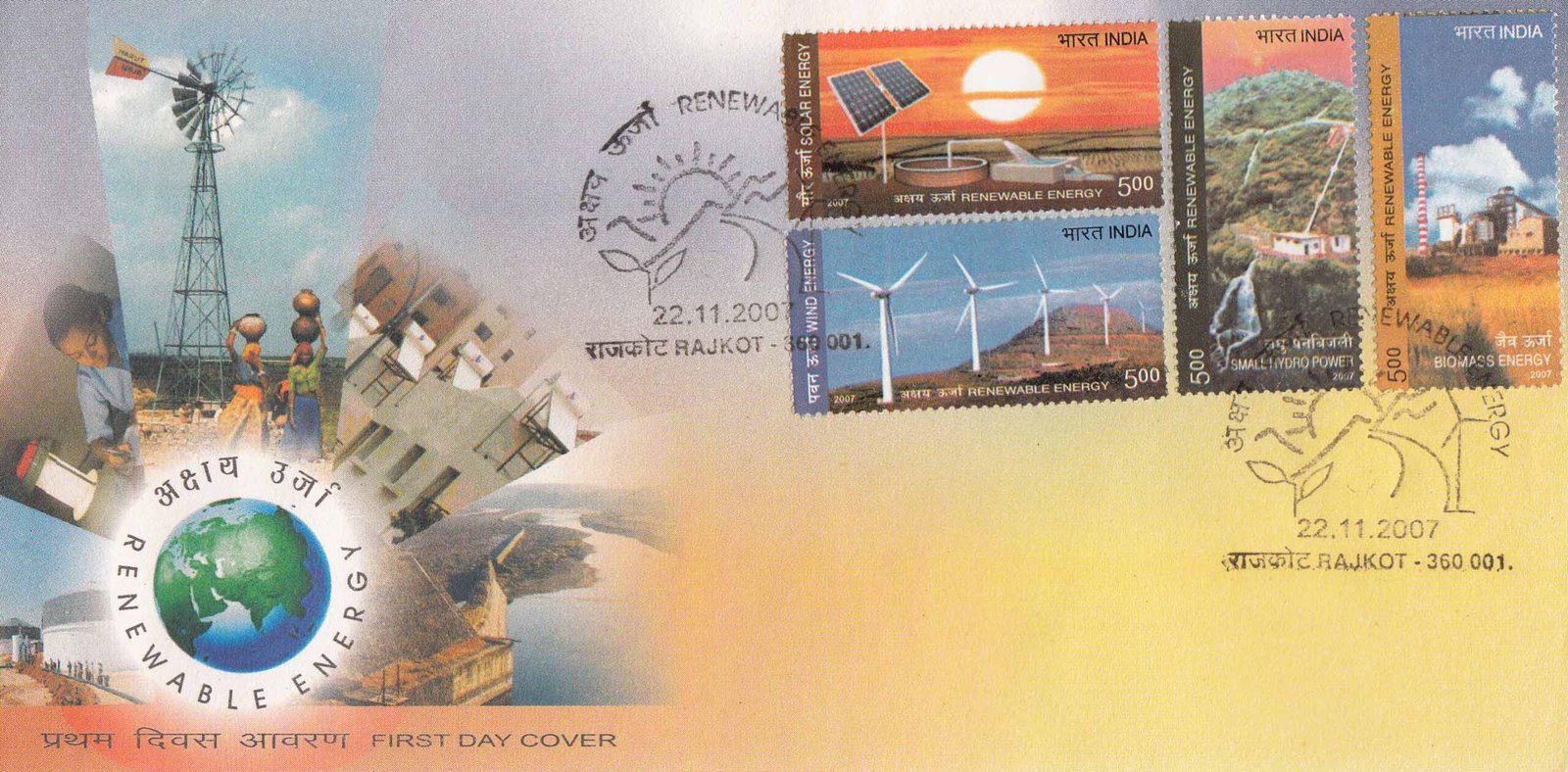
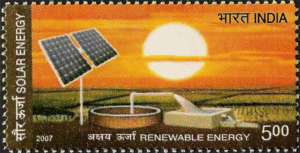
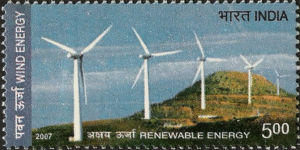
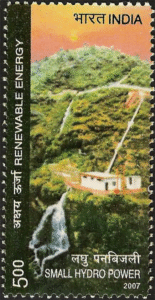
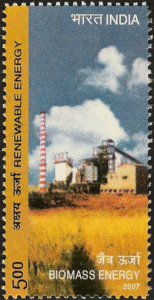
In recognition of the importance of clean and sustainable energy, the Department of Posts is pleased to issue a Miniature sheet consisting of set of four commemorative postage stamps on Renewable Energy. These stamps depict four major applications of renewable energy in India:
- Solar Energy
- Wind Energy
- Small Hydropower
- Biomass Energy
The stamp issue highlights India’s commitment to sustainable development and the growing role of renewable energy in meeting the nation’s future energy needs.
First Day Cover