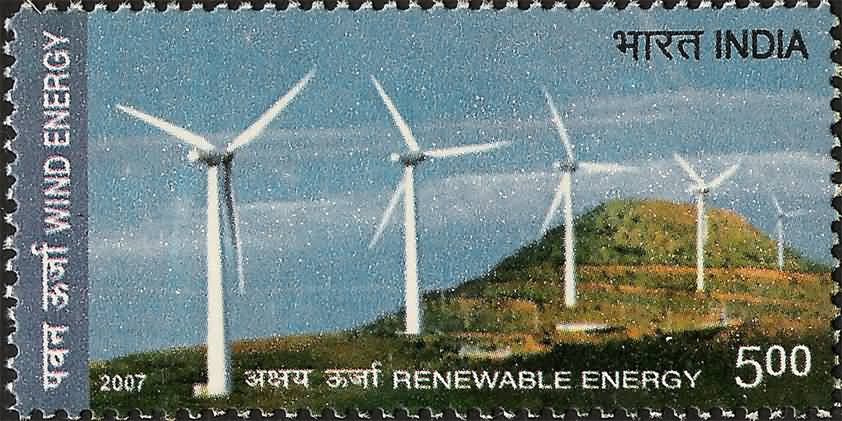
Wind Energy
Technical Data
| Date of Issue | November 22, 2007 |
|---|---|
| Denomination | Rs. 5 |
| Quantity | 800,000 |
| Perforation | 13 |
| Printer | India Security Press, Nasik |
| Printing Process | Photogravure |
| Watermark | No Watermark |
| Colors | Multicolor |
| Credit (Designed By) | Sh. Sankha Samanta |
| Catalog Codes |
Michel IN 2241A Stamp Number IN 2218 Stanley Gibbons IN 2442 WADP Numbering System - WNS IN059.2007 |
| Themes | Anniversaries and Jubilees | Energy | Towers | Windmills |
Harnessing Clean Power for Sustainable Growth
Wind Energy is one of the most important and rapidly growing sources of renewable energy in India. Energy is essential for economic development across agriculture, industry, transport, commercial, and domestic sectors. With steadily rising energy consumption and increasing dependence on fossil fuels, the shift toward clean and sustainable energy sources has become critical. Wind energy offers a reliable and environment-friendly alternative that supports long-term energy security.
Wind energy is generated by converting the kinetic energy of moving air into electricity through wind turbines. As wind is a naturally replenished resource, wind power is considered a renewable and sustainable energy source. In a country like India, which has extensive coastlines and favourable wind corridors, wind energy holds immense potential.
Advantages of Wind Energy
Wind energy offers several key advantages:
- Perennial and renewable, as wind is continuously replenished by natural processes
- Locally available, reducing dependence on imported fuels and long-distance transport
- Environment-friendly, producing electricity without greenhouse gas emissions or air pollution
- Modular and scalable, with installations ranging from small turbines to large wind farms
- Suitable for decentralised power generation, especially in rural and remote areas
These benefits make wind energy a vital component of India’s sustainable energy mix.
Development of Wind Energy in India
The Government of India has been implementing comprehensive programmes to promote the development and utilisation of wind energy as part of its renewable energy strategy. Over the past few decades, wind electric generators have become commercially viable and widely deployed across several states.
India today ranks fourth in the world in wind power generation, reflecting the success of its wind energy initiatives. Wind energy contributes significantly to the country’s renewable energy capacity, which accounts for approximately 7.5% of India’s total installed power capacity. Along with solar, biomass, and small hydropower, wind energy plays a crucial role in reducing reliance on fossil fuels and enhancing energy security.
Wind Energy and Sustainable Development
Wind energy supports sustainable development by providing clean electricity, promoting energy conservation, and reducing environmental degradation. It also contributes to economic growth by generating employment, strengthening local infrastructure, and supporting decentralised power supply.
Commemorative Postage Stamp on Wind Energy
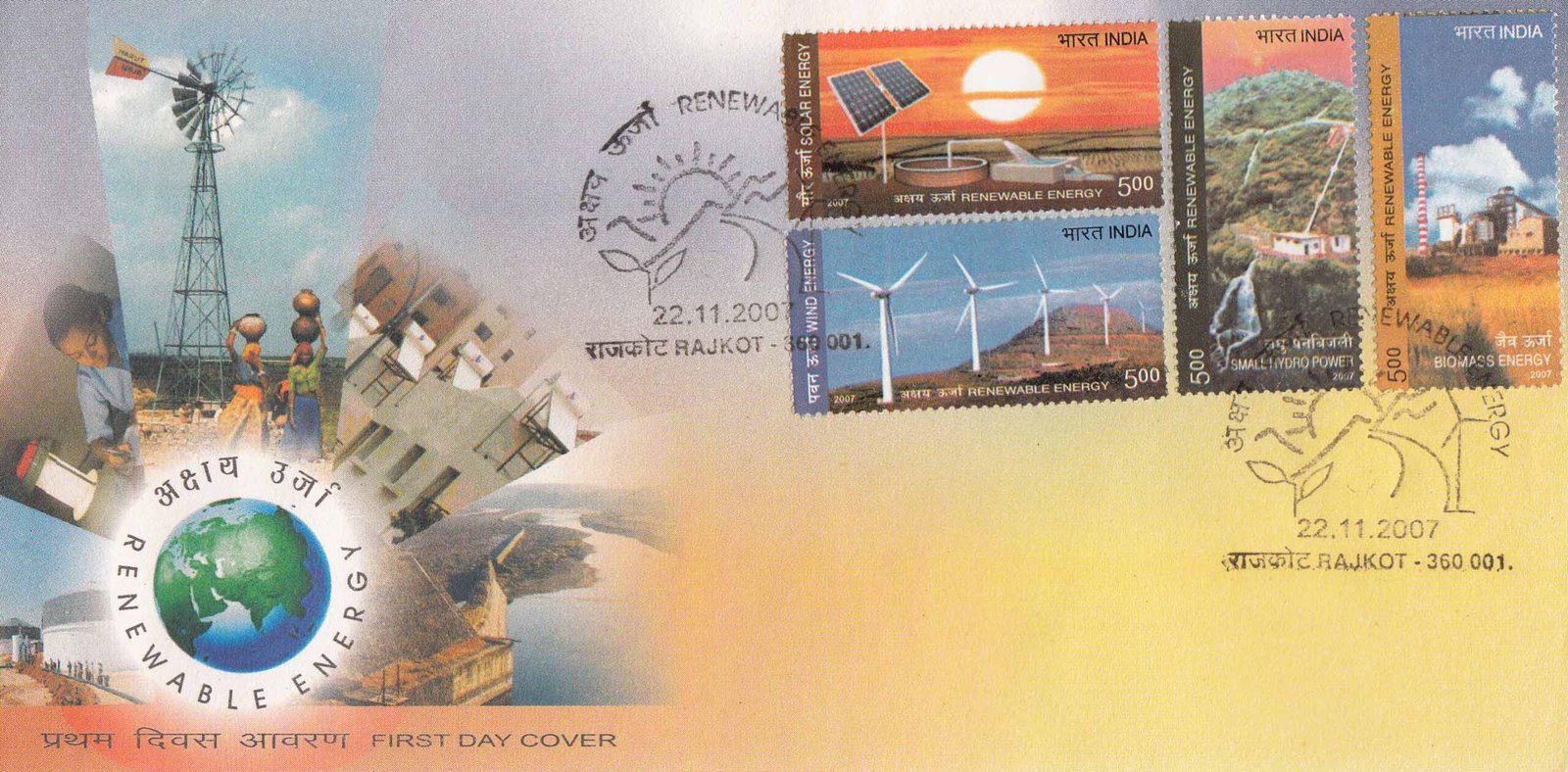
To underline the importance of renewable energy in national development, the Department of Posts has issued a commemorative postage stamp on Renewable Energy, depicting Wind Energy as one of its four major applications. The stamp symbolises India’s commitment to harnessing clean and sustainable energy sources for a resilient future.
First Day Cover