
Quill, Ink Well and Verse
Technical Data
| Stamp Set | Inauguration of Republic of India |
|---|---|
| Date of Issue | January 26, 1950 |
| Denomination | 3.50 ANNAS |
| Quantity | 1,200,000 |
| Perforation | comb 13 |
| Printer | India Security Press,Nasik |
| Watermark | Star of India Multiple [SR] |
| Colors | Ultramarine |
| Catalog Codes |
Stanley Gibbons IN 330 Michel IN 212 Yvert et Tellier IN 28 Stamp Number IN 228 |
| Themes | Feathers | Special Occasions | Stationery |
Education and Nation-Building in Republic of India 1950 Series
The 3½ Annas Stamp is an important part of the Republic of India 1950 commemorative stamp series, issued by India Post to mark the inauguration of India as a republic on 26 January 1950.
Design and Symbolism
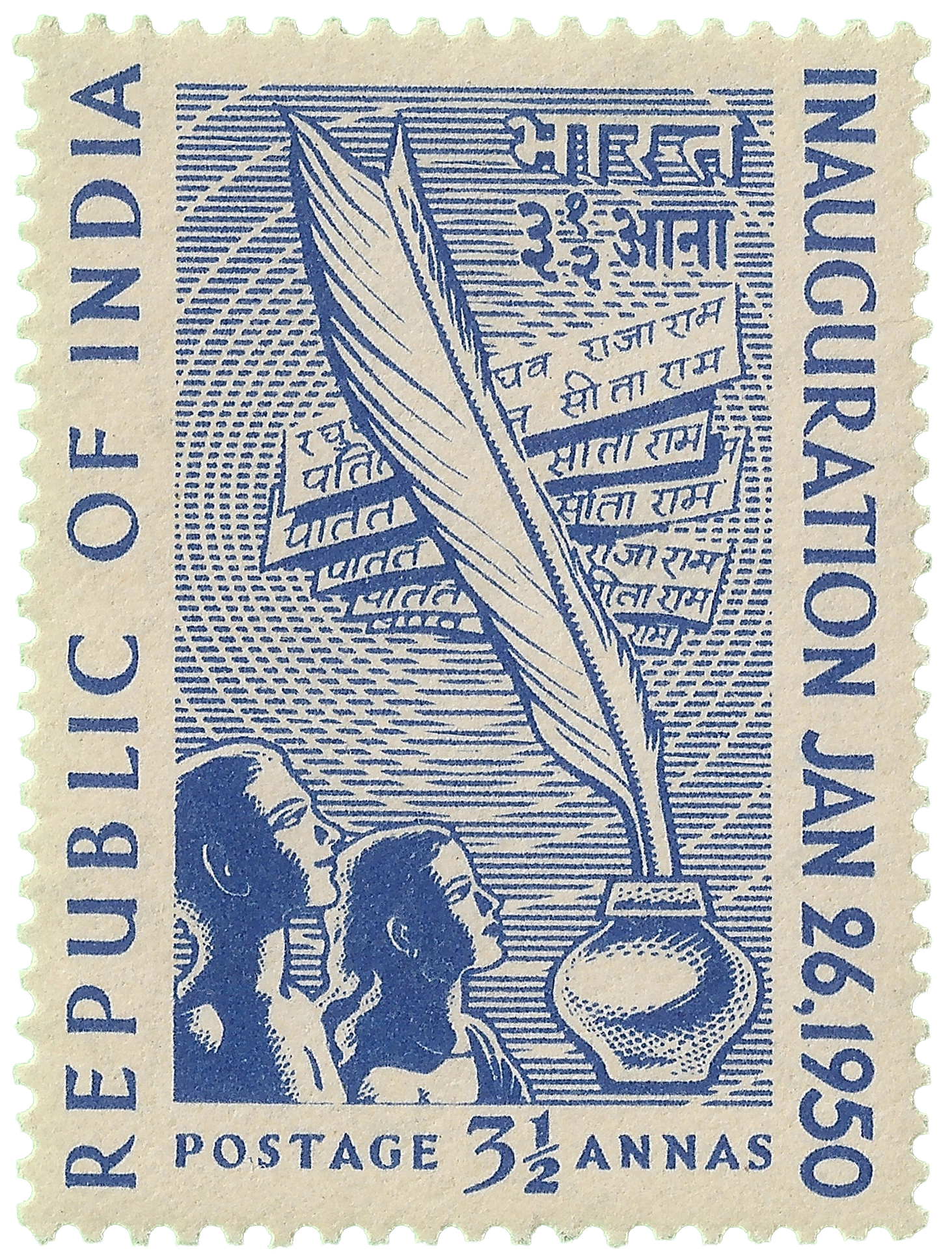
This stamp features a quill dipped in an inkpot, with several leaflets in the background inscribed in Hindi with ‘Raghupati Raghav Raja Ram’, a hymn closely associated with Mahatma Gandhi.
The design symbolizes India’s focus on education, moral values, and cultural heritage as key pillars of nation-building. The quill represents knowledge and learning, while the hymn reflects Gandhian ideals of truth and simplicity.
Purpose and Usage
The 3½ annas stamp was specifically issued for:
- Foreign letter mail
This made it an important denomination for international communication during the early years of the Republic.
Colour and Features
- Colour: Blue
- Series: Republic of India Inauguration (1950)
- Inscription: “Republic of India” and “Inauguration January 26, 1950”
- Includes the word “POSTAGE” and denomination in English, along with “BHARAT” and value in Hindi script
Philatelic Importance
As part of a historic stamp series, the 3½ annas stamp reflects the vision of a newly independent nation striving to build itself through education and ethical values. Its symbolic design and limited issue make it a valuable collectible for philatelists.
Conclusion
The 3½ Annas Stamp stands as a representation of India’s commitment to education and cultural ideals during its formative years as a republic. Through its thoughtful design, it captures the spirit of nation-building inspired by Gandhian philosophy.