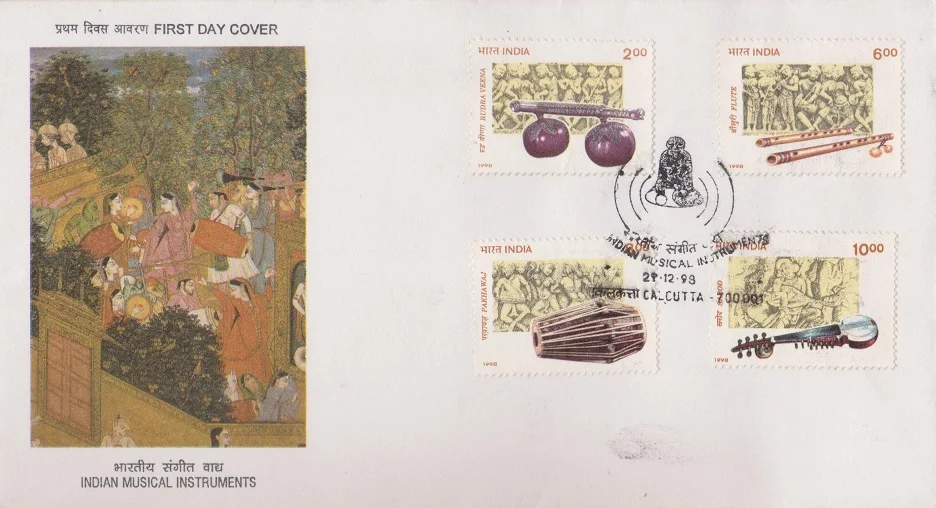
Rudra Veena (stringed instrument)
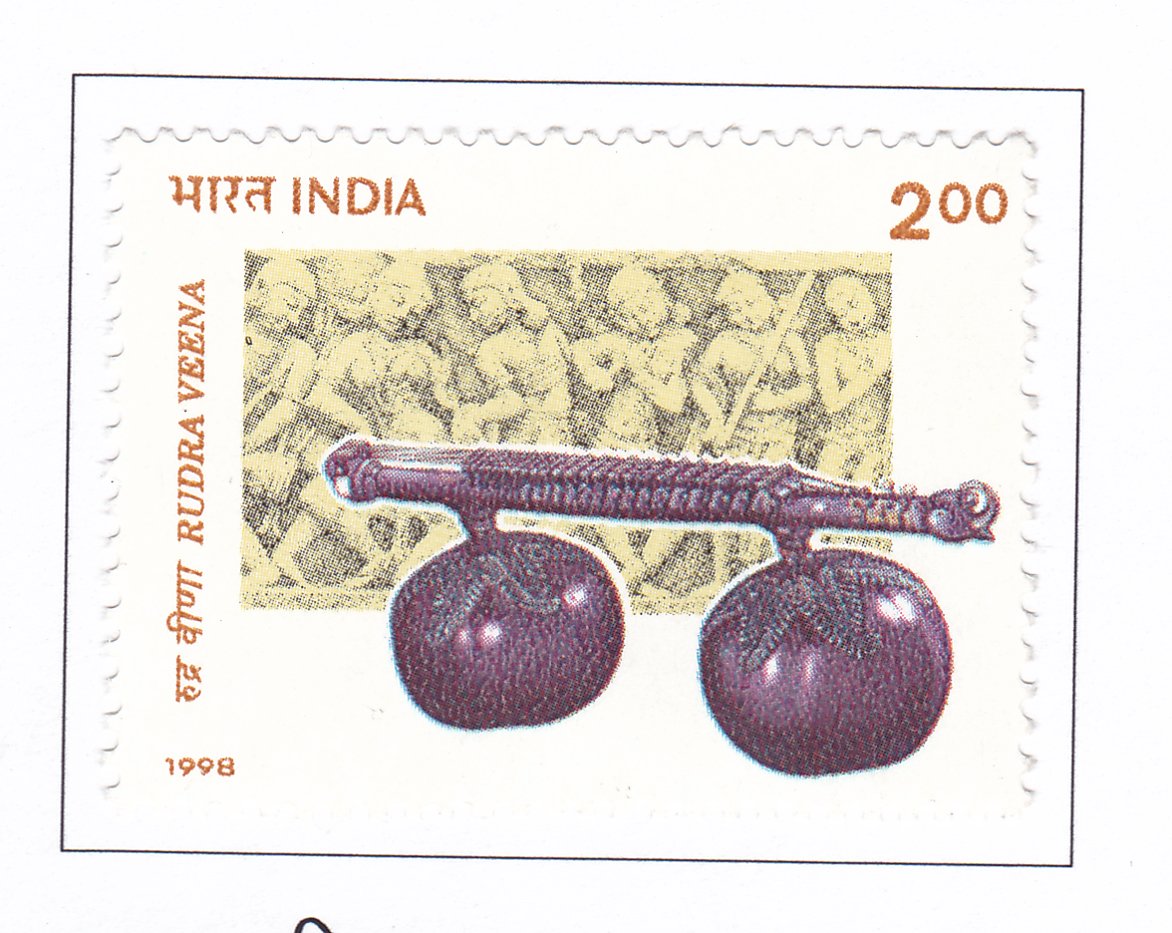
Technical Data
| Stamp Set | Indian Musical Instruments |
|---|---|
| Date of Issue | December 29, 1998 |
| Denomination | Rs. 2 |
| Quantity | 700,000 |
| Perforation | comb 13½ x 13 |
| Printer | Security Printing Press, Nashik |
| Printing Process | Photogravure |
| Watermark | No Watermark |
| Colors | Multicolor |
| Credit (Designed By) | Sh. Sankha Samanta |
| Catalog Codes |
Michel IN 1663 Stamp Number IN 1721 Yvert et Tellier IN 1428 Stanley Gibbons IN 1826 |
| Themes | Musical Instruments |
The Ancient String Instrument of Indian Classical Music
The Rudra Veena is one of the oldest and most revered musical instruments of India, representing the depth and sophistication of the country’s classical music tradition. As a prominent example of Tata Vadya (string instruments), it holds a significant place in the history of Indian music.
Origin and Classification
The Rudra Veena belongs to the category of string instruments defined in the Natya Shastra, compiled by Bharat Muni. In this system, instruments are classified based on how sound is produced.
As a Tata Vadya, the Rudra Veena produces sound through the vibration of stretched strings, which are plucked to create deep, resonant tones.
Structure and Design
The Rudra Veena is known for its distinctive and majestic structure:
- A long hollow wooden tube (dandi)
- Two large resonating gourds attached at both ends
- Metal strings stretched across the body
- Movable frets for precise tonal adjustments
This design allows the instrument to produce rich, meditative sounds ideal for classical performances.
Musical Characteristics
The Rudra Veena is especially suited for:
- Slow, elaborate musical passages (Alap)
- Deep and introspective ragas
- Classical styles like Dhrupad
Its sound is profound and serene, often associated with spiritual and meditative experiences in Indian classical music.
Historical Significance
String instruments like the Rudra Veena have ancient roots in India. Early forms of such instruments are believed to date back thousands of years, with evidence found in prehistoric art such as the Bhimbetka Rock Shelters, where bow-shaped harps are depicted.
Over time, the Rudra Veena evolved into a refined classical instrument, closely associated with traditional music schools and royal courts.
Cultural Importance
The Rudra Veena is more than just a musical instrument—it symbolizes:
- India’s classical music heritage
- Spiritual depth and discipline
- The evolution of string instruments
It has been traditionally played by master musicians and is often linked with the ancient Dhrupad style of singing.
Representation in Commemorative Stamps
The importance of the Rudra Veena has been recognized by India Post, which featured it in a set of commemorative stamps on Musical Instruments of India.
These stamps highlight:
- The historical significance of Indian instruments
- Their artistic and cultural value
- The continuity of musical traditions
Conclusion
The Rudra Veena stands as a timeless symbol of India’s rich musical legacy. With its deep tones and spiritual essence, it continues to represent the classical roots of Indian music and the enduring beauty of traditional string instruments.
First Day Cover