
S. D. Burman
Technical Data
| Date of Issue | October 1, 2007 |
|---|---|
| Denomination | Rs. 15 |
| Quantity | 400,000 |
| Perforation | 13½ |
| Printer | Security Printing Press, Hyderabad |
| Printing Process | Wet Offset |
| Watermark | No Watermark |
| Colors | Multicolor |
| Credit (Designed By) | Sh. Bharati Mirchandani |
| Catalog Codes |
Michel IN 2225 Stamp Number IN 2207 Yvert et Tellier IN 1990 Stanley Gibbons IN 2422 WADP Numbering System - WNS IN041.2007 |
| Themes | Anniversaries and Jubilees | Composers | Famous people | Men | Singers |
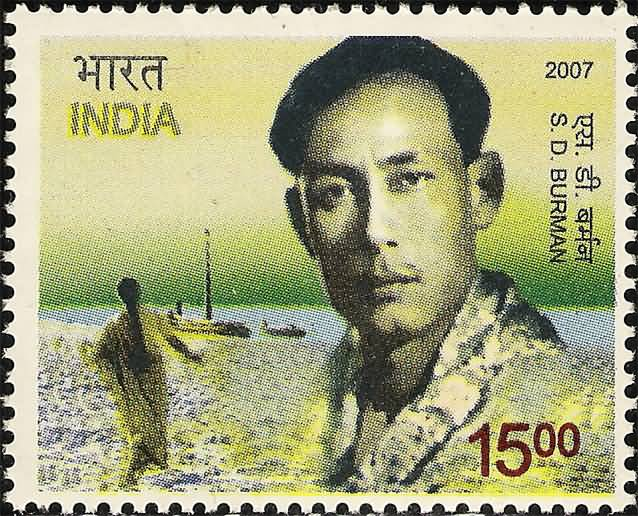
Commemorative Postage Stamp on Sachin Dev Burman
The Department of Posts proudly releases a commemorative postage stamp in honour of Sachin Dev Burman, the legendary composer whose music continues to resonate across generations. A maestro rooted in the cultural ethos of Bengal, his melodies carried the fragrance of rivers, rural landscapes, devotion, love, and longing, creating an immortal musical legacy.
Early Life and Musical Foundations
Born on 1st October 1906 in Comilla, Bengal (now in Bangladesh), into the royal family of Tripura, Sachin Dev Burman was the son of Nabadwip Chandra Dev Burman, a distinguished sitarist and Dhrupad singer, and Nirupama Devi. His father was his first guru, laying the foundation of his classical training.
He completed his B.A. in 1924, but his real education came from the vibrant folk traditions of Bengal. Deeply influenced by Vaishnava singers, Bauls, Faqirs, and devotional forms such as Kirtan, Jari songs of Muharram, Agamoni and Vijoya songs, he developed a rare sensitivity to musical nuances.
Burman travelled extensively through districts like Mymensingh, Comilla, and Brahmanbaria, collecting and absorbing folk songs. The music conferences organized at his ancestral home during Durga Puja and Holi exposed him to some of the finest classical musicians of the country, further enriching his artistry.
Training and Artistic Evolution
In 1924, he moved to Kolkata, where he trained under renowned musicians such as Krishna Chandra Dey, Shyamlal Kshetri, Badal Khan, and Bhishmadeb Chattopadhyay. Under their guidance, he mastered the Dadra style and gradually evolved his own distinctive musical signature—an exquisite blend of classical depth and folk simplicity.
His first recordings were made in 1923 with the Hindustan Musical Company of Kolkata. He debuted as a singer in the film Sanjher Pidim (1935) and soon became a music director with Rajgee (1937), establishing himself in Calcutta’s music scene before moving to Bombay in 1944.
Golden Era in Hindi Cinema
Settling permanently in Bombay, Sachin Dev Burman began composing for Filmistan and went on to score music for numerous landmark films. His early Hindi films included Shikari, Eight Days, Do Bhai, Shabnam, Munimji, and Paying Guest.
He revolutionized film music by blending classical foundations with folk rhythms and subtle Western influences. Understanding that cinema music needed to connect with common audiences, he created light yet soulful compositions that were instantly relatable.
Some of his unforgettable works include music for films such as:
- Pyaasa
- Kaagaz Ke Phool
- Guide
- Bandini
- Aradhana
- Jewel Thief
His compositions such as “Jinhe Naaz Hai Hind” and “Waqt Ne Kiya Kya Haseen Sitam” remain timeless masterpieces.
The Singer with a Bardic Voice
Apart from being a composer par excellence, Burman’s own thin yet powerful voice carried a haunting quality. Songs like “Wahan Kaun Hai Tera” from Guide and “Safal Hogi Teri Aradhana” from Aradhana showcased his unique ability to use voice as poetic commentary. His singing style, deeply rooted in folk traditions, fascinated listeners with its raw emotional depth.
Contribution to Bengali Music
For lovers of Bengali music, his songs released during Durga Puja became cherished traditions. His wife, Mira Dev Burman, played a pivotal and supportive role in his musical journey. He masterfully transformed folk melodies into refined yet accessible compositions, proving Goethe’s observation that “the true source of all music in this world is folk songs.”
Awards and Legacy
In recognition of his immense contribution to Indian music, he was awarded the Sangeet Natak Akademi Award in 1958. Even during his final days, music remained central to his life. He fell into a coma while recording “Badi Sooni Sooni Hai” for the film Mili and passed away on 31st October 1975 in Bombay (now Mumbai).
Though he is no longer among us, his melodies continue to enchant and inspire. This commemorative postage stamp stands as a tribute to his unparalleled contribution to Indian cinema and music—a fitting honour to a maestro whose songs remain eternally alive in the hearts of millions.
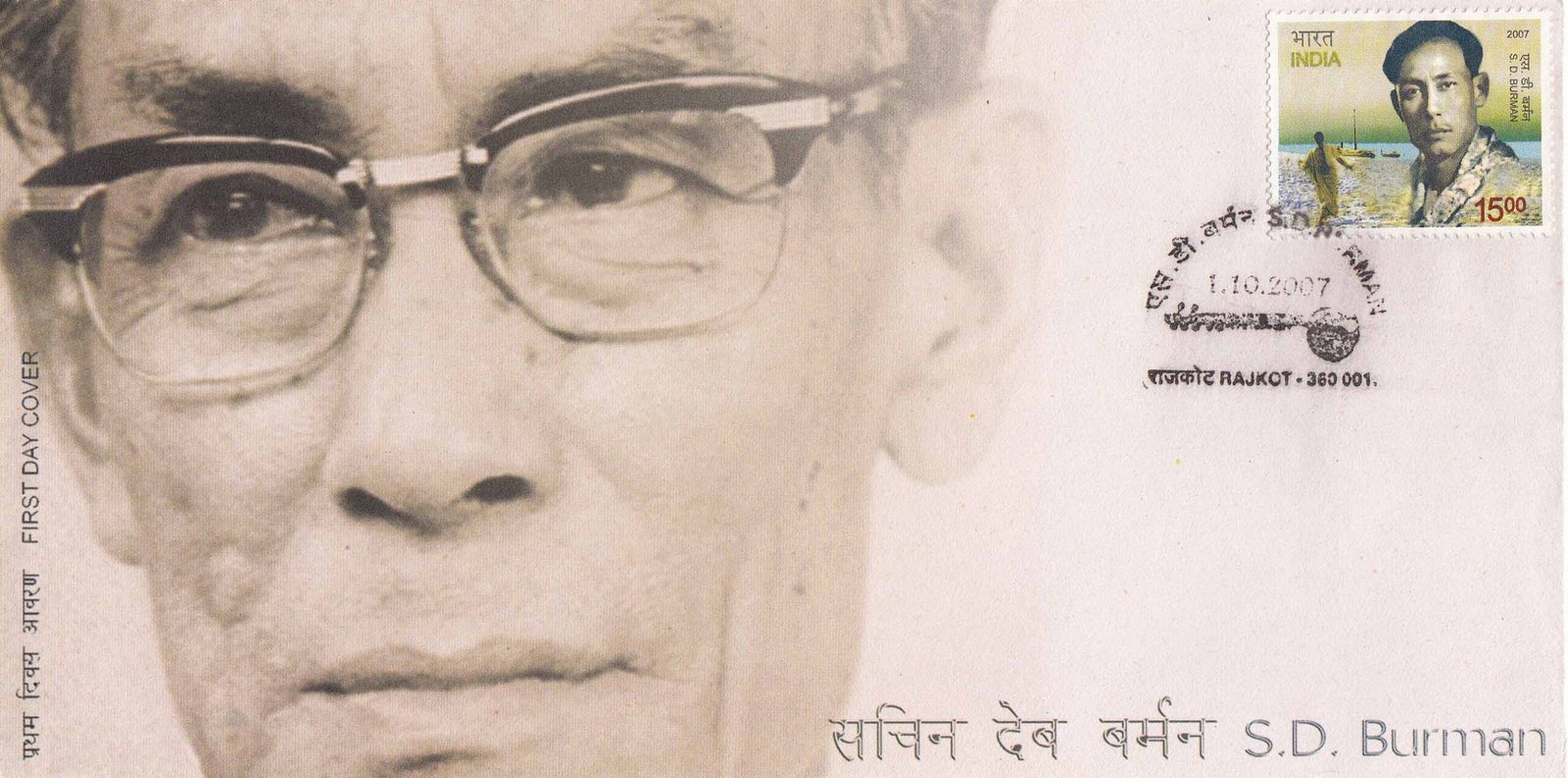
First Day Cover
Leave a Comment
You must be logged in to post a comment.