
Sagol Kangjei
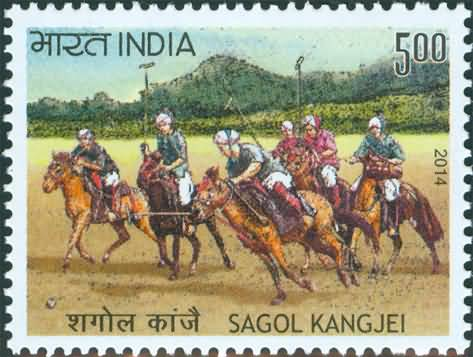
Technical Data
| Date of Issue | November 29, 2014 |
|---|---|
| Denomination | Rs. 5 |
| Quantity | 600,000 |
| Perforation | 13½ |
| Printer | Security Printing Press, Hyderabad |
| Printing Process | Wet Offset |
| Watermark | No Watermark |
| Colors | Multicolor |
| Credit (Designed By) | Ms. Nenu Gupta Shri Kamleshwar Singh |
| Catalog Codes |
Michel IN 2853 Yvert et Tellier IN 2597 Stanley Gibbons IN 3027 |
| Themes | Animals (Fauna) | Equestrianism and horse riding | Horses | Mammals | Sports |
The Ancestral Sport That Gave Birth to Modern Polo
Meaning and Origins of Sagol Kangjei
The traditional Manipuri sport Sagol Kangjei derives its name from two Manipuri words—‘Sagol’ (horse) and ‘Kangjei’ (hooking stick). Recognised today as the original form of modern polo, this ancient game has been played in Manipur for thousands of years.
Manipur’s rich lore attributes the invention of Sagol Kangjei to King Kangba, who ruled the region around 3300 B.C. During the festival Ukrong Hongba, he demonstrated how a clump of bamboo root could be dribbled with a walking stick, encouraging his subjects to practice the sport on horseback. Sagol Kangjei first appeared in written history in 33 AD in the royal chronicle Cheitharol Kumbaba.
Introduction of Polo to the Western World
The transformation of this indigenous sport into modern polo began in the mid-19th century. Lt. Joseph Ford Sherer, then a young lieutenant of the 44th (Sylhet) Regiment of Bengal Native Light Infantry, played a key role in introducing the game to Europeans. Along with Captain Robert Stewart, Superintendent of Cachar, he founded the first European Polo Club in 1859.
In 1864, Sherer and a team of seven skilled Manipuri players—fondly referred to as “The Brothers”—took the sport to Calcutta, where it immediately captivated British officers and civilians. Such was the admiration for Manipur’s equestrian tradition that on 22 June 1891, George Frederick Samuel Robinson, 1st Marquess of Ripon and former Viceroy of India, declared Manipur “the birthplace of Polo” in the British Parliament.
Players, Ponies, and Traditional Equipment
Sagol Kangjei is played between two teams, each consisting of seven players, symbolizing the seven ancestral clans of Manipur. All players ride the indigenous Manipuri pony, a small yet sturdy breed standing four to five feet high, known for its agility and spirited nature.
The ponies are elaborately decorated and equipped with protective guards for the eyes, forehead, and flanks. The traditional playing implements include:
- Kangjei (Polo Stick): A bamboo shaft fitted with a hardwood head at an obtuse angle.
- Kangdrum (Ball): Made from the root of a bamboo plant.
- Saddle: Lightweight, large, and raised at both ends, accompanied by leather flaps for leg protection.
Gameplay and Unique Rules
Sagol Kangjei is renowned for its free-flowing, dynamic style of play—so much so that many spectators claim the rules appear almost invisible. A goal is scored once the ball crosses the backline. Instead of a ground throw-in, the ball is tossed high into the air from the centre, giving players the opportunity for striking mid-air or even catching the ball by hand.
These distinctive features emphasize speed, precision, horseback balance, and traditional skill inherited through generations.
Commemorative Stamp on Sagol Kangjei
To honour this ancient sport and its monumental contribution to world polo, a commemorative postage stamp on Sagol Kangjei was issued. The stamp celebrates Manipur’s cultural heritage, its legendary ponies, and the timeless sport that continues to inspire polo enthusiasts worldwide.
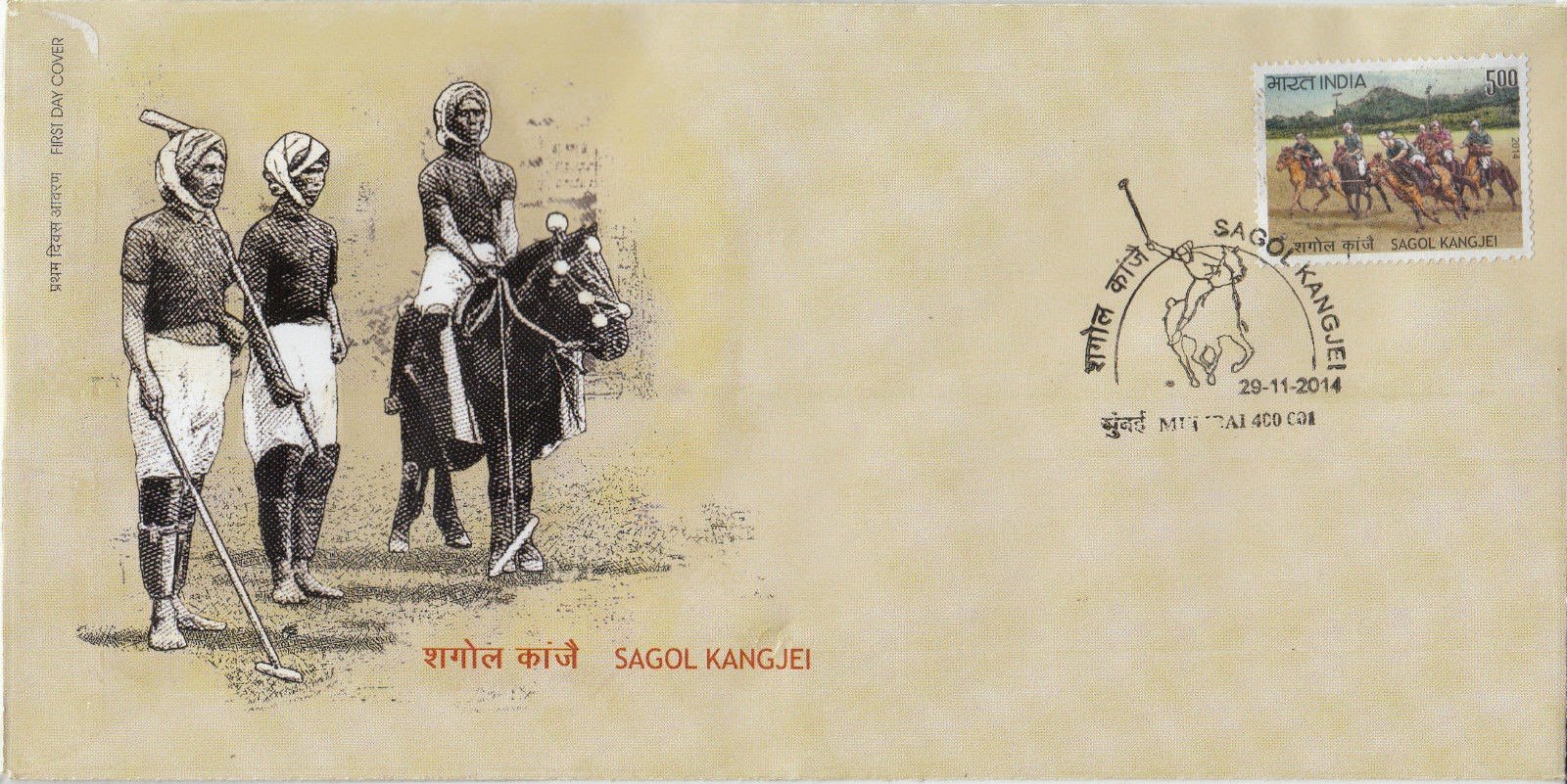
First Day Cover
Leave a Comment
You must be logged in to post a comment.