
Shri Shirdi Sai Baba

Technical Data
| Date of Issue | May 25, 2008 |
|---|---|
| Denomination | Rs. 5 |
| Quantity | 400,000 |
| Perforation | 13 |
| Printer | India Security Press, Nasik |
| Printing Process | Photogravure |
| Watermark | No Watermark |
| Colors | Multicolor |
| Credit (Designed By) | Mr. Chitta Pakrashi |
| Catalog Codes |
Michel IN 2273 Stamp Number IN 2242 Stanley Gibbons IN 2479 WADP Numbering System - WNS IN017.2008 |
| Themes | Anniversaries and Jubilees | Famous people | Men | Philosophers | Religion | Saints |
Apostle of Faith, Unity and Devotion
The pathos of human life often inspires man to seek a divine light—one that illumines every level of consciousness, liberates the spirit, and elevates existence to a higher fulfilment. Bound in the cycles of pleasure and pain and confined within rigid routines, the human heart yearns for wisdom and a deeper meaning that transcends logic and reason. This spiritual restlessness becomes the starting point of an inward journey—an exploration of higher consciousness guided by a Guru who reveals the path of sadhana and leads the seeker toward peace.
Among the most radiant manifestations of India’s spiritual heritage stands Shri Shirdi Sai Baba. Rooted in the timeless wisdom of the subcontinent, Sai Baba harmoniously linked ancient spiritual truths with progressive modern thought. He upheld the belief that true unity—the foundation of lasting happiness—cannot be achieved through political doctrines, social reforms, or scientific principles alone. These may evolve with time, but spiritual unity endures eternally. For Sai Baba, the Divine was the nucleus from which fellowship and brotherhood among humanity naturally emerged.
His compassionate assurance to devotees, “Cast all your burdens on me and I will bear them,” reflects his profound message of surrender and fearlessness. He regarded fear as humanity’s greatest enemy and emphasized unwavering faith in the Divine as the key to liberation.
Early Life and Spiritual Journey
The early life of Sai Baba remains shrouded in mystery and legend. It is believed that he was born to Brahmin parents in the Nizam’s State and was later found and raised by a fakir. After spending his formative years under different guardians, he first arrived in Shirdi at the age of sixteen. Following a brief disappearance, he returned in 1859 and remained there for the rest of his earthly life.
With his arrival, the Bhakti movement—devotion as a path to salvation—gained renewed vitality. Sai Baba revived and strengthened the spiritual practice of Bhakti, encouraging men and women alike to embrace devotion as the most natural and rewarding form of sadhana. Love, he taught, is inherent in every human heart. Since loving and being loved are universal experiences, Bhakti becomes the simplest yet most profound path to spiritual realization.
Message of Unity and Interfaith Harmony
Sai Baba’s life in Shirdi became a living example of communal harmony. He discouraged arguments over caste, creed, or religious identity, often dismissing questions about whether he was Hindu or Muslim. In his divine presence, followers of all communities found unity. Each devotee saw in him the embodiment of their chosen deity, worshipping him in their own way.
He emphasized the sacred bond between Guru and disciple, considering it central to India’s spiritual ethos. Teaching primarily through spoken words, much like the ancient sages, Sai Baba’s wisdom transcended time and geography, touching lives across India and abroad.
“Sai is not this three and a half cubic feet of visible body residing in Shirdi,” he often reminded his devotees, affirming the eternal nature of his spiritual presence.
On 15 October 1918, Sai Baba attained Mahasamadhi, transcending mortal existence. Yet his assurance to devotees remains deeply cherished: “Do not grieve when my body passes away. My tomb will live and move and speak with all those who make me their sole refuge.”
Commemorative Postage Stamp
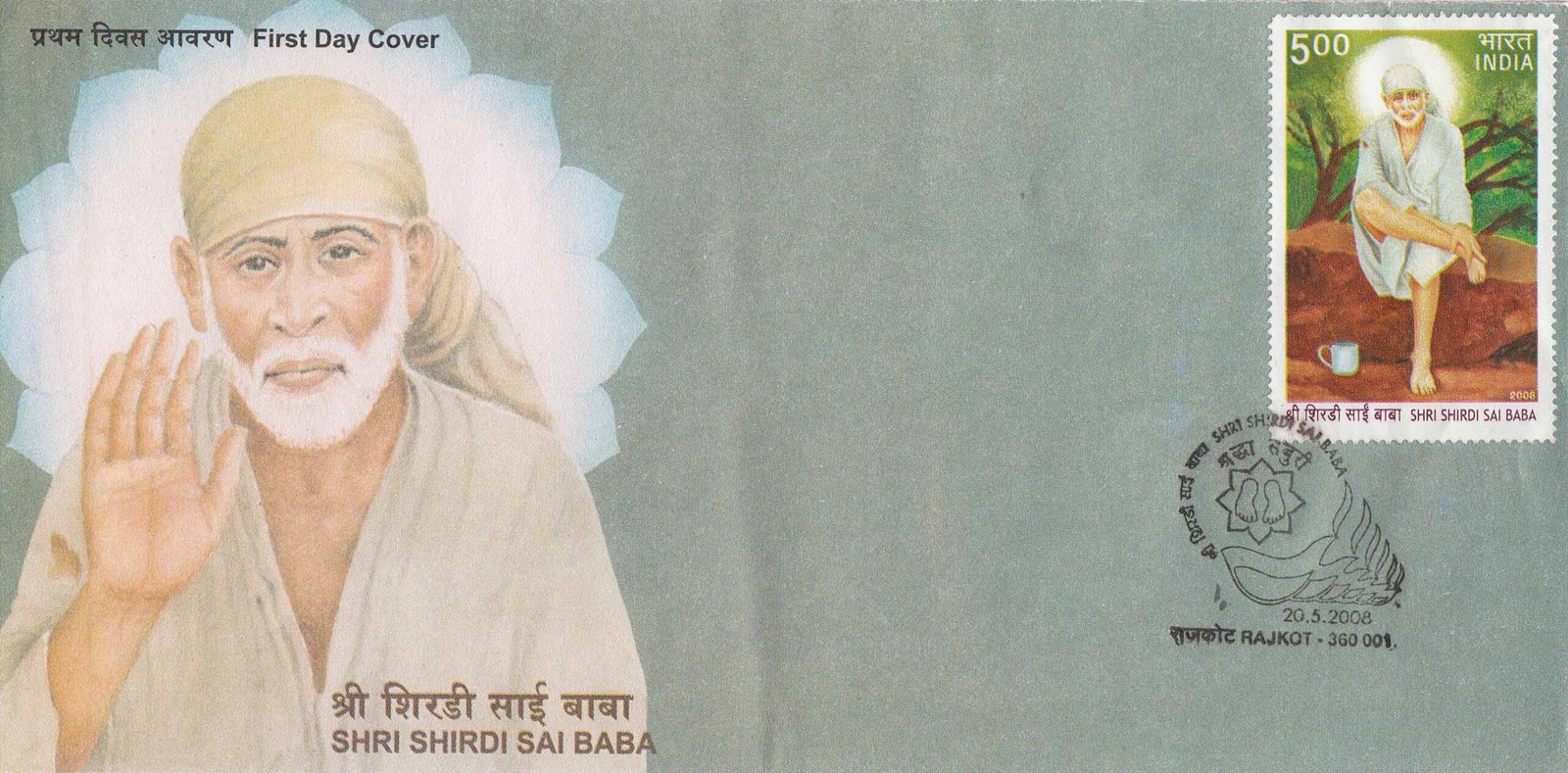
To honour the enduring legacy and spiritual influence of Shri Shirdi Sai Baba, India Post issued a commemorative postage stamp celebrating the Saint of Shirdi. The stamp stands as a tribute to his timeless message of faith (Shraddha), patience (Saburi), unity, and universal brotherhood.
This philatelic tribute not only commemorates a revered spiritual figure but also reflects India’s rich tradition of recognizing saints and reformers who have shaped the moral and cultural fabric of the nation.
First Day Cover
Leave a Comment
You must be logged in to post a comment.