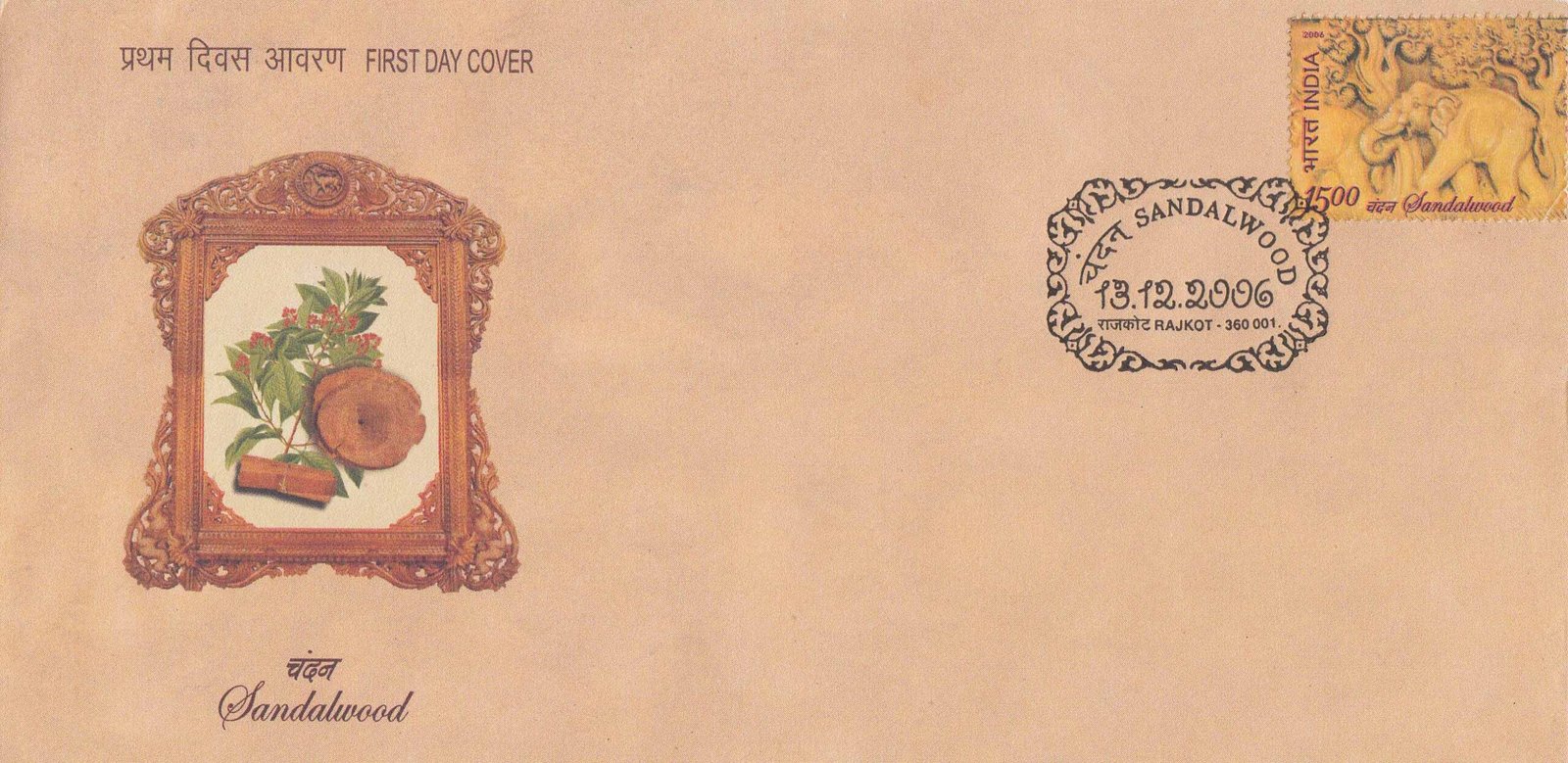
Sandalwood

Technical Data
| Date of Issue | December 13, 2006 |
|---|---|
| Denomination | Rs. 15 |
| Perforation | comb13 |
| Printer | India Security Press, Nasik |
| Printing Process | Photogravure |
| Watermark | No Watermark |
| Colors | Multicolor |
| Credit (Designed By) | Sh. Sankha Samanta |
| Catalog Codes |
Michel IN BL39 Stamp Number IN 2179a Stanley Gibbons IN MS2371 WADP Numbering System - WNS IN060MS.2006 |
| Themes | Animals (Fauna) | Art | Elephants | Forests | Mammals | Stylized Animals |
India’s Fragrant Heritage
Prized since ancient times for its rich fragrance and remarkable medicinal properties, Santalum album holds a special place in Indian culture and tradition. Sandalwood has long been an integral part of Hindu religious rituals and social customs. References to sandalwood appear in ancient Indian literature dating back to around 2000 BC, including the Ramayana, the works of Kalidasa, and Buddhist scriptures that associate it with Amitabha.
Distribution and Botanical Characteristics
The sandalwood tree is found in several parts of the world, including India, Sri Lanka, Australia, China, Taiwan, Hawaii, and some South Pacific islands. In India, it mainly grows in the southern deciduous forests of the Western Ghats and the Deccan Plateau, particularly in the states of Karnataka and Tamil Nadu.
Botanically known as Santalum album, sandalwood belongs to the Santalaceae family and is a hemi-parasitic plant. This means that its roots draw some of their nutrients from neighboring plants. The tree is also naturally resistant to many insects.
As the tree matures, aromatic essential oil gradually develops in its roots and heartwood—the dense inner core of the tree. This process can take 15 to 20 years. Interestingly, sandalwood trees are usually uprooted rather than felled, particularly during the rainy season when the roots contain the highest concentration of valuable oil. It is estimated that one ton of sandalwood heartwood can yield up to 60 kilograms of oil.
Uses of Sandalwood
Apart from its precious oil, sandalwood is valued for its wood and bark. The powdered bark is widely used in making Agarbatti, while the fragrant wood is highly prized for carving. Skilled artisans transform sandalwood into beautifully crafted caskets, decorative panels, statues and figurines of deities, and even ornate temple doors.
Though rarely used as a structural material, sandalwood has occasionally been used in temple construction. Its natural aroma can linger for centuries, adding a spiritual dimension to sacred spaces.
Medicinal and Therapeutic Value
Sandalwood has long been used in traditional medicine. Both the powdered wood and essential oil are believed to treat various ailments, including snakebites, respiratory and digestive disorders, and skin conditions. Sandalwood paste is also widely used in skincare for its soothing and nourishing properties.
In aromatherapy, sandalwood oil is valued for its calming fragrance. It helps reduce stress, relieve depression, ease anger and aggression, and promote a sense of calm and tranquility. Its warm, sweet, slightly spicy woody fragrance is long-lasting and blends harmoniously with other scents, making it a highly sought-after ingredient in perfumery.
Conservation and Cultural Importance
Because of its many uses, sandalwood has been an important trade commodity since ancient times. However, genuine Indian sandalwood has now become rare and expensive. In 1792, Tipu Sultan, the ruler of Mysore, declared sandalwood a royal tree. Even today, sandalwood trees in India are government property, and their harvesting is strictly regulated.
Despite these measures, illegal felling and smuggling continue to threaten the survival of this valuable tree and its natural habitat. Protecting sandalwood is therefore essential to preserving an important part of India’s natural and cultural heritage.
A Unique Philatelic Tribute
Recognizing the cultural and economic significance of sandalwood, the India Post issued a perfumed
a Miniatre Sheet consisting one no. of commemorative postage stamp dedicated to this national treasure. Infused with the unmistakable fragrance of sandalwood, this stamp became the first perfumed stamp released by India Post, celebrating the timeless legacy of India’s most cherished aromatic tree.
First Day Cover